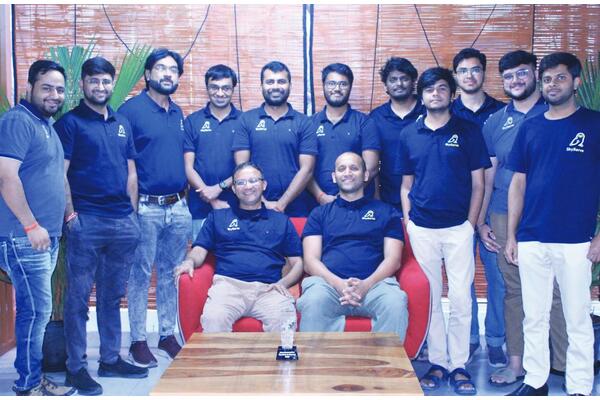

FLIPPING THE SCRIPT ON SATELLITE INTELLIGENCE

For decades, satellites have orbited the earth as passive ‘eyes in the sky’, capturing images and relaying vast amounts of raw data back to the ground. Much of this data, however, has remained in archives, rendering traditional satellite operations as costly and inefficient. In an era where decisions rely on data, SkyServe is transforming how satellites serve humanity.
Founded by experts in artificial intelligence (AI), aerospace, and systems engineering, SkyServe, a Bengaluru-based startup, is introducing onboard AI processing, known as Edge AI suite, for Earth observation satellites — a radical departure from the conventional model of satellites.
As Vinay Simha, Co-Founder & Chief Executive Officer, SkyServe, explains, “Optical satellites generate a massive amount of data, yet not all captured data is useful. Downlinking it all is costly and inefficient. We asked ourselves: Why not make satellites intelligent agents instead of passive sense, store, and forward systems?”
Flipping the Satellite Data Pipeline
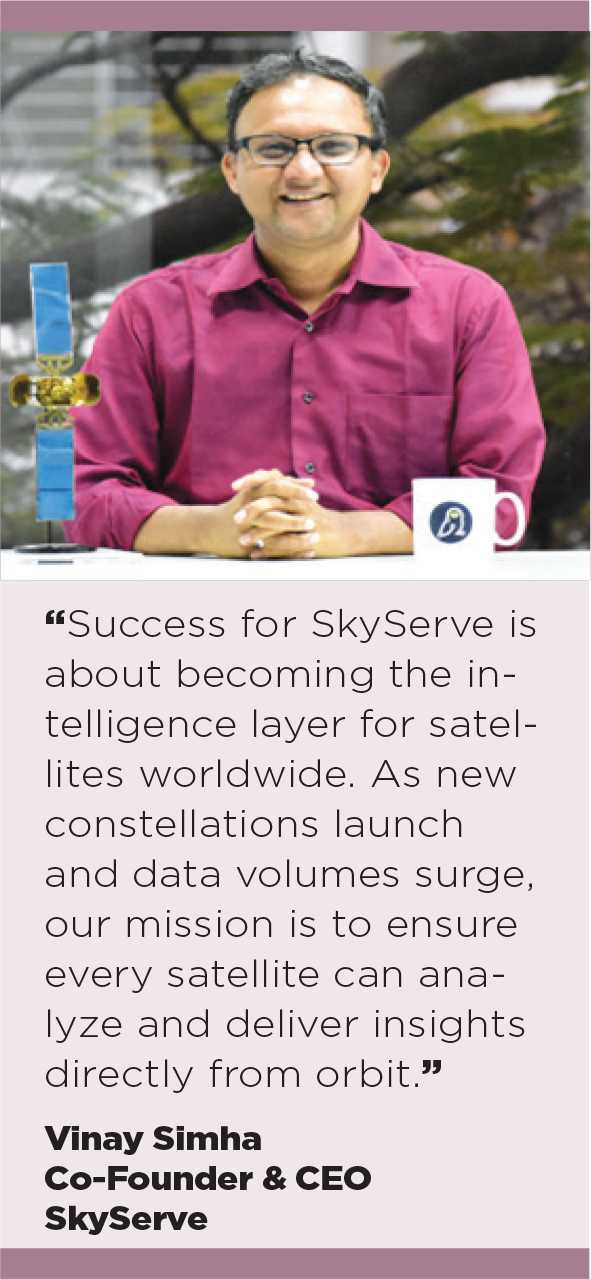
To thoroughly understand the company’s innovation, the function of a conventional satellite must be broken down. “Satellites have long functioned as orbiting cameras, streaming down vast amounts of raw imagery, much of it never analyzed,” he outlines. The result: clogged networks, high transmission costs, and delays in turning images into actionable insights.
The company’s EdgeAI suite flips this model. By embedding AI into the satellite itself, raw data is processed in orbit, and only meaningful intelligence is downlinked. Offering a further explanation, Simha shares, “That means critical information reaches the right people faster, each orbit can cover more areas of interest, and bandwidth costs drop dramatically.”
In critical moments where every minute counts—from alerting authorities to wildfires to tracking dark ships or safeguarding infrastructure—this time advantage can be the difference between prevention and disaster.
Turning Hurdles into Breakthroughs
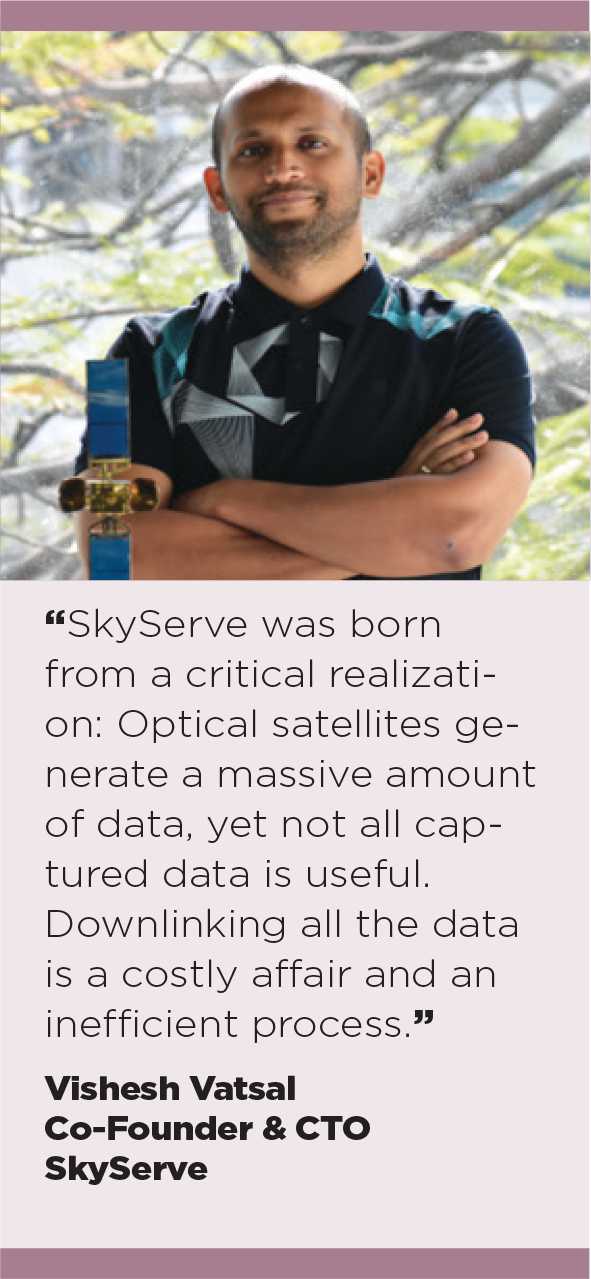
The journey from concept to deployment was fraught with hurdles. Taking an idea from the whiteboard to the harsh realities of space began with the first principles: “We mapped the traditional Earth observation workflow and identified current friction points.”
The company’s next step was to double down on aspects where it could build smart solutions within the extremely resource-constrained environment of space—without impacting satellite operations.
“One of the biggest hurdles was making our Edge AI suite highly resourceful in a compute-constrained environment,” he points out. Compressing advanced AI models into systems capable of withstanding space conditions— radiation, thermal extremes, and limited power—was the breakthrough that set the foundation for the company’s credibility.
Arms of Support
For a space-tech startup, partnerships are as important as the technology itself. “Partnering with satellite operators was a turning point. It allowed us to deploy our software directly onboard their missions,” he highlights.
 |
|
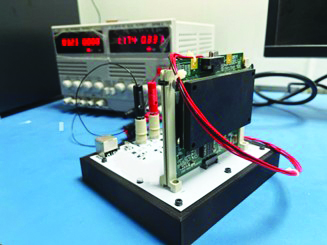
Upscaled Processor |
Early on, the company focused on building platform-agnostic compatibility and thus, proved its value across diverse applications. Each successful deployment of the system, showcasing its ability to reduce downlink loads and filter irrelevant data in orbit, boosted confidence, leading to wider adoption.
As of recent times, the company’s EdgeAI software is compatible with over 60 satellite platforms, signaling growing trust in its technology within the global satellite community.
Uniting with the Nation’s Strongest
The company’s growth story has been a consistent upward trajectory as a result of the policy environment in India becoming supportive of private innovation. According to the CEO, “India’s space ecosystem has changed dramatically in the past few years.”
“The Indian National Space Promotion and Authorization Centre (IN-SPACe) has opened structured pathways for startups, and the Indian Space Research Organisation (ISRO) has been a huge supporter in collaborating with private players,” he observed. This openness has enabled the company to collaborate and offer solutions quickly.
| The EdgeAI suite is platform-agnostic, already proven across more than 60 satellites. Its compatibility makes it one of the few technologies ready for seamless adoption by global satellite operators. |
Furthermore, he emphasizes, “India wants to be a hub for space innovation.” For a startup in a highly competitive sector, such institutional support has proved to be invaluable.
Building a Layer of Intelligence for Space
 |
|
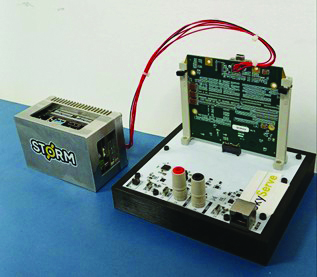
STORM Edge Card |
As new constellations launch and data volumes surge, the company’s mission is to ensure every satellite can analyze and deliver insights directly from orbit.
Simha further articulated this vision: “Over the next five years, we see SkyServe evolving into an application in the App Store for Earth Observation, where anyone can query a location and instantly access real-time insights, whether for wildfire response, maritime monitoring, or disaster management.”
Through the company’s virtual layer, users will not only receive ready-to-use intelligence but also deploy their own GeoAI models, artificial intelligence models designed to work with geospatial data, on demand. “That’s the future we’re building: SkyServe as the critical infrastructure powering space-driven decision-making,” he concludes.
  |
NITYASREE KUMARASWAMY |
 Facebook
.png) Twitter
Twitter Linkedin
 Subscribe