
GrindingHub Focuses on Hybrid Grinding Processes
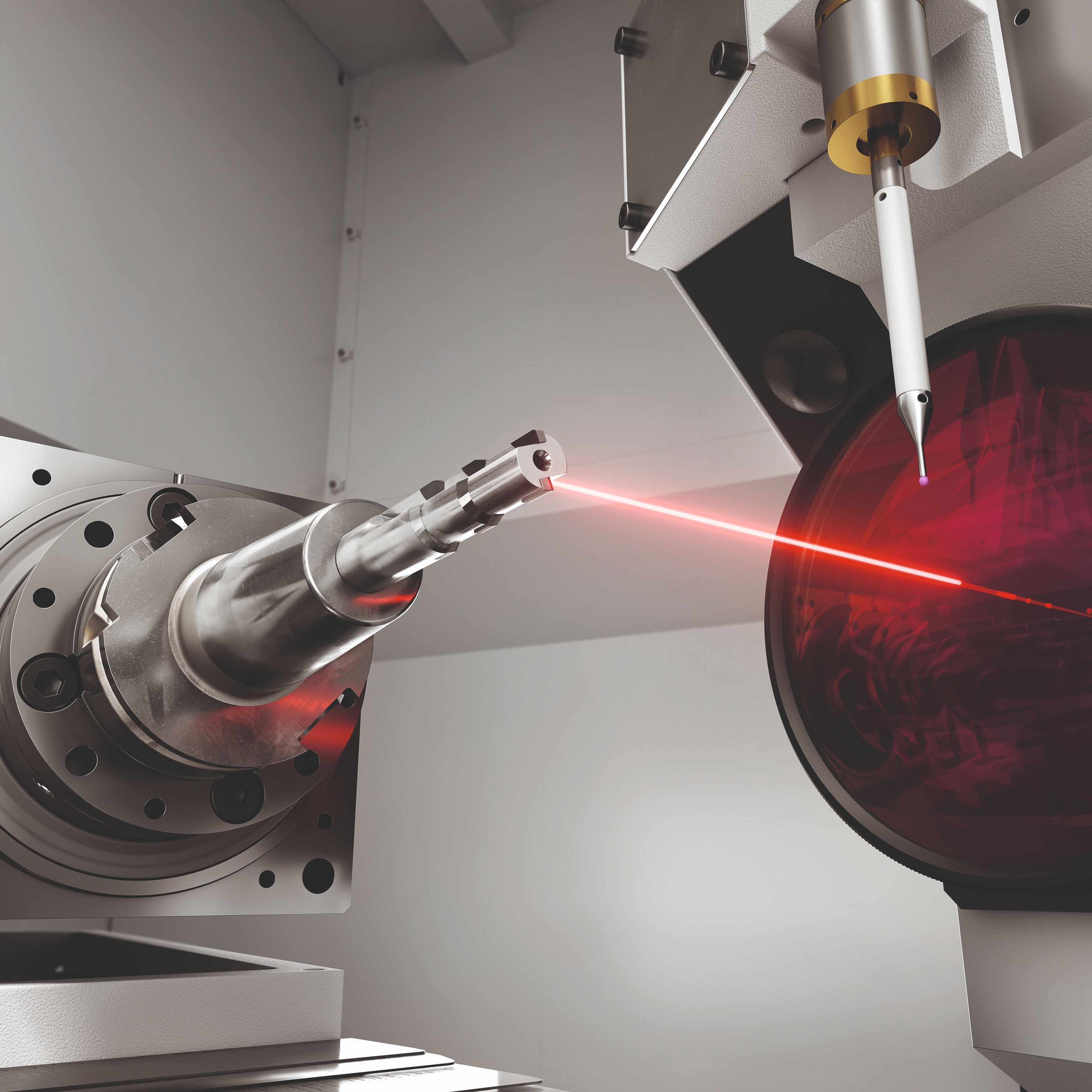
Frankfurt am Main, Germany – GrindingHub 2026 will present the current state-of-the-art of grinding technology with a focus on topics such as hybrid machining systems and cross-process efficiency increases. How can sophisticated individual processes such as grinding or eroding be combined for even greater output and precision? When does the use of laser technology make sense? From May 5-8 in Stuttgart, the trade fair will showcase how users can achieve higher material removal rates, less downtime, and maximum process stability with state-of-the-art processes. GrindingHub will set the technological benchmark for networked, resource-efficient and high-precision manufacturing of the next generation.
More Efficiency Through Numerous Combinations
“Today’s tool manufacturers are striving for ever more efficient ways to produce their tools to customer specifications – and to do so on an automated basis,” says Tobias Trautmann, Managing Director of Vollmer Werke Maschinenfabrik GmbH based in Biberach an der Riss, Germany. “We support this goal with various sharpening technologies that can not only machine ultra-hard cutting materials precisely, but also optimize manufacturing processes thanks to digital solutions and AI applications.”
At GrindingHub 2026, the Vollmer Group will be showcasing its portfolio of grinding, eroding, and laser machines that allow customers to machine ultra-hard cutting materials such as carbide, PCD (polycrystalline diamond), CVD (chemical vapor deposition) diamond, or PcBN (polycrystalline cubic boron nitride). When it comes to efficiency, hybrid machines are of particular interest for sharpening tools faster and with higher quality. One example of these are full-head PCD tools with complex geometries: The contours in the carbide can be ground and the cutting edges in the PCD head can also be eroded in a single clamping operation. This procedure not only shortens both productive and non-productive time, but also makes the transition between the PCD head and the carbide blank virtually seamless—without any unevenness or graduation.
Grinding machines are used by tool manufacturers to sharpen all cutting edges made of carbide or PcBN with diamond wheels. However, if tools cannot be ground or can only be ground to a limited extent, eroding or laser machines are used. Lasers have the advantage that—in contrast to erosion—they can also be used on non-conductive materials. The wear that happens on grinding wheels does not take place on these systems because the cutting edges are machined without contact during eroding and lasering. The tool machining also takes place without significant thermal influence.
Regardless of the sharpening technology in question, Vollmer’s philosophy is that its machines are always suitable for automated tool machining in 24/7 shifts. Central robot systems control loading trolleys, pallet loaders, or chain magazines and monitor the fully automatic complete machining process. Digital solutions in particular are currently being used to increase efficiency in automation, which is why Vollmer equips its machines with IoT gateways as standard in order to network them with their digital environments. Data from different machines is recorded, processed, and managed via a central IT platform. Supported by AI-based algorithms, a chatbot provides information on documentation or historical data to answer queries about machine utilization, the number of tools produced, or missing parts. “To make our machines even more efficient, we collaborate intensively with customers, industry partners, and research institutes,” emphasizes Ralf Grosshauser, Managing Director, Vollmer Group. “We collaborate with Furtwangen University on grinding technologies and belong to a network of around 30 companies that exchange knowledge and help each other stimulate future innovations.”
Productivity Increases of Up to 70 Percent
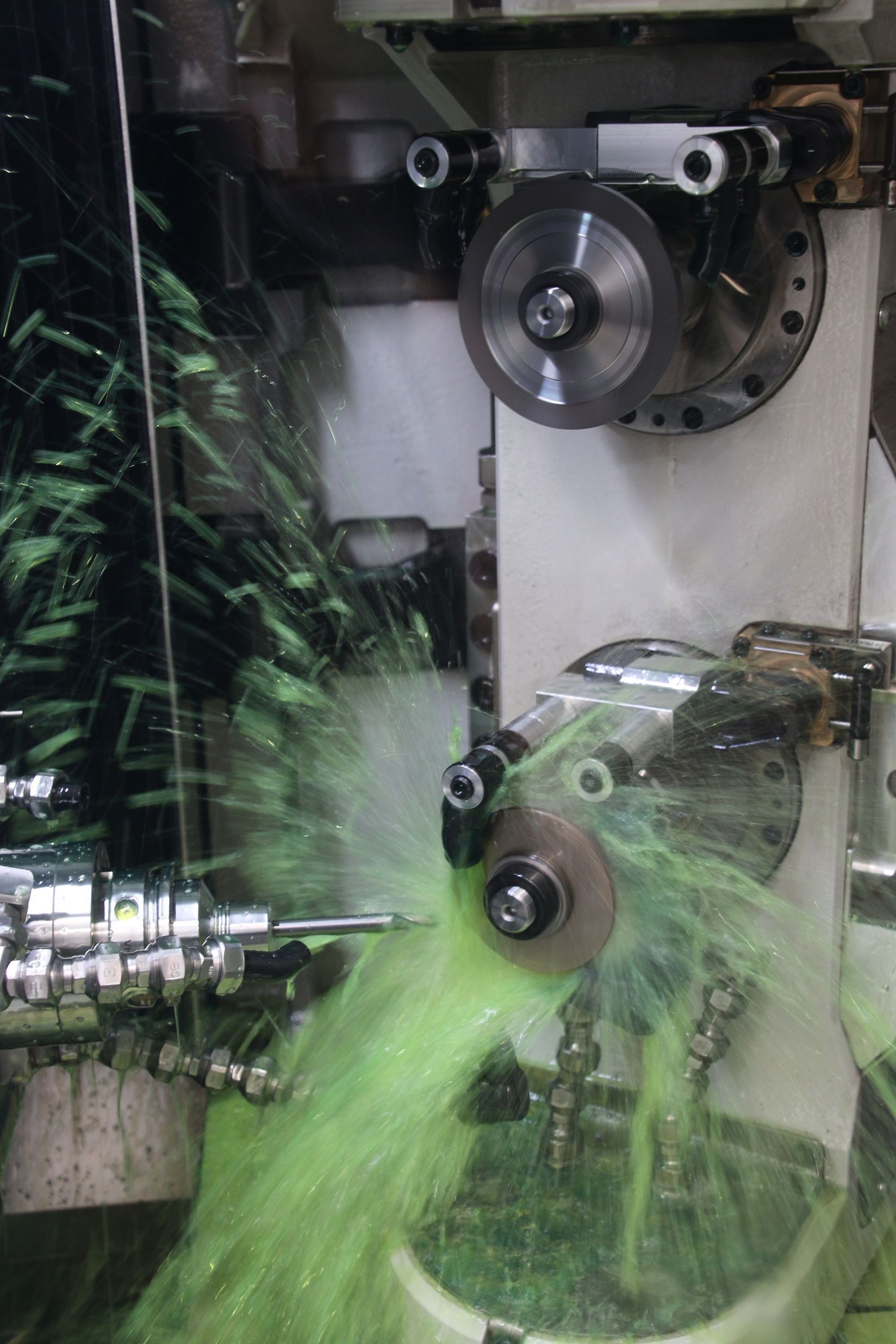
Studer’s WireDress technology is an example of intelligently combined hybrid technologies in the field of grinding technology. It is integrated into high-precision CNC grinding machines for external cylindrical grinding and now also for internal cylindrical grinding. The full integration of electro-erosive dressing technology eliminates the need to manually dismantle and reset the grinding wheel for the dressing process.
Christoph Plüss, CTO of United Machining Solutions Management AG, based in Bern, Switzerland, describes the electrical erosion process as follows, “In the WireDress process, metal-bonded diamond or CBN grinding wheels are dressed, profiled, and sharpened in the machine using a wire. The dressing process can be carried out at the full working speed of the grinding wheel. This massively reduces non-productive time. Especially when grinding high-alloy, hardened steels, carbides, and ceramics, where metal-bonded grinding wheels are used, WireDress offers enormous advantages and provides productivity increases of up to 70 percent for certain materials when this technology is used.”
The newly founded United Machining Solutions Group has now expanded its portfolio to include 15 brands in 2025 (including Studer). The group is one of the largest machine tool manufacturers in the world with a total turnover of over US$ 1.5 billion and, as usual, will be represented at GrindingHub and ready to engage in face-to-face discussions with its team of specialists.
Rethinking Hard Finishing
After hardening, internal gears can be machined using various processes—depending on the required quality level—such as honing, profile grinding, generating grinding, hard skiving, or hard broaching. Each process has specific strengths and limitations: Hard skiving is highly cost-effective, but reaches its limits when very high precision is required. Profile grinding offers maximum precision, but is slow and cost-intensive—and therefore only has limited appeal for high-volume production, for example, in the e-mobility or commercial vehicle sectors.
Liebherr-Verzahntechnik GmbH from Kempten has closed precisely this gap with SkiveFinishing. The process combines the kinematics of power skiving with a dressing-free, electroplated tool and thus enables a significantly higher quality than hard skiving—with shorter process times and lower costs than profile grinding. This combines the best of both worlds: Excellent precision and economically robust process control. “SkiveFinishing combines the flexibility of skiving with the advantages of CBN hard finishing,” explains Haider Arroum, Division and Site Manager Tools. “Optimal roughness values and economical processes can be achieved through the targeted selection of CBN grain sizes.”
Significant efficiency gains are now also achieved with twist-free generating grinding. With the further development of this process, Liebherr-Verzahntechnik is raising both the economic efficiency and the quality of hard finishing to a new level. The machining times when using dressable grinding worms have been reduced almost to the level of conventional processes—even with asymmetrical gears. At the same time, optimized shift methods allow the integration of fine grinding or polishing in a single operation. The technology is suitable for a wide range of applications: From transmission components for e-mobility to special and heavy-duty transmissions. “In combination with the high rigidity of our machines—which our customers repeatedly praise—we offer measurable added value in terms of efficiency and precision and therefore a clear competitive advantage,” emphasizes Fabian Stadelmann, Technology Development Manager.
Staying Ahead with Megatrends
Hybrid technologies are among the major levers that can allow a company to position itself at the forefront of the technology and also boost profitability. The innovations described here impressively demonstrate where the future of grinding technology lies. Combined with other megatrends such as automation and artificial intelligence, this opens up countless opportunities to stay ahead of the global competition. As a roadmap towards future innovations, the third edition of GrindingHub will offer unique opportunities in this regard.
Image Source: German Machine Tool Builders’ Association (VDW)
 Facebook
.png) Twitter
Twitter Linkedin
 Subscribe