
The Liquid Advantage
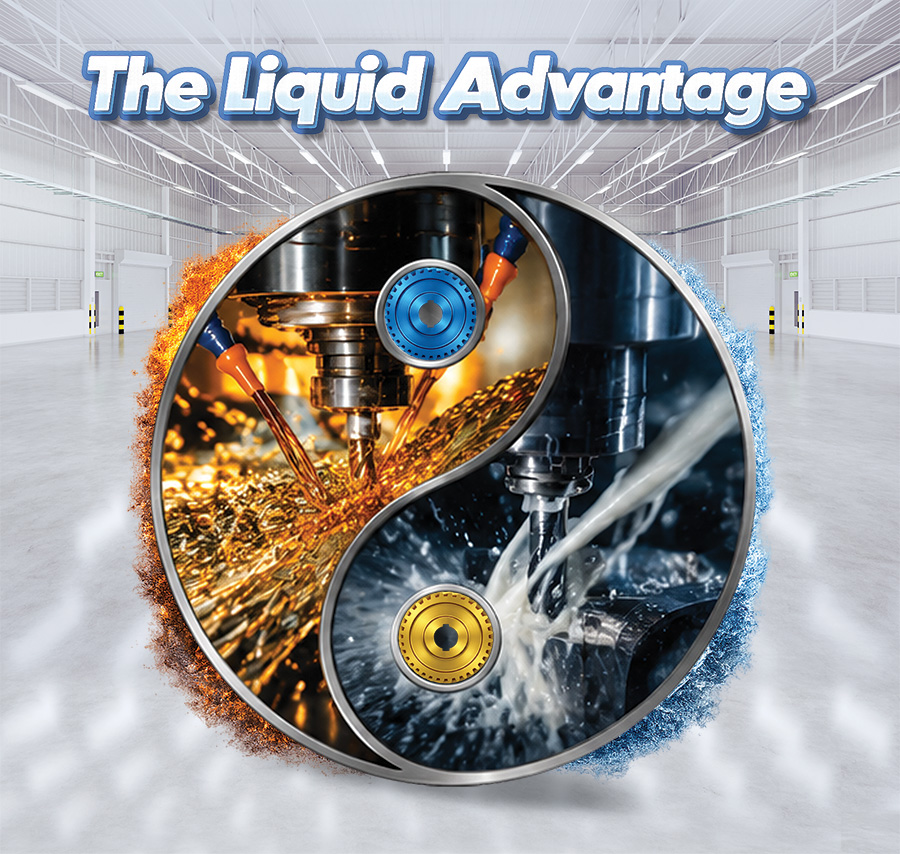
The modern manufacturing shop floor is undergoing a seismic shift. Driven by high-speed CNC centers, complex lightweight alloys, strict sustainability mandates, and the digital push of Industry 4.0, metalworking fluids, and industrial lubricants are no longer viewed merely as passive consumables.
Industry leaders now regard fluid as an essential, active component, a ‘Liquid Tool’ that directly affects total cost of ownership (TCO), tool life, process stability, and operator safety.
As automotive, aerospace, and defence sectors scale up production using lightweight and hard-to-machine materials such as titanium, Inconel, aluminum, and advanced composites, the thermal and mechanical demands on cutting tools have intensified. Titanium, for instance, presents a severe challenge due to its low thermal conductivity, which traps heat directly at the cutting edge and rapidly destroys tools.
Mastering High-Speed Machining and Tough Alloys
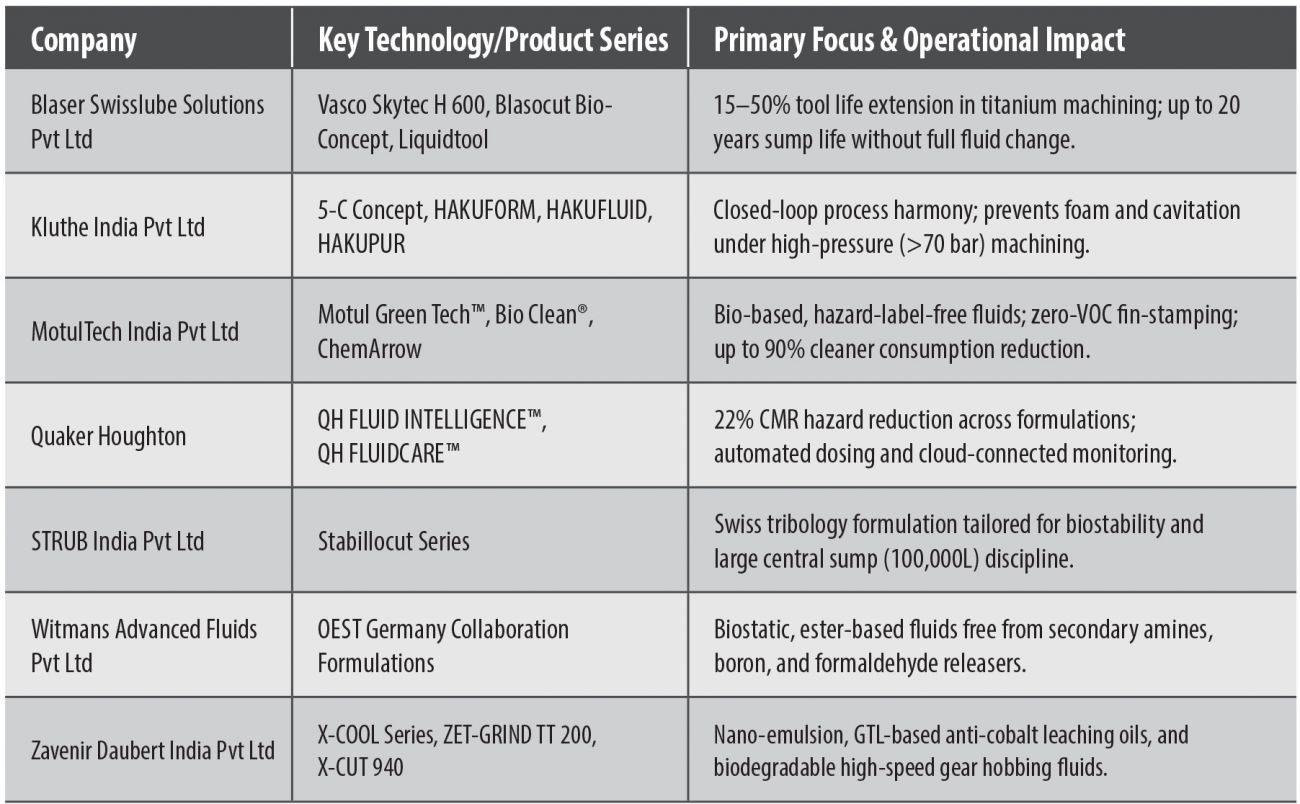
To address these extreme conditions, Blaser Swisslube Solutions collaborated on high-pressure 5-axis horizontal machining trials with Makino and Walter Tools. Punit Gupta, Managing Director, Blaser Swisslube Solutions Pvt Ltd, explains, “Titanium is exactly where our specially designed fluid formulation makes or breaks the economics of a job. On the face insert, tool life went from 27 minutes with standard coolant to 31 minutes with Vasco Skytec H 600—a 15 percent improvement. On peripheral inserts, it was even bigger: 44 minutes up to 66 minutes—a 50 percent jump.”
Similarly, handling non-ferrous and exotic lightweight alloys introduces issues like built-up edge (BUE), micro-cracking, and thermal shock. MotulTech India leverages global innovation labs to counter these issues.
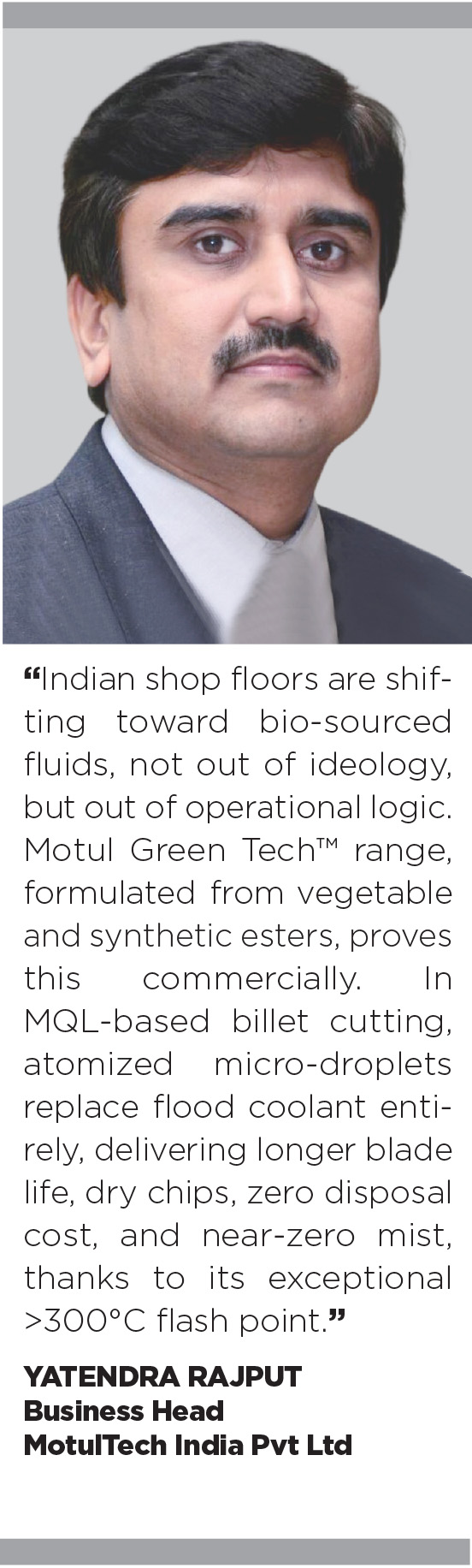
Yatendra Rajput, Business Head, MotulTech India Pvt Ltd, elaborates, “These products prevent built-up edge formation on soft and ductile lightweight materials, eliminate temperature spikes caused by uneven coolant application, and shield tools from micro-cracking.” The company’s specialized chemistries also ensure crack-free working for titanium, which can be a big problem if metalworking fluids contain EP additives that react with titanium over time.
Quaker Houghton targets similar challenges in electric vehicle (EV) component manufacturing, such as high-pressure aluminum die castings. Raul Jurado
Yanini, Vice-President - India, Middle East, Africa (IMEA), Quaker Houghton, outlines the company’s strategy, “Quaker Houghton is working on improvising the boundary lubrication and enhancing the EP additives to prevent metal-to-metal contact, thus ensuring that the BUE issue is taken care of balancing the products by improvising heat dissipation over sheer lubricity.”
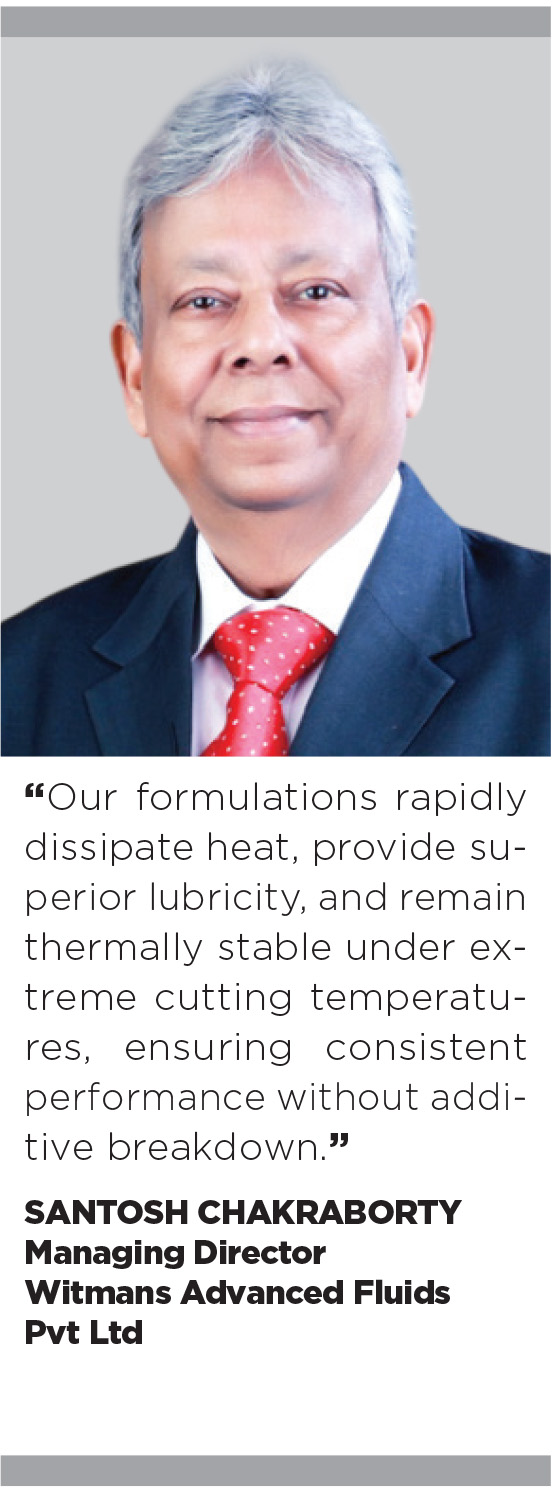
Witmans Advanced Fluids, in collaboration with OEST Germany, focuses on high thermal stress in high-speed CNC machining. Santosh Chakraborty, Managing Director, Witmans Advanced Fluids Pvt Ltd, emphasizes, “Our formulations rapidly dissipate heat, provide superior lubricity, and remain thermally stable under extreme cutting temperatures, ensuring consistent performance without additive breakdown.”
Foam Suppression and High-Pressure Reliability
Modern machine tools operating with through-spindle coolant pressures exceeding 50 to 70 bar create highly turbulent sump environments that can lead to micro-foaming, cavitation, and sudden tool degradation. Addressing these intense mechanical stresses, Kluthe India deploys engineered chemical architectures.
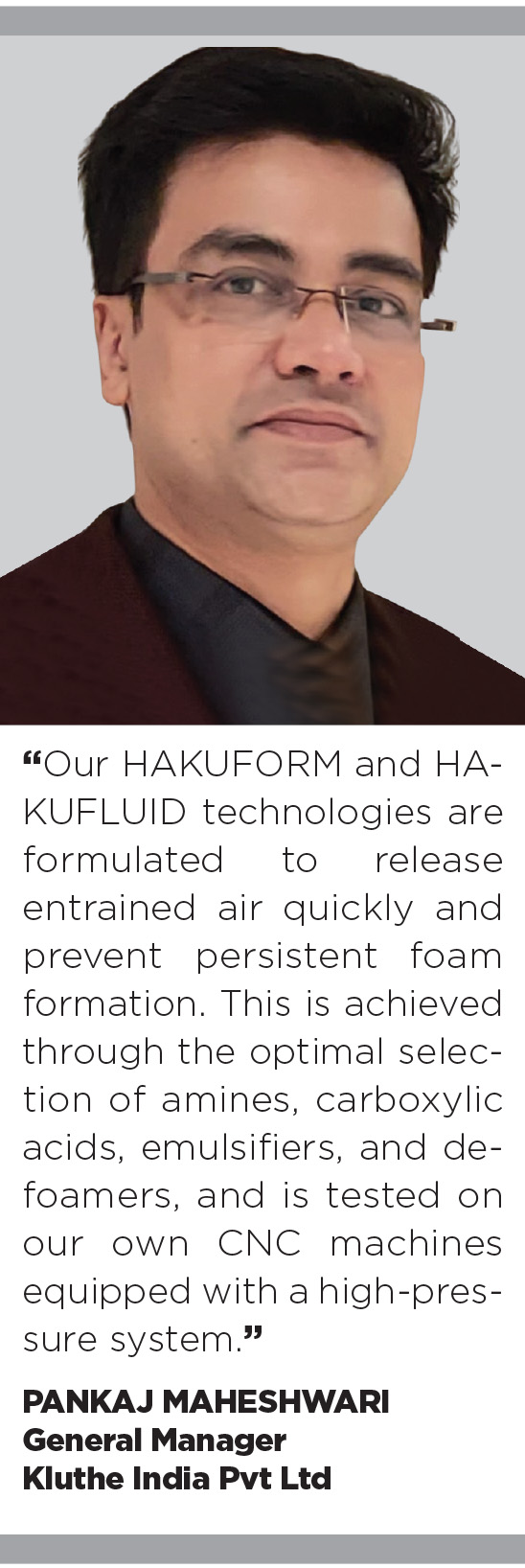
Pankaj Maheshwari, General Manager, Kluthe India Pvt Ltd, shares, “Our HAKUFORM and HAKUFLUID technologies are formulated to release entrained air quickly and prevent persistent foam formation. This is achieved through the optimal selection of amines, carboxylic acids, emulsifiers, and defoamers, and is tested on our own CNC machines equipped with a high-pressure system.”
Stability under extreme pressure requires a holistic approach to machine hardware compatibility. Sandeep Limbekar, Managing Director, STRUB India Pvt Ltd, points out, “At STRUB, we consider metalworking fluid as part of the complete machining system. High anti-foaming stability is important, but so is compatibility with modern tool coatings, guideways, hydraulic systems, and sealing materials.”
For specialized applications such as precision solid carbide tool grinding and gear hobbing, Zavenir Daubert tackles micro-foaming and fluid breakdown alongside chemical risks like cobalt leaching. Mudit Mathur, Senior Product Manager, Zavenir Daubert India Pvt Ltd, explains, “ZET-GRIND TT 200 has been specifically engineered to address cobalt leaching. Built on advanced Gas-to-Liquid (GTL) base oil technology, ZET-GRIND TT 200 delivers low-misting and low-evaporation characteristics. Rapid air-release properties further support foam-
free operation.”
“X-CUT 940 has been specifically engineered for high-speed gear hobbing applications. Built on advanced vegetable ester technology with a high flash point, X-CUT 940 provides outstanding lubricity and efficient heat dissipation,” he adds.
Eliminating Cross-Contamination
A persistent pain on shop floors is cross-contamination between tramp oils, slideway lubricants, metalworking fluids, and industrial parts washers. When these chemistries clash, wash defects, residue accumulation, and premature fluid breakdown occur. To resolve interface friction between sequential production stages, Kluthe advocates for a closed-loop philosophy.
Maheshwari elaborates, “Coolant, slideway lubricant, and cleaner must be chemically and physically compatible in the right way. The key advantage of our 5-C Concept—Cutting, Cleaning, Coating, Conserving, and Waste Management—is that we do not optimize a single product in isolation; we understand the entire manufacturing process. We align the chemistry so that each process step supports the next.”
Industry 4.0 and Cognitive Fluid Management
Fluid monitoring is transitioning from manual, subjective dipstick checks to automated, real-time digital ecosystems. Quaker Houghton has introduced its global digital monitoring technologies locally. Yanini states, “QH FLUID INTELLIGENCE™ provides differentiated value to our customers so they can operate safely, sustainably, and at the optimized total cost of ownership. As a pilot project, we have installed Greenlights® systems at select customer sites. The feedback is clear—customers are looking for zero-human-intervention, Industry 4.0 automation at their sites.”
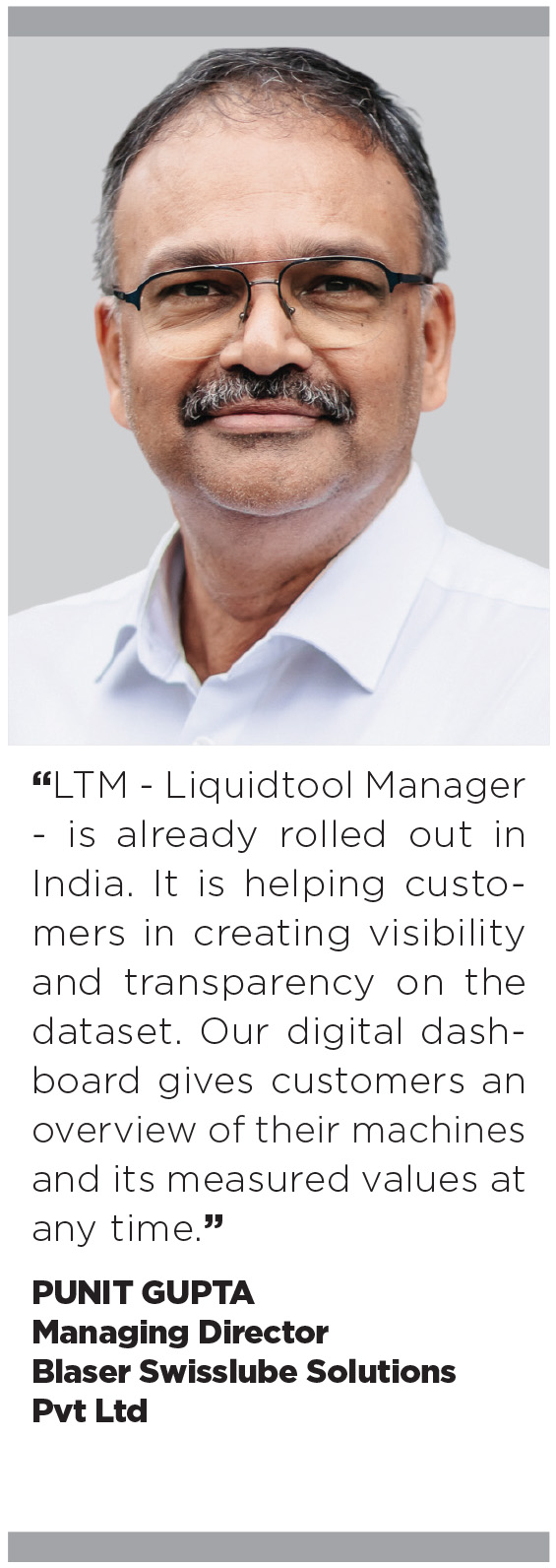
Blaser Swisslube is similarly advancing its digital offerings in India. Gupta highlights, “LTM - Liquidtool Manager - is already rolled out in India. It is helping customers in creating visibility and transparency on the dataset. Our digital dashboard gives customers an overview of their machines and its measured values at any time.”
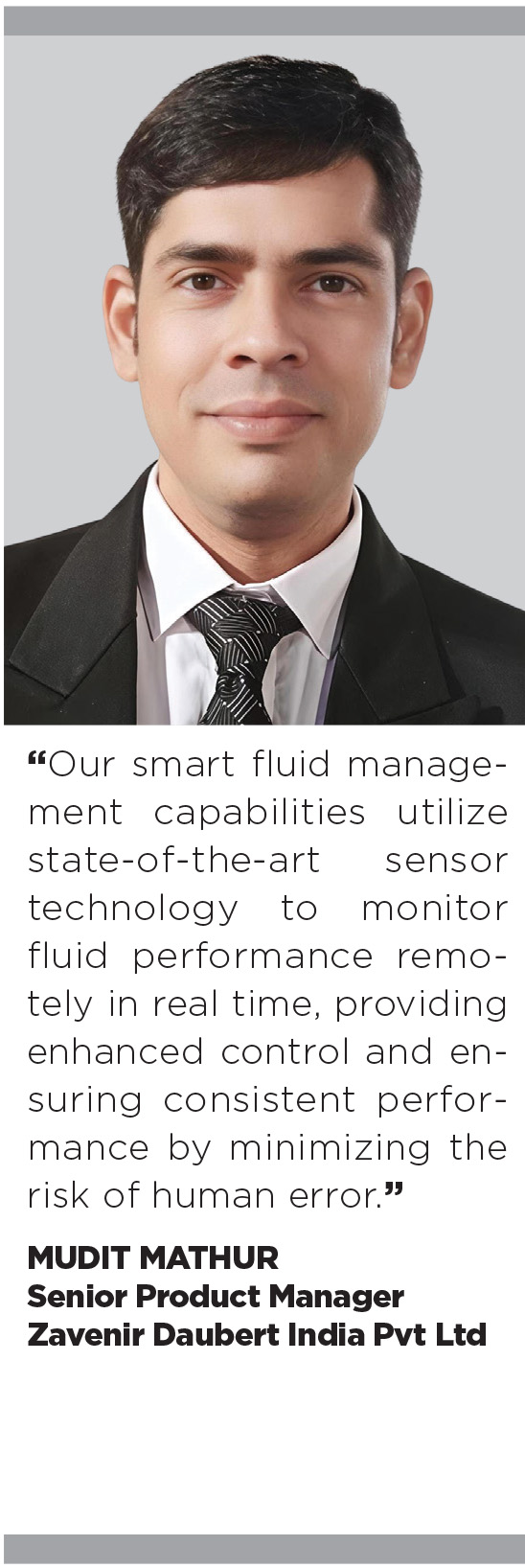
At Zavenir Daubert, fluid chemistry is integrated directly with sensors under that ‘Chemistry 4.0’ vision. Mathur shares, “Our smart fluid management capabilities utilize state-of-the-art sensor technology to monitor fluid performance remotely in real time, providing enhanced control and ensuring consistent performance by minimizing the risk of human error.”
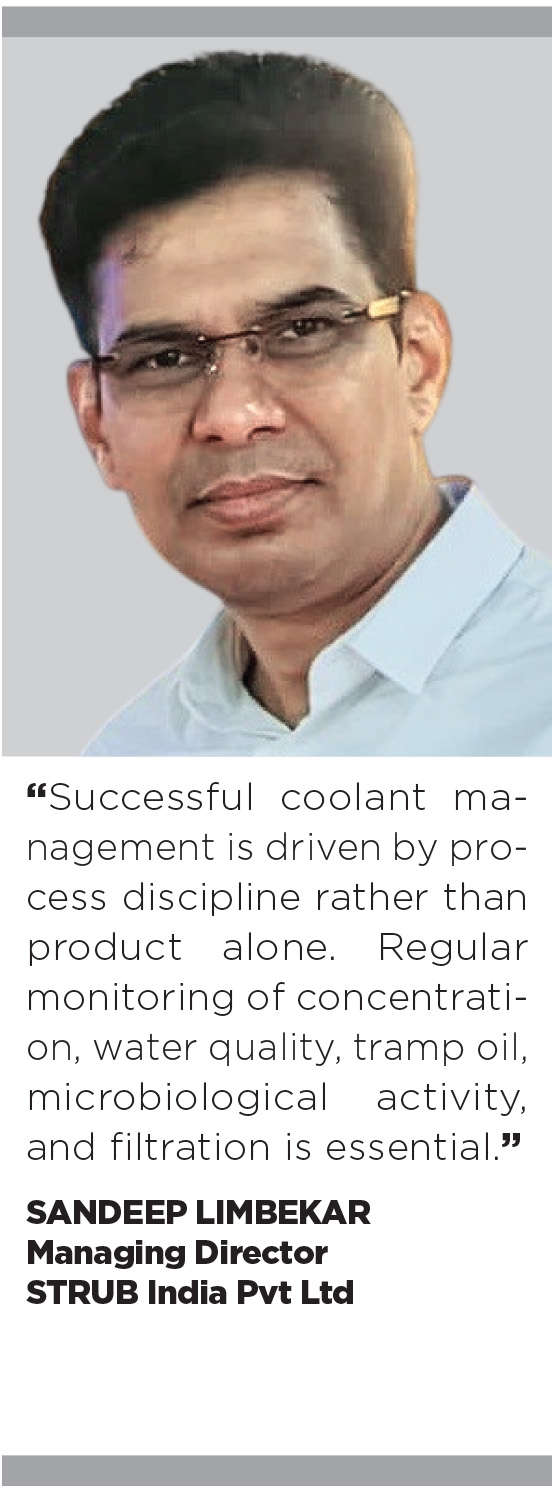
Large-scale operations require rigorous discipline to maintain process consistency. Limbekar, whose team oversees central systems as large as 100,000 liters, remarks, “Successful coolant management is driven by process discipline rather than product alone. Regular monitoring of concentration, water quality, tramp oil, microbiological activity, and filtration is essential.”
Sustainability and Total Cost of Ownership
Environmental standards, regulatory pressures, and operator health considerations are driving manufacturers toward bio-sourced alternatives, hazardous additive phase-outs, and zero-hazard labeling.
Blaser Swisslube’s long-standing bio-concept leverages natural micro-flora instead of harsh chemicals. Taking pride, Gupta shares, “Our Blasocut Bio-Concept, introduced in early 70s promotes a naturally robust microbiological equilibrium that ensures long emulsion life. In fact, one central coolant system in India has run on Blaser technology for over 20 years without a complete fluid change.”
MotulTech’s acquisition of Chem Arrow Corporation and its bio-sourced Green Tech™ range further illustrate this eco-friendly shift. Rajput highlights, “Motul Green Tech™ is built on three pillars: products from renewable raw materials, performance that reduces chemical consumption, and technology that lowers energy costs. MotulTech ChemArrow's proven low- and zero-VOC fin-stamping and tube- bending lubricants are now deployable locally.”
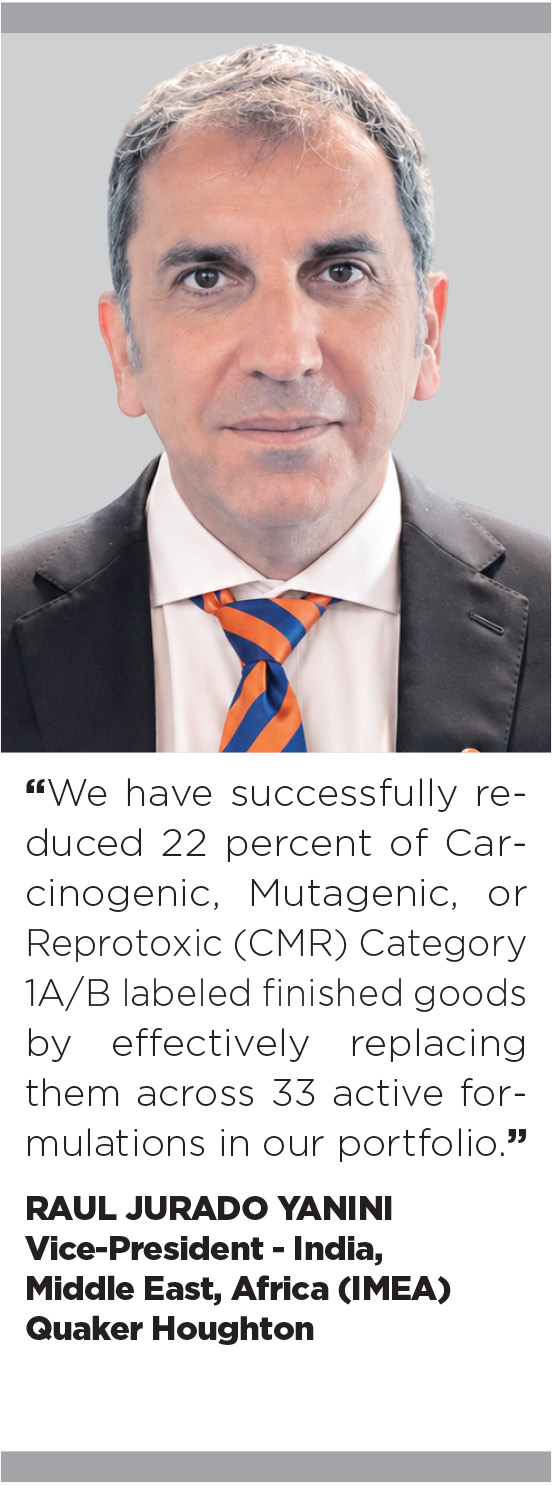
Quaker Houghton actively reduces hazardous substances within its product portfolio through its QH FLUIDCARE™ program. Yanini points out, “We have successfully reduced 22 percent of Carcinogenic, Mutagenic, or Reprotoxic (CMR) Category 1A/B labeled finished goods by effectively replacing them across 33 active formulations in our portfolio.”
Witmans Advanced Fluids aligns its formulations with European health standards. Chakraborty states, “Eliminating legacy chemicals such as secondary amines, boron, formaldehyde-releasing biocides requires advanced formulation expertise and strong ethics. We develop products as per European standards, using carefully selected, safer raw materials, even where such regulations are not mandatory.”
Ultimately, transitioning manufacturers from a ‘lowest cost-per-liter’ mindset to a Total Cost of Ownership (TCO) perspective relies on demonstrated operational efficiency, fluid longevity, and waste reduction.
As Chakraborty sums up, “Too many suppliers push volume regardless of whether it helps or harms the customer. At WAF, we train representatives to speak the truth. We earn entry by solving problems and focusing on productivity, not litres sold.”
Source: Magic Wand Media
 |
SOUMI MITRA |
 Facebook
.png) Twitter
Twitter Linkedin
 Subscribe