
COMPETING ON THE EIGHT DIMENSIONS OF QUALITY
Reji Varghese revisits Harvard professor David Garvin’s landmark framework on the Eight Dimensions of Quality, showing why true manufacturing excellence is about much more than inspections and tolerances, and how companies can create lasting competitive advantage by understanding quality through the customer’s eyes.
Ask ten manufacturing professionals what quality means, and the answers are likely to vary.
A production engineer may define quality as meeting specifications, while a purchase manager may associate it with supplier consistency. Customers often view quality as a product’s ability to perform reliably over time, whereas service engineers may focus on how quickly a machine can be repaired when problems arise.
The reality is that quality is much broader than most of us assume.
In the 1980s, Harvard Business School professor David Garvin challenged the traditional view of quality in his landmark article, ‘Competing on the Eight Dimensions of Quality’. His central argument was simple: quality is not a single characteristic but a combination of different dimensions, each capable of influencing customer satisfaction and competitive advantage.
Four decades later, Garvin’s framework remains highly relevant, particularly for Indian manufacturers serving demanding global markets in automotive, aerospace, electronics and industrial machinery.
Why Quality is Often Misunderstood
Many organizations reduce quality to inspection reports, rejection rates, and compliance audits. These measures matter since no manufacturer wants defective products reaching customers. However, they represent only part of the picture.
Some companies achieve excellent inspection results yet struggle to succeed in the market. Others have products that technically meet specifications but fail to delight customers.
Garvin argued that quality should be viewed from the customer’s perspective rather than purely from the factory floor. Customers judge products across multiple dimensions, not just their conformance to drawings.
Understanding these dimensions helps manufacturers make better strategic decisions and avoid optimizing one aspect of quality while neglecting others.
1. Performance: Does It Do the Job Well?
Performance refers to the primary operating characteristics of a product.
For a CNC machine, performance may be measured by accuracy, cutting speed, and productivity. An aircraft engine’s performance may be judged by thrust, fuel efficiency, and reliability. In the case of a smartphone, it may involve processing speed, battery life, and camera performance.
Customers usually notice performance first because it directly affects productivity and value.
Toyota’s global success was built partly on delivering vehicles that performed consistently well in everyday use and were economical to maintain. In Aerospace, companies such as Boeing and Airbus compete intensely on performance metrics that matter to airlines, like safety, fuel efficiency, and operating costs.
Although performance is often the most visible dimension of quality, it is only one piece of the puzzle.
2. Features: The Extras That Create Differentiation
Features are the additional characteristics that complement core performance. For example, a machine tool manufacturer may offer remote diagnostics, predictive maintenance software, or automated tool management systems. While these features do not determine whether the machine functions, they can significantly enhance customer value.
In today’s manufacturing environment, software has become an increasingly important source of features. The challenge lies in determining which features customers genuinely value. Adding complexity for its own sake rarely creates a competitive advantage.
As many manufacturers have discovered, customers are often willing to pay for useful features but not for unnecessary ones.
3. Reliability: Will It Work Consistently?
Reliability measures the probability that a product will perform without failure over a specified period.
In industries such as Aerospace, Medical Devices, and Automotive Manufacturing, reliability is critical. A machine that produces accurate parts most of the time is far less valuable than one that performs accurately every time.
Japanese manufacturers gained global recognition because they focused relentlessly on reliability. Customers learned that products from companies such as Toyota, Honda, and Canon could be trusted year after year.
Reliability reduces downtime, maintenance costs, and customer frustration. It also builds something far more valuable than product performance alone: trust.
4. Conformance: Does It Meet Specifications?
Conformance is the dimension most engineers immediately associate with quality. It refers to the extent to which a product meets its design specifications and manufacturing standards.
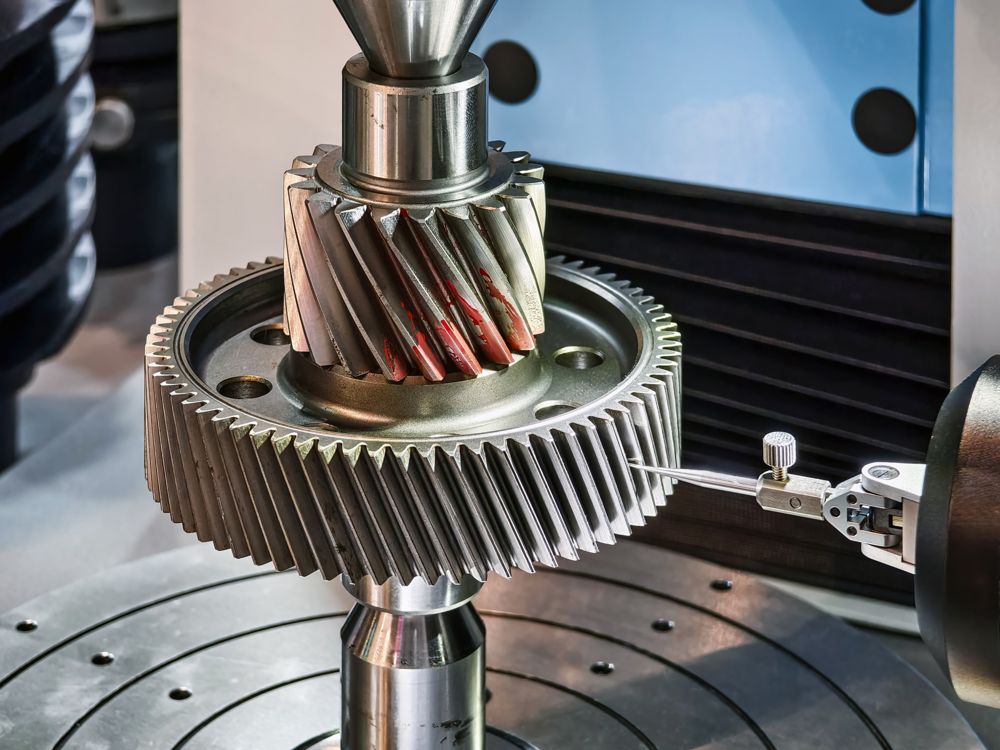
For example, if a drawing calls for a tolerance of ±10 micron, quality requires consistently achieving that tolerance. This is where systems such as ISO 9001, statistical process control, and rigorous inspection procedures play an important role.
Conformance remains essential because poor conformance creates defects, rework, and customer complaints. However, as Garvin cautioned, conformance alone does not guarantee customer satisfaction. A product can perfectly meet specifications and still fail to meet customer expectations.
5. Durability: How Long Will It Last?
Durability reflects the useful life of a product before replacement be-comes necessary.
Customers often evaluate value by comparing initial cost against expected lifespan.
Heavy industrial equipment, aircraft components and automotive powertrain systems are expected to deliver years of dependable service.
Durability can be a significant competitive advantage. Customers frequently remember products that continue working long after competitors’ products have failed. At the same time, manufacturers must balance durability with cost. Overengineering can make products unnecessarily expensive.
The goal is to achieve the durability customers need without adding costs they do not value.
6. Serviceability: What Happens When Something Goes Wrong?
No product is perfect. Eventually, maintenance or repairs may be required.
Serviceability refers to the ease, speed, and effectiveness of servicing a product. This dimension is becoming increasingly important in modern manufacturing.
A customer may forgive an occasional failure if support is fast, competent, and responsive. On the other hand, even a reliable product can create frustration if repairs are difficult and spare parts are unavailable.
Many successful machine tool builders have built strong reputations through their service organizations. Ultimately, customers remember how effectively a company responds when problems arise.
7. Aesthetics: The Emotional Side of Quality
Engineers sometimes underestimate aesthetics since they are inherently subjective.
Yet a product’s appearance, feel, sound, and overall sensory experience can strongly influence customer perceptions of quality.
Consider the difference between two machines with identical technical performance. One looks thoughtfully designed, organized, and professional. The other appears cluttered and unfinished. Although both may perform equally well, most customers will instinctively perceive the first machine as of higher quality.
Apple demonstrated the power of aesthetics on a global scale, but the principle applies equally to industrial products.
Ultimately, aesthetics communicate care, attention to detail, and professionalism.
8. Perceived Quality: Reputation Matters
Perceived quality reflects the customer’s overall impression of a product or company. This perception may be influenced by brand reputation, previous experience, recommendations, and market standing.
In many cases, customers cannot immediately evaluate every technical detail of a product. Instead, they rely on signals that indicate likely quality. This is why reputation is such a valuable business asset. Companies spend years building trust and can lose it remarkably quickly.
For manufacturers entering global markets, perceived quality often determines whether they are invited to participate in major projects.
What This Means for Indian Manufacturing
India’s Manufacturing sector is undergoing a significant transformation. As Indian companies expand their presence in global automotive, aerospace, electronics, and industrial supply chains, customers are evaluating suppliers on far more than price alone. They expect reliability, durability, service support, innovation, and strong quality systems.
Garvin’s framework reminds us that quality is multidimensional. Improving quality requires more than reducing defects. It requires understanding what customers value and delivering excellence across multiple dimensions.
The most successful manufacturers do not simply produce parts within tolerance. They create products that perform well, last longer, inspire confidence, and strengthen customer trust.
The Real Competitive Advantage
W Edwards Deming famously observed that quality should be aimed at the needs of the customer, present and future. Garvin expanded that idea by showing that customer needs are more complex than many organizations realize.
When manufacturers think beyond inspection reports and rejection percentages, quality becomes a strategic tool rather than a compliance requirement. That shift in thinking may be one of the most important lessons modern manufacturing leaders can learn. Because in the end, customers rarely judge quality through a single dimension. They experience it through all eight.
 |
REJI VARGHESE |
 Facebook
.png) Twitter
Twitter Linkedin
 Subscribe