
FROM SHOP FLOOR TO SMART FACTORY
When the manufacturing sector faced increasing pressure from rising raw material costs, intense competition, and operational inefficiencies, Korrocoat Polymers Pvt Ltd chose transformation over stagnation. Rather than treating operational bottlenecks as routine challenges, the company launched a structured initiative rooted in lean manufacturing, digitalization, and employee empowerment.
With over 25 years of expertise in solvent-based and water-based industrial coatings, Korrocoat Polymers serves industries ranging from metal and wood to plastic and concrete. The company also exports to international hospitality chains while maintaining strict quality and environmental commitments.
However, as operations scaled up, several systemic inefficiencies began to surface. There was a heavy dependence on top management for both technical and commercial decisions. Batch holds occurred because shade-matching expertise was limited to a few individuals. Manual data entry slowed down production reporting, while inventory mismatches were frequently observed between physical stock and system records. In addition, delays in the production cycle began affecting delivery timelines.
As a result, traditional management structures were no longer sufficient to support the company’s growing operations. The need for decentralization and digital integration became increasingly evident.
Identifying Structural Gaps
A cross-functional team, comprising Production Heads, R&D, Quality, and Supervisors, initiated a structured diagnostic study using Lean tools and process mapping.
The study revealed several structural gaps within the organization. Knowledge was concentrated in a limited number of individuals, which created dependence and slowed decision-making. There was also a lack of standardized digital tracking across processes. In addition, centralized approvals were causing delays in routine operations.
The team also observed a high workload related to manual documentation. Various forms of operational waste were identified, including waste in motion, waiting, rework, and overprocessing, commonly referred to as TIMWOODS (Transport, Inventory, Motion, Waiting, Overproduction, Over-processing, Defects, and Skills) in Lean practices.
Based on these findings, the company recognized that sustainable improvement would require not only technological integration but also a broader cultural transformation within the organization.
The Strategic Response: Lean, Digital & Human-Centric
The transformation was built around five strategic pillars.
Shop Floor Empowerment
Operators were trained to perform independent shade matching, which removed the earlier dependence on a single expert for this task. Within a few months, five to six operators became self-sufficient in shade matching. As a result, batch holds were eliminated and delivery performance improved significantly.
With this change, decision-making moved closer to the shop floor and the actual production process. This helped improve both the speed of operations and accountability among team members.
Marketing & Commercial Empowerment
The marketing team was trained in several key business and negotiation frameworks. These included Customer Value Proposition, the 4Ps (Product, Price, Place, and Promotion) and 5Cs (Company, Collaborators, Customers, Competition, and Context) frameworks, BATNA (Best Alternative to a Negotiated Agreement) strategies, as well as contribution margin and break-even analysis.
As a result, the team was able to handle negotiations with customers even in the absence of senior leadership, which helped reduce the risk of losing orders.
Digitalization & ERP Integration
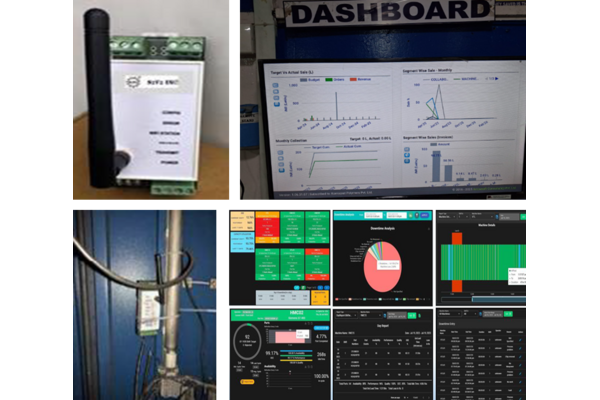
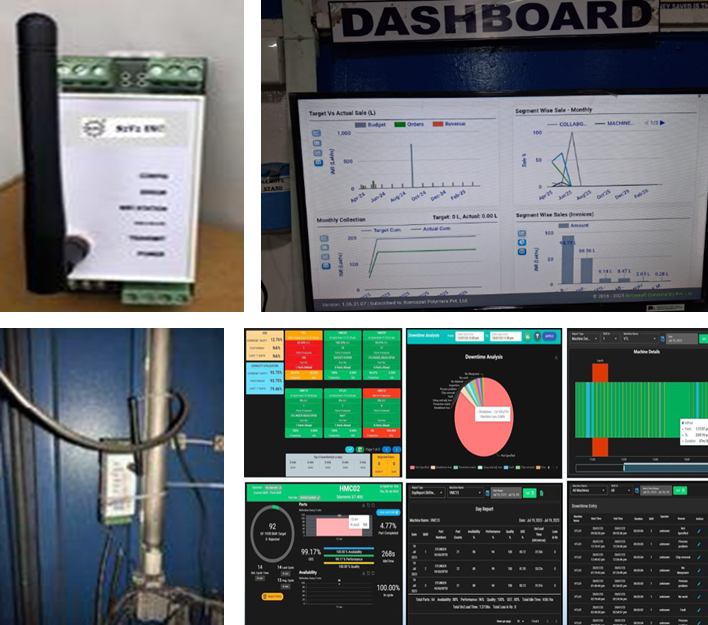
Korrocoat Polymers implemented a robust ERP system that integrated production, inventory, and reporting functions. Digital dashboards enabled real-time analytics and helped managers make faster and more informed decisions.
The digitalization initiative led to several measurable improvements. Batch cycle time was reduced by 20 percent, from 13 hours to 10 hours for a 1000-litre batch. Overall Equipment Effectiveness (OEE) improved from 78 percent to 90 percent. Product defects were reduced by 32 percent, while raw material wastage declined by 15 percent. The company also achieved a 22 percent reduction in energy consumption and an 80 percent reduction in manual documentation work. In addition, inventory accuracy between physical stock and system records improved to 90 percent.
With these changes, digitalization helped the company move from reactive control to a more predictive and data-driven management approach.
Daily Small Improvement (DSI) & Kaizen Culture
The company institutionalized ‘Daily Small Improvement’ initiatives across several operational areas. These included quality improvement, cost reduction, productivity enhancement, delivery performance, safety practices, and environmental impact.
In addition, Korrocoat Polymers introduced daily 10-minute ‘Tea Time Trainings’ to create a continuous learning environment on the shop floor. During these sessions, operators discussed topics such as process optimization, safety awareness, and quality improvement.
This cultural shift helped strengthen employee engagement and encouraged a greater sense of ownership among team members.
Lean Manufacturing Implementation
The company implemented several structured Lean tools to improve operational efficiency. These included 5S (Sort, Set in Order, Shine, Standardize, and Sustain) for workplace organization, Value Stream Mapping (VSM) to analyze process flow, and Standard Work Procedures to ensure consistency in operations.
In addition, it focused on waste elimination by addressing Muda, Mura, and Muri, which are key concepts in Lean practices. Visual management systems were also introduced to improve transparency and monitoring on the shop floor.
Together, these practices helped reduce process variability and strengthened overall operational discipline.
Measurable Business Impact
The transformation delivered results across multiple areas of the business.
Operational Impact: Production throughput increased, while rework and spillage were significantly reduced. The First-Time-Right rate improved from 80 percent to 96 percent. In addition, self-delivery performance improved by 10 percent.
Financial Impact: The improvements also led to a stronger operating cash cycle. Material wastage costs were reduced, and profitability increased as waste was systematically eliminated through Lean practices.
Competitive Positioning: Despite being a small-scale enterprise, Korrocoat Polymers competes product-wise with major industry players such as Asian Paints, Berger Paints, Kansai Nerolac Paints, and JSW Paints.
Lean-driven cost optimization, combined with a strong ‘WOW factor’ approach to customer experience, has enabled the company to steadily expand its customer base year after year.
Environmental & Social Responsibility
The initiative extended beyond financial performance. The company reduced energy consumption by 22 percent, while waste reduction helped lower its overall environmental footprint.
At the same time, vendor relationships were strengthened through consistent and timely payments. Employee satisfaction also improved, as reflected in the Q12 engagement metrics. The company also maintained a CMR-3 rating with its bankers, indicating strong financial discipline and credibility.
Throughout the transformation journey, the philosophy of Zero Defect Zero Effect Scheme (ZED) guided every step.
The Kaizen Spirit: A Culture of Ownership
Beyond systems and software, the project reinforced several important organizational learnings. The company recognized that empowered employees play a key role in driving productivity. It also emphasized that while digital tools are important, they are meant to enhance human intelligence rather than replace it.
The transformation also showed that decentralization helps accelerate decision-making, while standardization makes processes scalable. At the same time, a culture of continuous improvement helps organizations remain resilient in changing market conditions.
Overall, what began as an efficiency improvement initiative gradually evolved into a full-scale cultural transformation.
Building a Future-Ready Organization
In an era where manufacturing competitiveness depends on agility and data-driven decision-making, Korrocoat Polymers has demonstrated that even mid-scale industries can achieve world-class operational excellence.
By combining Lean principles, digitalization, and employee empowerment, the company was able to turn operational challenges into strategic advantages. This integrated approach strengthened both efficiency and long-term competitiveness.
The journey highlights an important lesson: sustainable growth is possible when technology, process discipline, and people empowerment move together in alignment.
Source: Korrocoat Polymers Pvt Ltd
 |
YOGESH RASANE |
 Facebook
.png) Twitter
Twitter Linkedin
 Subscribe