
WHY WORKFORCE LEARNING NEEDS A RESET
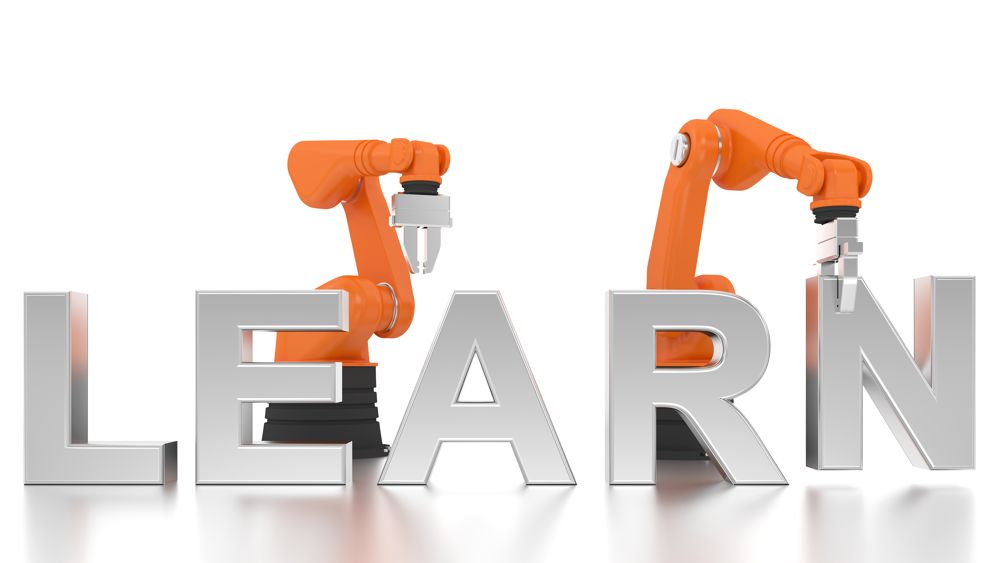
As manufacturing rapidly adopts AI, robotics, and automation, the skills required of its workforce are changing too. This makes continuous, relevant, and work-focused learning increasingly important to help employees adapt to the technologies shaping the future of manufacturing.
A new era of technology adaptation is emerging within the manufacturing industry. Artificial intelligence, robotics, automation, and other related innovations are changing the way factories work, the way decisions are made, and even the way workers operate in production spaces. However, along with accelerated investments in technology, a deeper question arises – is the current workforce equally prepared to adapt to change?
While introducing any new technology is a challenge for manufacturers, the major issue is to ensure that workers have the necessary skills and willingness to work with the technology effectively. An entirely automated production process requires workers who can analyze the information gathered, address emerging issues, and make decisions.
It is here that the approach to workforce learning needs to be reconsidered. Traditional approaches based on specific courses, occasional seminars, and standard content do not always prove effective in constantly changing circumstances.
The Skills Gap is Evolving into a Dynamic Issue
Manufacturing has never been a homogeneous industry. People have always worked across various roles, functions, machines, processes, and levels of experience. The deployment of AI technologies adds yet another aspect of heterogeneity, since people’s skill requirements may change as technologies get integrated into daily operations.
A person who is working with an automated process may require a totally different set of competencies than someone who works on interpreting the data produced by connected devices. At the same time, a manager may be aware of the principles of using AI for decision-making, while engineers and data analysts may have a deeper understanding of the technology.
That means that assessing skills gap cannot be done once a year.
Companies should have a clearer view of where their capabilities are, where the gaps are, and what kinds of skills will become essential as technology adoption continues. Assessing skills, analyzing performance data, and mapping skills to roles will help companies go beyond assumptions about the capabilities of their workforces.
The goal is not to find out what people do not know, but to understand what competencies are needed for the next tasks.
Moving Beyond One-Size-Fits-All Training
Traditionally, corporate training has been based on an underlying belief that employees in a certain role share similar training requirements. This belief becomes harder to sustain as manufacturing jobs become more technology-based.
Imagine two workers who work at the same production facility, one of whom has several years of experience working with a certain machine, while the other is new to the job and is still learning the basics. Providing training to both workers through the same learning program might meet the requirement, but not their individual needs.
A more practical approach would be to personalize learning based on employees’ roles, current skills, and future needs.
It doesn’t mean creating a unique program for each worker individually, but it means analyzing existing information about workers and figuring out where to start and what should be learned next.
Learning Has to Move Closer to the Work
The one constraint that is really hard to address in manufacturing is time. The production schedule does not always allow for long learning classes or training courses. Employees must learn how to do things without having a big impact on the process. That is why the integration of learning into the workflow becomes so crucial.
Organizations no longer treat learning as something that occurs separately from employees’ work. Organizations can use short learning interventions that can be integrated into the workflow. Different digital modules, simulations, assessments, contextually relevant resources, and help available on demand could assist employees with particular skills or knowledge whenever necessary.
If a new machine, process, or digital tool is introduced, it would not be necessary to wait until the next training session. Learning could be offered along with the implementation process.
It is also a recognition of the truth about modern manufacturing: learning doesn’t end when the course finishes. Processes change; learning needs also change.
Learning Measurement Through Business Metrics
Another area that needs resetting is the approach that organizations take toward measuring learning.
Completion rate, attendance, and results can provide meaningful insights, but they do not always reflect whether the learning led to improved performance on the shop floor or alignment with business goals.
Organizations should start linking their capabilities to performance.
Depending on the function, what needs to be measured through performance metrics may include productivity, quality, safety, downtime, compliance with processes, or technology adoption. Metrics are different for different companies, but the idea is always the same – learning should lead to improved performance, not just increased completion rates.
AI will help identify patterns within learning and workforce data, which will make it easier to assess whether enhancement in capabilities have translated into improvements in operations and to see what else needs to be done to achieve the desired results.
This is likely to redefine the role of the L&D function. It will no longer be a support function delivering training programs, but rather a strategic partner in the workforce transformation journey.
Building a Workforce That Can Adapt
There won’t be any solution to the manufacturing skills challenge through one-off reskilling programs. The world of technology is constantly changing, and so are the systems that support it.
So, the more realistic option would be to create a culture of continuous capability building.
Manufacturing companies will have to hire workers capable of operating in a new reality, learning new systems, and working alongside emerging technologies. At the same time, they will still have to develop skills among their workers such as critical thinking, problem-solving, decision-making, and collaboration.
This way, instead of training people to use a particular technology, manufacturing leaders will have to build a flexible workforce able to work with different technologies.
Therefore, there is an important paradigm shift that manufacturing leaders will have to make in terms of AI adoption. It shouldn’t be considered solely from the point of view of the machinery, software, or automation that needs to be invested in, but also from the perspective of whether people will be ready to work with all these tools.
The next steps in manufacturing transformation will thus require manufacturing organizations to reconsider the whole process of learning, making it continuous, relevant to the particular job and directly connected to business outcomes. Learning may thus become an enabler of sustainable development when it is seen as part of the technology strategy.
 |
SAMEER NIGAM |
 Facebook
.png) Twitter
 Linkedin
 Subscribe