
IMTEX FORMING 2026: BRINGING NEW-AGE METAL FORMING TECHNOLOGIES
Metal forming is undergoing a major transformation as industries demand higher precision, faster production, and greater design freedom. This shift is being driven by the rise of automation, digital integration, and new-age manufacturing technologies. IMTEX FORMING 2026 aims to showcase this transition and celebrate human ingenuity and machine intelligence.
Artificial intelligence (AI) is now enhancing the art and science of metal forming, improving precision, consistency, and speed in every operation across the shop floor. At the same time, additive manufacturing and hybrid manufacturing are also gaining ground, enabling manufacturers to shape metal, create complex geometries, and combine subtractive and additive techniques in a single workflow.
Rise in Demand, Rise in Expectations
Although metal forming currently accounts for 29 percent of the Indian machine tool market, the segment is expected to grow in the coming years. In FY25, consumption of metal forming machine tools was INR 9,139 crore, with production valued at INR 2,696 crore. Overall, metal forming machine tool exports increased by approximately 6 percent year-over-year. Among the exports, presses topped the list, followed by press brakes, bending machines, and shearing machines. Industries’ expectations are rising, driven by the demand for quality and volume. A shift from traditional machines to fully automated ones with digitally integrated systems is thus inevitable.
Technologies in Transition
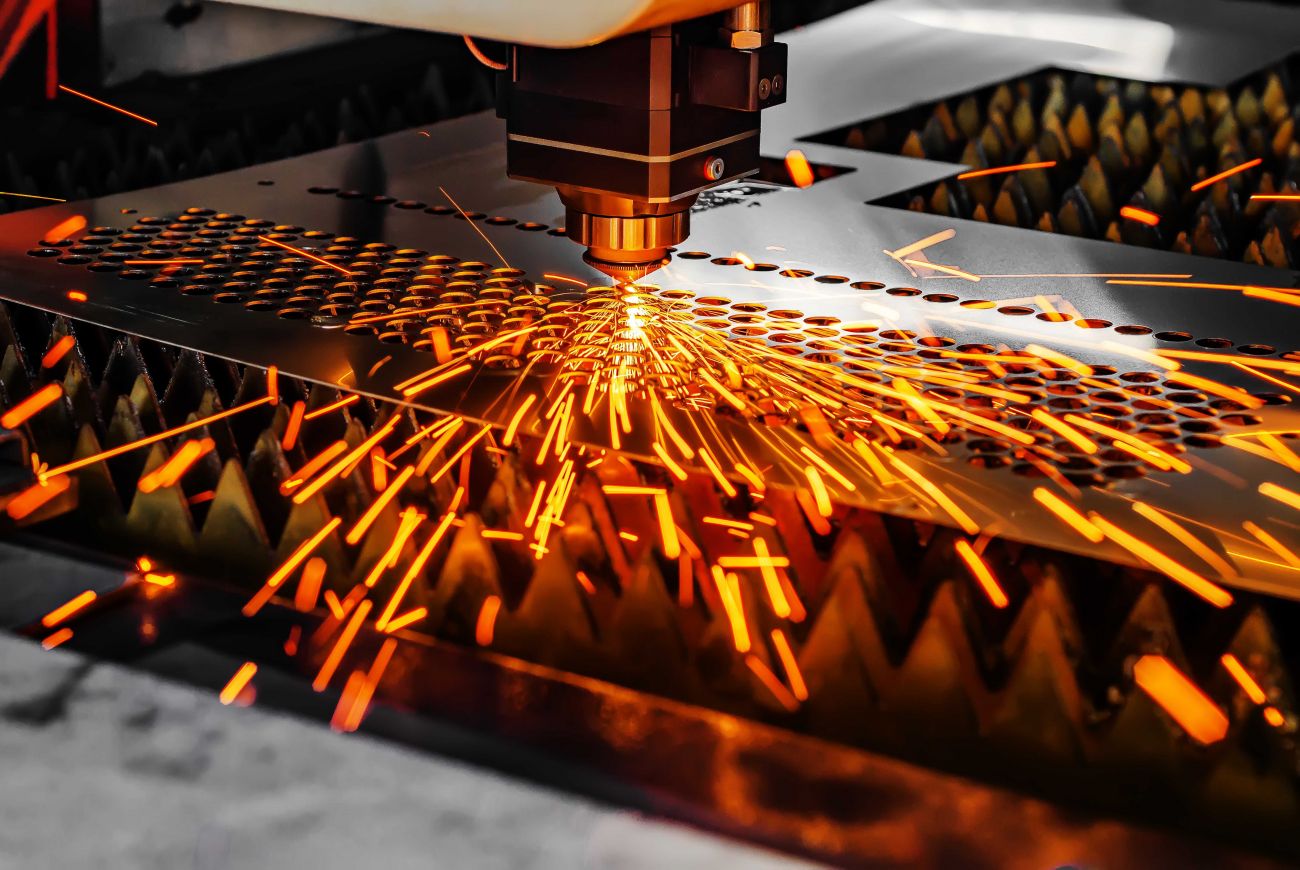
The evolution of technology in the Metal Forming sector is far from rudimentary today, with advanced processes now shaping metal into precise, high-value products. Sheet metal forming, stamping dies, press brakes, CNC punch presses, and laser waterjet cutting are gaining increasing acceptance. Newer techniques like hot stamping, hydroforming, flow forming, and electromagnetic forming are gaining popularity. On the heavier manufacturing side, bulk forming technologies such as forging, casting, extrusion, and pressure die casting play a crucial role in shaping critical metal components.
|
Although metal forming currently accounts for 29% of the Indian machine tool market, the segment is expected to grow in the coming years. In FY25, consumption of metal forming machine tools was INR 9,139 crore, with production valued at INR 2,696 crore. |
Factors Driving This Transformation
Self-reliance in Aerospace, Defence, and other sectors is leading to a shift from globalization to localization. Many small and medium-sized enterprises (SMEs) are manufacturing drones, missile navigation systems, and related products. A preference for premium, high-performance products, government incentives for technology adoption, and an industry-wide move from lower-end to premium and exotic offerings also support this transition.
There is also a growing focus on lightweighting and safety in Automotive, Aerospace, and Railway sectors. The rising adoption of electric vehicles, the push to reduce carbon footprints, and the promotion of a circular economy are other factors. Overall, the Indian market is willing to pay for quality, reliability, convenience, and prestige.
IMTEX FORMING 2026
The transformation in metal forming manufacturing will be on full display at IMTEX FORMING, Asia’s largest exhibition on metal forming and manufacturing technologies, scheduled from January 21-25, 2026, at Bangalore International Exhibition Centre (BIEC) in Bengaluru.
Organized by Indian Machine Tool Manufacturers’ Association (IMTMA), IMTEX FORMING 2026 will host exhibitors from 22 countries across four exhibition halls, covering 46,000 sq mt of exhibition space. Germany, Italy, Japan, and Taiwan will have dedicated country pavilions. Tooltech, Digital Manufacturing, and WeldExpo will run concurrently, alongside key knowledge events such as the International Seminar on Forming Technology, i2 Academia Square, and the Jagruti–IMTMA Youth Programme.
IMTMA anticipates approximately 50,000 visitors from diverse manufacturing industries to attend IMTEX FORMING 2026 and celebrate human ingenuity and machine intelligence.
Source: IMTMA
 Facebook
.png) Twitter
Twitter Linkedin
 Subscribe