


DECODING DIGITIZATION
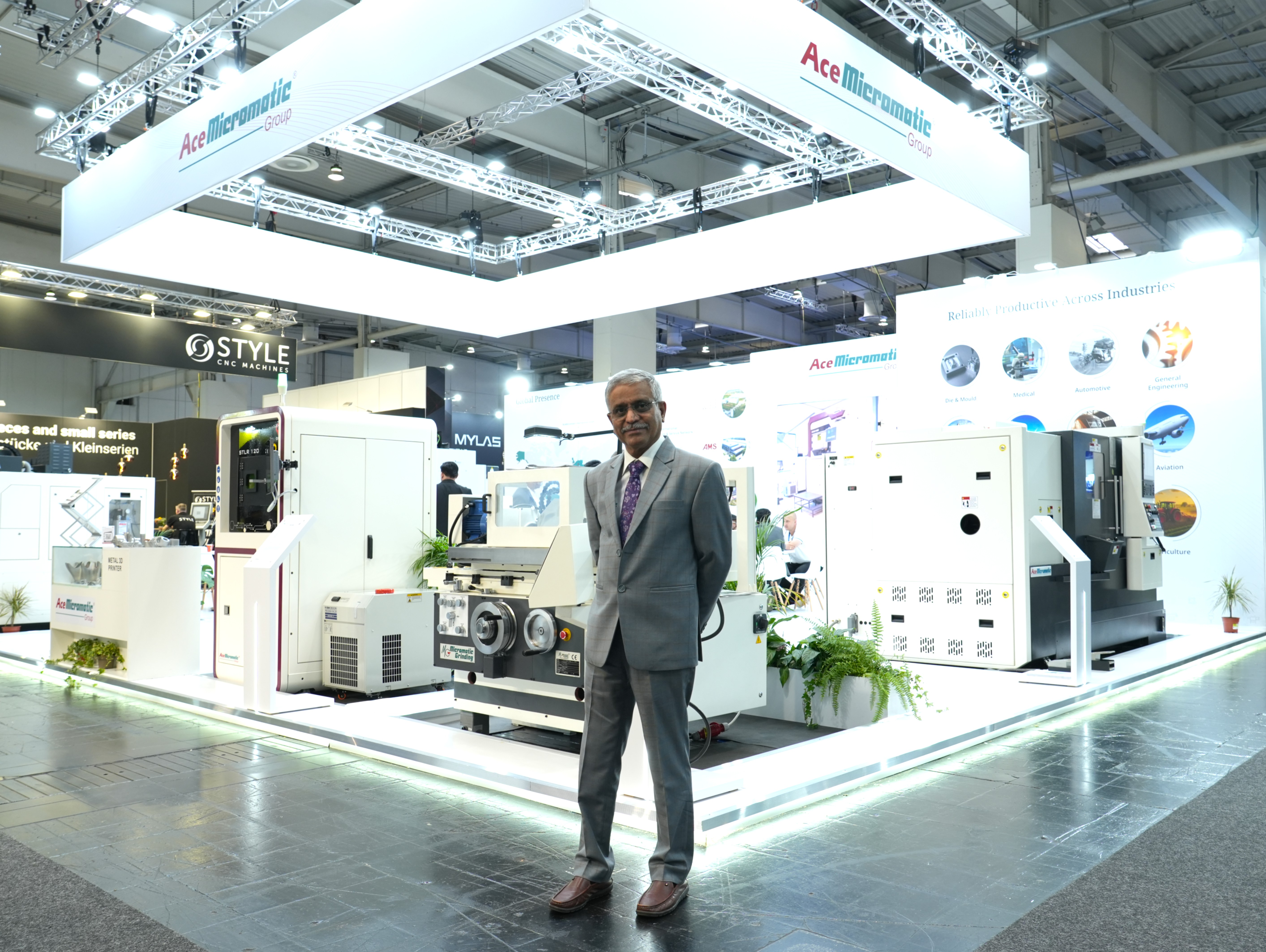
ACE Designers, a part of India’s largest machine tool conglomerate, AceMicromatic Group, made a notable impression at the recently concluded EMO Hannover 2025. With a sense of pride and clarity about the future, the company brought a distinct Indian presence to the event.
One of the core themes of EMO Hannover 2025 was digitization, which continues to influence every stage of manufacturing at Ace Designers Ltd and is viewed as essential for future growth by company Managing Director, TK Ramesh.
He notes that manufacturers often think of metal cutting and part output while discussing modern productivity. This kind of digitization has its focus on the speed of the machine, the number of parts it produces, and how productive both the machine and operator are.
Predictive Maintenance Gains Momentum
A second form of digitization, he says, is based on machine reliability. He explains that machines run for different hours and at different temperatures, and digital tools can help predict issues before failure occurs. “Digitization can play a crucial role in predicting before the machine fails. It can indicate when oil or lubrication needs to be changed. Such planning prevents breakdowns that could take two or three days to fix,” he adds.
CNC Programming Enabling Complex Shapes
A third stage of digitization appears in CNC technology. The Managing Director notes that earlier the production depended heavily on a person’s skill, but programming now enables complex shapes to be produced efficiently. He describes this shift as “computer programming or digitized programming becoming central to machining”.
Factory-Level Data Supporting Smarter Decisions
According to Ramesh, digitization becomes even more powerful when applied to an entire factory. It helps track the number of parts produced in a cell, people working during a specific period, and how efficiently materials are being used. He adds that with layered data, digitization can help predict future requirements.
|
With a strong focus on digitization, Ace Designers Ltd presented its next-generation lineup, including its advanced multi-axis machines, at EMO Hannover 2025 |
Manufacturers can use the available information to estimate material needs and determine the number of machines a company will need or whether the cycle time can be reduced without adding new machines.
A Changing Landscape at EMO 2025
Reflecting on EMO Hannover 2025, he observes a noticeable shift from earlier editions. Much of the momentum, he notes, came from outside Europe, with several new projects emerging from outside the region—even as strong interest continued from traditional markets such as Germany and Italy. The experience gained from past editions, he adds, helped the company arrive significantly better prepared this year.
At the show, the company presented its next-generation lineup, including advanced multi-axis machines. Ramesh points out that the organization’s readiness to introduce automation solutions to the European market was significantly stronger in this edition of the show.
India’s Stronger Global Footprint
He highlights the sharp rise in participation from Indian machine tool companies at EMO Hannover 2025. The event offered opportunities to reconnect with long-standing customers while engaging with prospective Indian clients exploring global technologies.
He points to the surge in non-European attendees, adding that India remains “the only place where manufacturing is truly growing”—a momentum that strengthens the country’s position in the global industrial landscape.
Speaking of partnerships, he shares that companies in India and Europe recognize shared benefits in technology, cost, and market opportunities. These efforts, he adds, will likely lead to tangible results.
 |
NITYASREE KUMARASWAMY |
 Facebook
.png) Twitter
Twitter Linkedin
 Subscribe