
LOCALIZING TURBOPROP AVIATION IN INDIA
India’s regional aviation landscape is expanding rapidly, driven by policy initiatives and rising demand for connectivity across smaller cities. However, domestic capability to support aircraft operations, maintenance, and production in the turboprop segment remains limited. Hyderabad-based Flamingo Aerospace aims to bridge this gap by building a self-reliant aviation ecosystem in India.
When Flamingo Aerospace looked at the Indian aviation landscape, the structural gap was very clear. Demand is growing in the 60–70-seat turboprop segment, especially across Tier-II and Tier-III cities, but indigenous capability to support that demand sustainably remains limited. “Under the Government’s regional connectivity push through UDAN, many shorter and underserved routes have opened,” outlines Subhakar Pappula, Founder & CEO, Flamingo Aerospace. “However, domestic manufacturing, assembly, and lifecycle support for aircraft operating in this segment remain underdeveloped.”
Flamingo Aerospace was never conceived as just an aircraft acquisition company. “From day one, our vision has been to build an integrated aviation ecosystem in India,” shares Subhakar. That includes operations support, Maintenance, Repair, and Overhaul (MRO) capability, and a long-term ambition of manufacturing and localization. This broader strategy is reflected in the company’s agreement at Wings India 2026, Asia’s largest civil aviation event, held from January 28–31, at Begumpet Airport in Hyderabad. “It is not simply about flying aircraft,” he stresses. “It is about building capability aligned with ‘Make in India’ and ‘Aatmanirbhar Bharat’ objectives.”
Building Credibility
Aerospace is one of the most capital-intensive and compliance-driven industries in the world. Every conversation, whether with regulators or OEMs, requires deep technical and financial credibility. “One of the early defining moments for us was engaging with United Aircraft Corporation,” Subhakar notes. “Before any agreement is signed, there is extensive due diligence, technical alignment, and long-term industrial planning. Establishing credibility with a global OEM is a significant milestone for a young company.”
Another critical aspect is regulatory alignment. Introducing a new aircraft type in India requires close coordination with the Directorate General of Civil Aviation and adherence to certification pathways. “Even before deliveries begin, planning for induction, training, maintenance capability, and operational readiness must be mapped out in detail,” he explains. “In aerospace, there are no shortcuts. Every milestone is earned.”
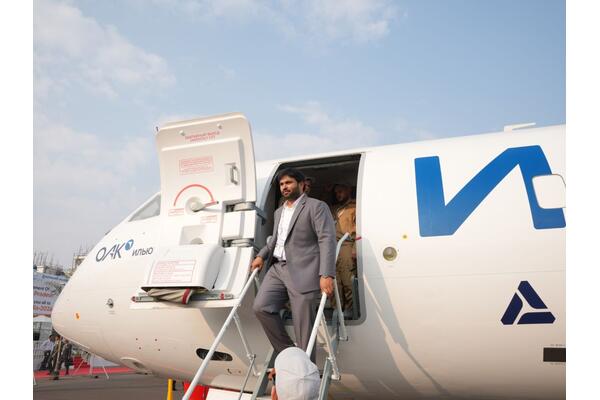
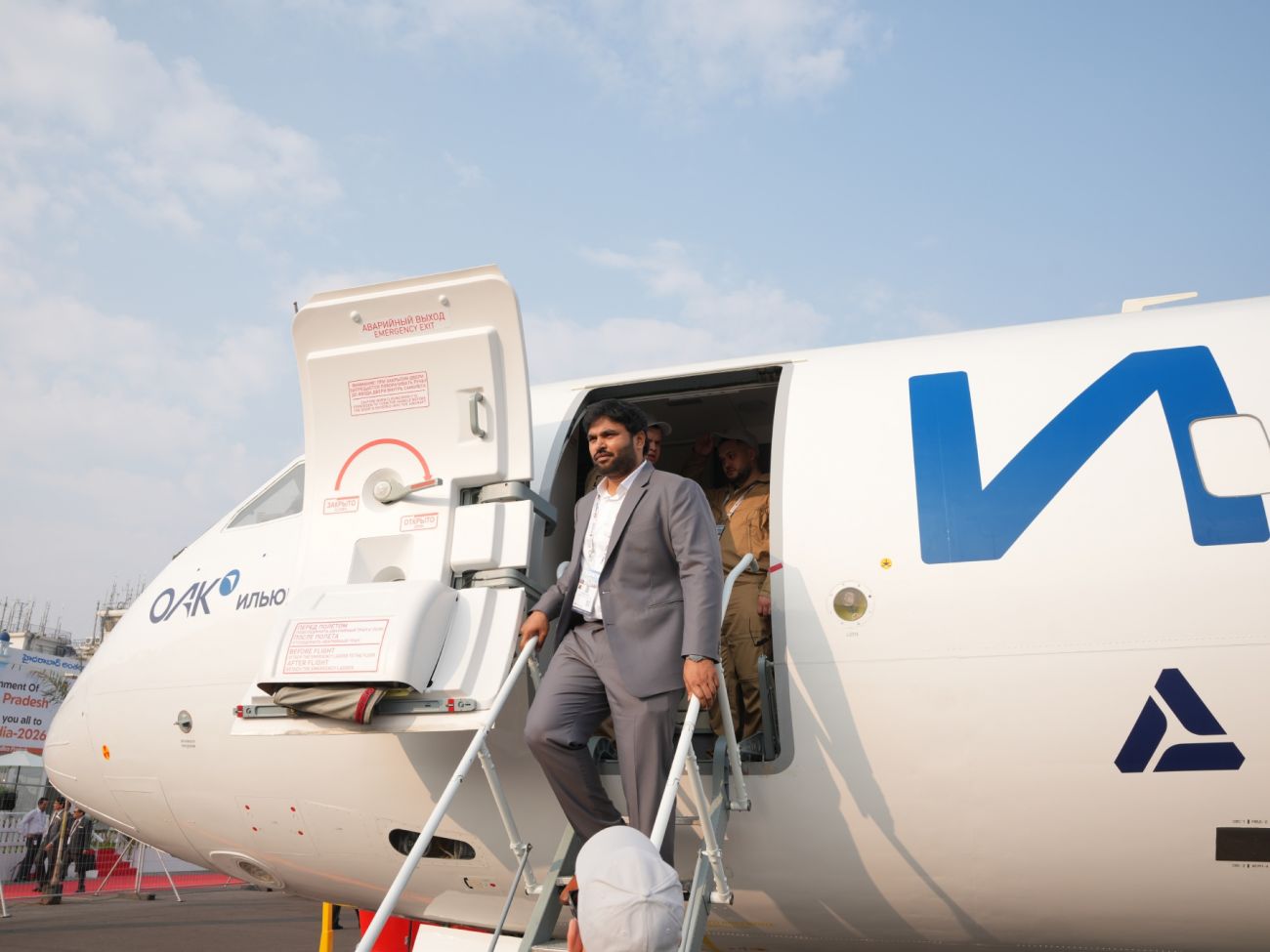
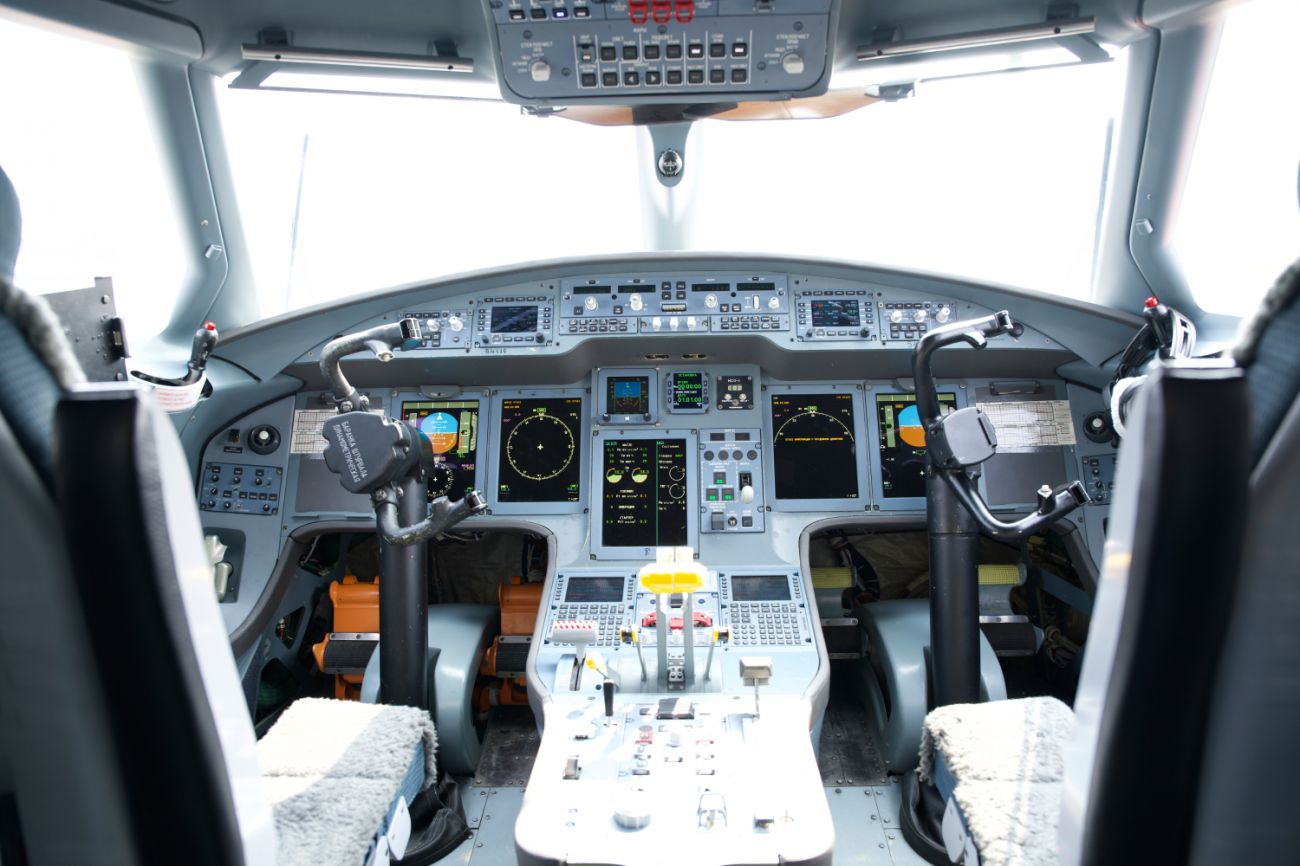
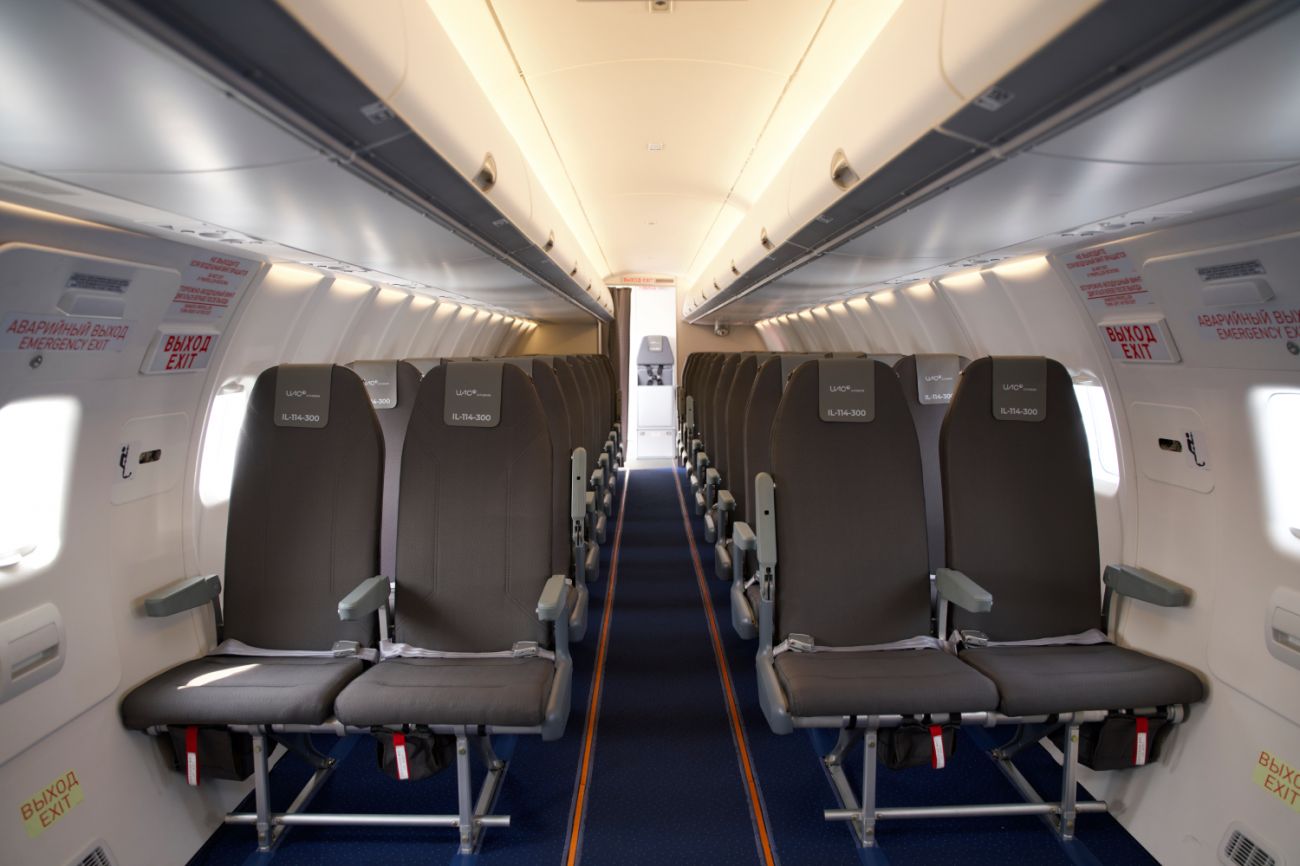
At Wings India 2026, Flamingo Aerospace signed a landmark agreement with United Aircraft Corporation for six Ilyushin IL-114-300 aircraft, with deliveries scheduled from 2028. The IL-114-300 precisely fits into the 60–70-seat category required for India’s regional connectivity ecosystem. Designed for short- to medium-haul operations, it also has the operational flexibility to serve smaller or less developed airfields, which is critical for many emerging regional routes.
|
Flamingo Aerospace signed an agreement with United Aircraft Corporation for six Ilyushin IL-114-300 turboprop aircraft with deliveries from 2028. The partnership includes a phased roadmap for technology transfer, localization, and final aircraft assembly in India by 2030. |
“However, the decision was not based solely on operational performance. It was also about industrial strategy. The program includes a phased roadmap for technology transfer and eventual localization,” explains Subhakar. “That makes this partnership fundamentally different from a pure aircraft purchase. It aligns with our ambition to build capability within India rather than remaining dependent on imports.”
Beyond Aircraft Acquisition
A licensing and technology transfer arrangement signals long-term industrial trust. It means the partnership goes beyond operating aircraft to progressively building assembly and possibly component manufacturing capability in India. In aerospace, licensed assembly rights are not granted lightly. They require evaluation of industrial infrastructure, quality systems, compliance standards, and long-term commitment. “Our roadmap for phased localization and final assembly by 2029 reflects a structured partnership rather than a transactional sale,” Subhakar points out. This transition positions Flamingo Aerospace as a future integrator within the aerospace value chain.
The next two years are foundational as the company prepares for committed deliveries and eventual final assembly. “First, regulatory and certification planning for the induction of the IL-114-300 into Indian operations must be completed in coordination with aviation authorities,” he elaborates. “Second, we are working on developing initial MRO capability within India so that lifecycle support is integrated from the outset. Third, groundwork for supplier identification and qualification is essential for phased localization.”
Aerospace supply chains require rigorous standards, and early ecosystem development is critical. “Fourth, workforce development and technical training aligned with technology transfer provisions will determine how smoothly we transition from operations to assembly,” he adds. “These milestones are interconnected. Progress in one area reinforces progress in the others.”
Economics of Regional Connectivity
|
Flamingo Aerospace’s near-term roadmap includes regulatory certification planning with the Directorate General of Civil Aviation, along with supplier identification and technical workforce training to prepare for future aircraft assembly and localization. |
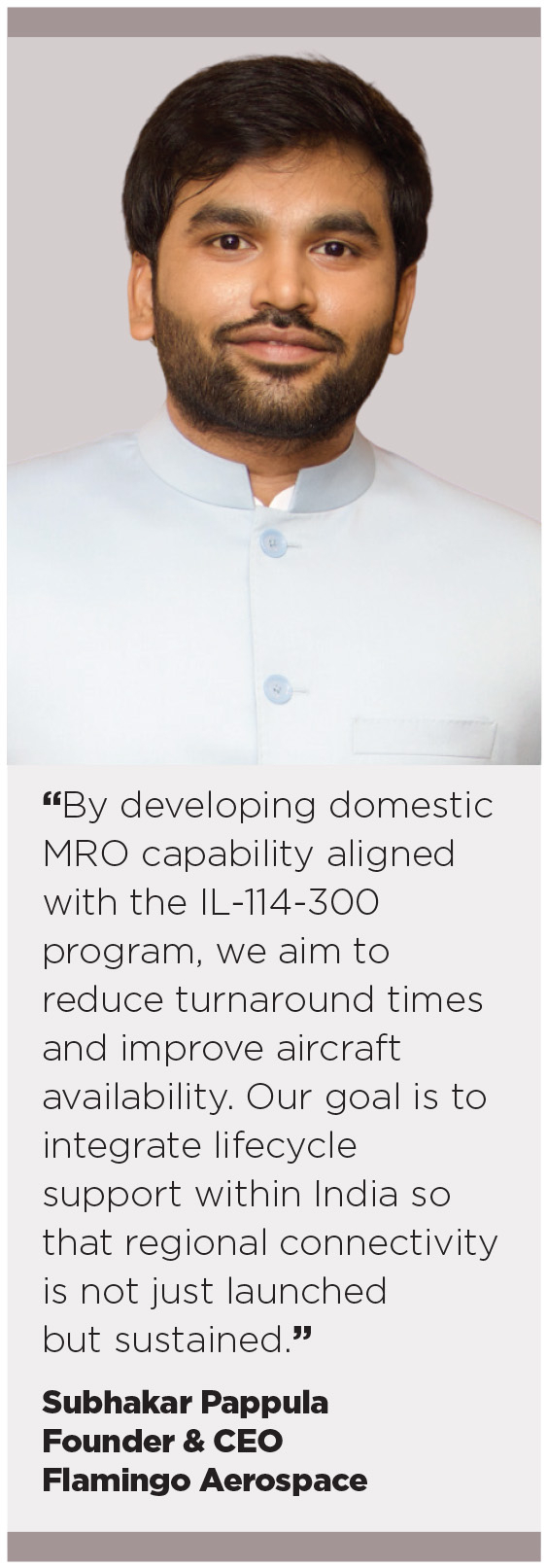
In India, MRO costs have historically been high because many aircraft types rely on overseas maintenance facilities. This increases ferry costs, downtime, and foreign exchange outflows. “By developing domestic MRO capability aligned with the IL-114-300 program, we aim to reduce turnaround times and improve aircraft availability,” says Subhakar.
For regional airlines operating in smaller cities, aircraft utilization rates are critical. Higher aircraft availability and faster maintenance cycles directly support route economics. “Our goal is to integrate lifecycle support within India so that regional connectivity is not just launched but sustained,” he adds.
The Road to Aerospace Capability

 Aerospace manufacturing requires precision machining, composite manufacturing capability, strict traceability systems, and globally benchmarked quality standards. Such capabilities cannot be built overnight.
“Our phased localization roadmap acknowledges that capability development is a journey,” Subhakar notes. “We believe India has a strong engineering base and a growing advanced manufacturing sector.”
The key is structured collaboration, skill development, and adherence to certification standards. Rather than assuming immediate readiness at scale, Flamingo Aerospace is approaching this through phased capability development aligned with the 2030 assembly objective. “If we execute our roadmap as planned, I would like Flamingo Aerospace to be recognized as a company that has positioned India as a regional assembly and lifecycle support hub for turboprop aircraft in the 60–70-seat category,” he says.
Beyond aircraft, the real contribution would lie in ecosystem development—skill development, strengthening supplier networks, reducing import dependence, and integrating into the global aerospace value chain. “Aatmanirbhar Bharat is not about isolation,” Subhakar concludes. “It is about building competitive capability. That is the journey we have embarked on.”
 |
Sovan Tudu |
 Facebook
.png) Twitter
Twitter Linkedin
 Subscribe