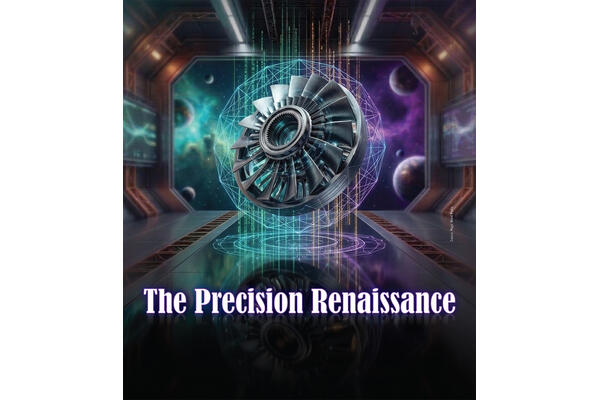

The Precision Renaissance

The Indian die and mold industry in 2026 stands at a historic crossroads. For decades, the narrative surrounding Indian machine tool manufacturing was one of roughing versus finishing. Domestic machines were often relegated to the heavy, initial removal of material, while the micron-perfect, high-aesthetic finishing work was reserved for expensive imports from other countries.
Driven by the ‘Aatmanirbhar Bharat’ (Self-Reliant India) mission and a strategic pivot from a brand-heavy to a performance-first mindset, Indian toolrooms are now competing on global terms. The conversation has shifted from mere machine acquisition to total application engineering.
Today, the focus is on the Reliability-Value-Knowledge Triangle—a new cornerstone where indigenous engineering, real-time metrology, and sophisticated CAM software converge to create a manufacturing ecosystem that is not just a cost-effective alternative, but also a preferred global partner for high-precision engineering.
Democratization of the 5-Axis Frontier
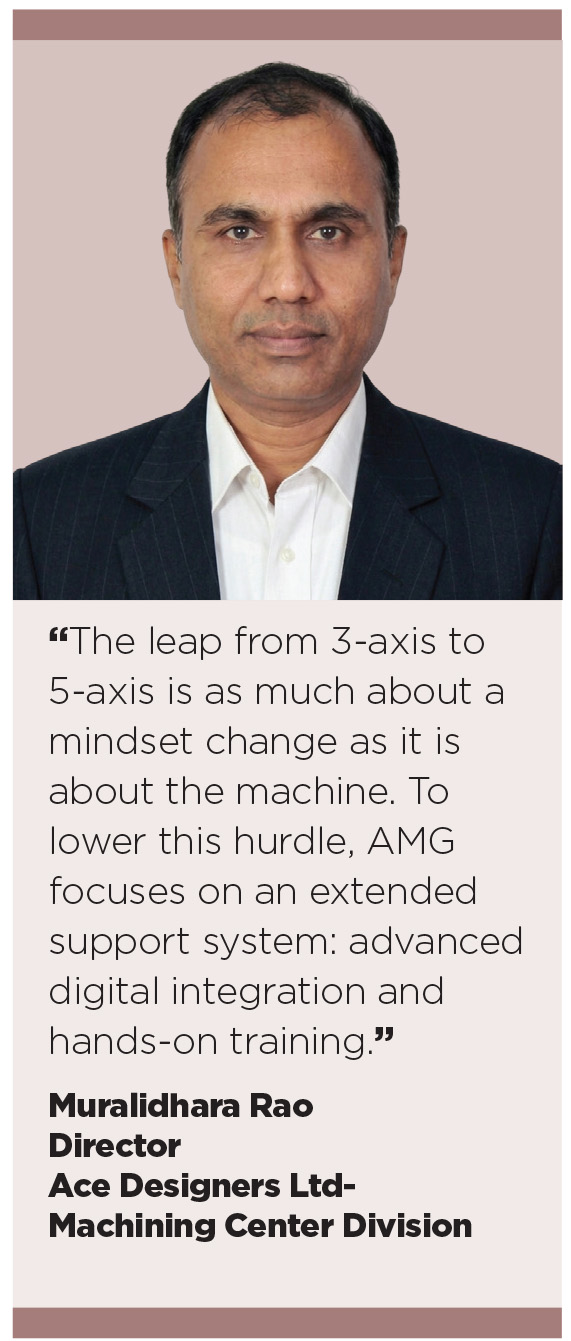
One of the most significant trends defining the current era is the democratization of 5-axis simultaneous machining. Muralidhara Rao, Director, Ace Designers Ltd – Machining Center Division, AceMicromatic Group (AMG), explains that historically, this technology was the exclusive domain of large Tier-1 aerospace or automotive suppliers due to its high capital costs and the steep learning curve of programming. With the changing times, technology is defined by the application, not the size of the company.
He explains that Ace Designers has engineered its latest models to break the price barrier for Tier-2 and Tier-3 toolrooms through modular versatility. Its flagship GV-60 5C is engineered as a performance-first machine, offering a ‘Right-Fit’ approach. By providing compatibility across multiple CNC controls—including Siemens, Mitsubishi, Fanuc, and Syntec—it allows toolrooms to select the control environment they are already comfortable with, reducing training time and capital expenditure.
For MSMEs where 5-axis simultaneous work might still be a future goal, Ace Designers provides solutions such as high-precision 3-axis machines integrated with Rotary Tilting Tables. This enables 4+1 positioning, allowing complex geometries to be machined with the required accuracy without the extreme cost of a full, continuous 5-axis system.
The complexity of 5-axis work, specifically the fear of collisions, is addressed through technology. The company now integrates collision avoidance and AI-driven optimization, making complex parts of 5-axis work automated and safe.
The ‘Done-in-One’ Philosophy
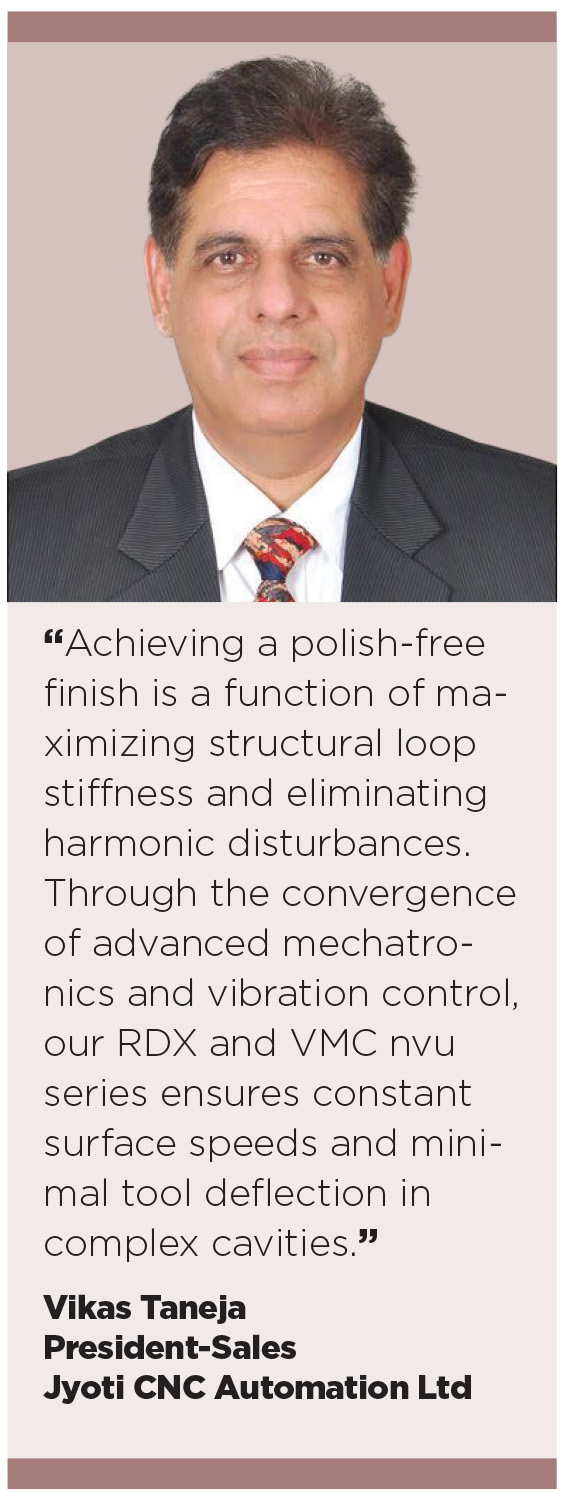
Jyoti CNC Automation Ltd is catalyzing a similar process-led transition. To this end, Vikas Taneja, President-Sales, observes that Tier-2 and Tier-3 die makers are increasingly adopting 5-axis technology to achieve setup consolidation and lead-time optimization. By adopting a ‘Done-in-One’ philosophy, smaller shops eliminate multiple secondary setups, ensuring datum integrity and drastically reducing part-handling time.
The company makes this transition affordable through vertical integration, manufacturing high-precision rotary tables and tilting heads in-house to lower capital entry barriers. Furthermore, its systems utilize AI to automate kinematic calibration, which empowers existing 3-axis operators and reduces the overall cost of operation. This modular, ‘Fit-for-Purpose’ engineering, backed by a localized service ecosystem, makes high-end 5-axis precision a scalable reality for all toolrooms.
Indigenous Rotary Technology
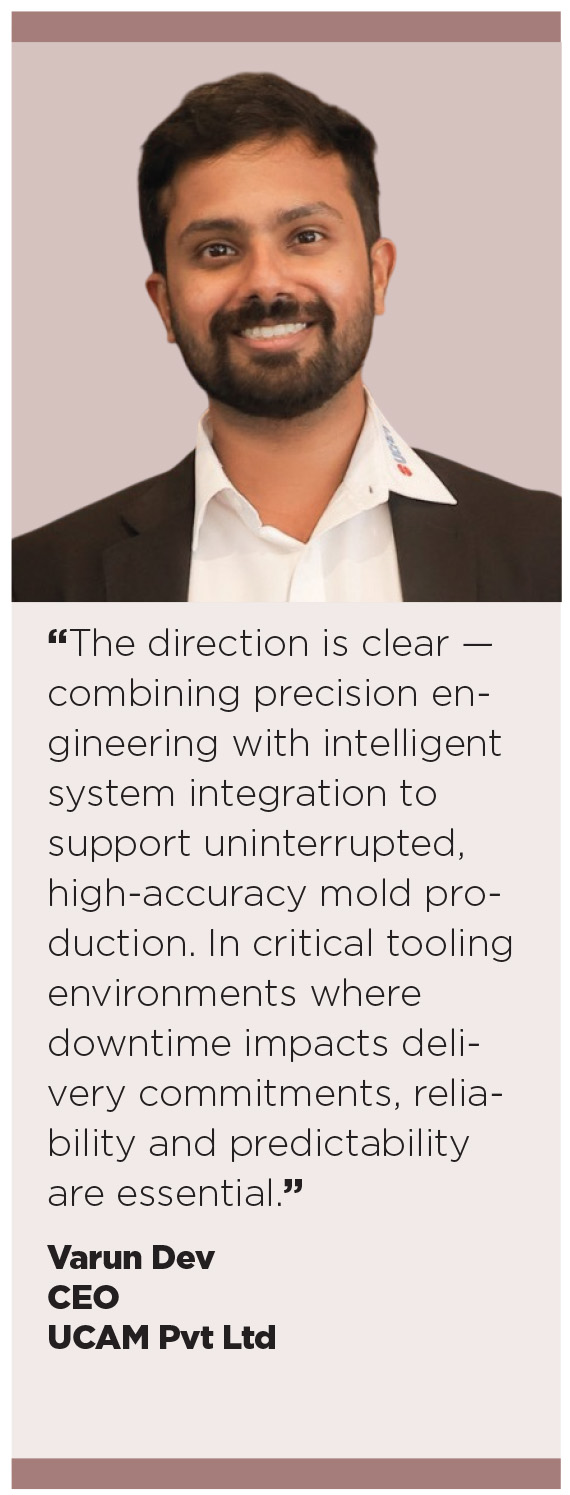
A critical enabler of this 5-axis shift is the rising confidence in domestic rotary solutions. Varun Dev, CEO, UCAM Pvt Ltd, confirms the steady shift among Tier-1 mold makers toward high-performance indigenous 5-axis rotary technology.
UCAM’s benchmarking framework against global competitors focuses on dynamic positioning accuracy, torque capability, structural rigidity, and thermal stability. By delivering consistent contouring accuracy and dependable performance under real production conditions, domestic solutions are proving that ‘Make in India for the World’ is a tangible reality.
|
Today, the focus is on the reliability-value- knowledge triangle—a new cornerstone where indigenous engineering, real-time metrology, and sophisticated CAM software converge to create a manufacturing ecosystem. |
Bridging the Imported Grade Finish Gap
The most persistent challenge for Indian manufacturers has been overcoming the perception of thermal instability. In die and mold making, where a machine may run for 48 hours straight to finish a single cavity component, even a few microns of thermal drift can ruin a multi-million-rupee workpiece.
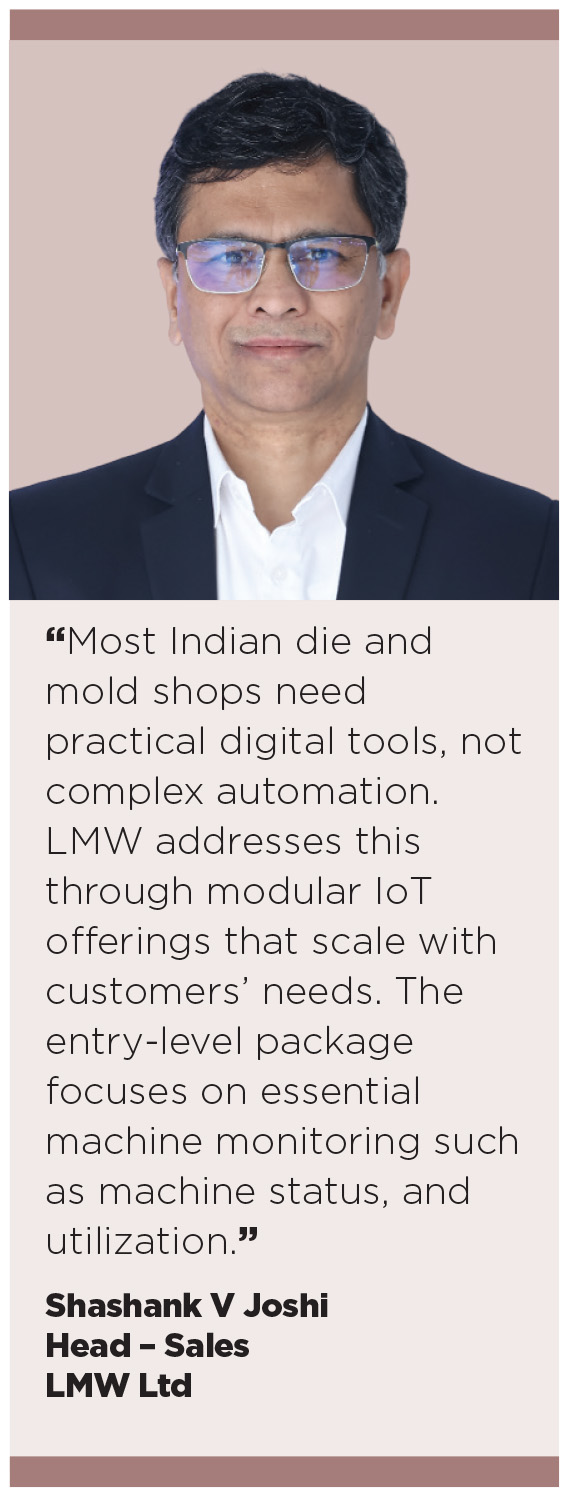
In this context, Shashank V Joshi, Head of Sales, LMW Ltd, shares that the company addresses these fundamentals at the design stage with its J & JV Series (Versatile and Heavy-duty VMCs). “Optimized cast structures, thermally symmetric machine layouts, controlled spindle cooling, and direct-coupled drives significantly reduce thermal drift. Additionally, finite-element-validated ribbing and damping characteristics minimize micro-vibrations during high-speed finishing. Together, these enable consistent micron-level accuracy and surface finishes that meet global mold-making expectations,” he elaborates.
LMW's focus is on confidence in application execution. By supporting the transition from 3-axis to 5-axis through post-processor optimization and real-part prove-outs, it ensures that the machine’s technical capability is fully realized by the end-user.
Eliminating Reversal Error
Achieving high surface finishes also depends on the dynamic accuracy of the rotary table. UCAM’s latest generation of Direct Drive (DDR) tables addresses this by eliminating mechanical transmission elements, thereby directly reducing reversal errors. The high-resolution encoder feedback ensures smoother motion during complex contouring. As per Varun, DDR platforms are engineered for balanced thermal behavior, ensuring minimal thermal drift even during long machining cycles. This results in stable angular positioning and consistent dimensional fidelity throughout the process.
|
By delivering consistent contouring accuracy and dependable performance under real production conditions, domestic solutions are proving that ‘Make in India for the World’ is a tangible reality. |
Polish-Free Molds
For Jyoti CNC, the goal is achieving a surface finish so fine that manual bench-polishing is eliminated. Taneja explains that surface roughness (Ra) is a critical cost driver. Its RDX and VMC nvu Series leverage broad-base rigid structures for dynamic stability and thermal-harmonic synchronization. Through the convergence of advanced mechatronics and vibration control, these machines ensure constant surface speeds and minimal tool deflection, allowing end-users to effectively bypass manual polishing.
EV Pivot and New Mobility Tooling
The rapid shift to Electric Vehicles (EVs) has fundamentally changed tooling requirements, from compact, heavy dies to large, lightweight structural molds and complex battery trays. Joshi shares that LMW has evolved its R&D to emphasize machines with larger work envelopes, high dynamic stiffness, and superior axis acceleration. Special attention is given to spindle responsiveness for thin-wall machining and aluminum-intensive applications like battery trays.
Similarly, UCAM’s 2026 R&D focus is strengthening torque density and axis rigidity for these demanding mold applications. The industry is moving toward high-speed simultaneous machining where dynamic accuracy is the key differentiator.
LMW has also realigned its R&D to cater to these requirements, which often demand larger table sizes, higher dynamics for thin-wall machining, and superior stiffness to handle high-speed milling of aluminum alloys used in battery housings. This shift also necessitates better process control.
|
Software intelligence is about the redistribution of skill rather than its removal. It helps standardize outcomes and shorten learning curves, but it does not replace engineering judgment; rather, it scales capability across teams. |
Digital Gatekeeping
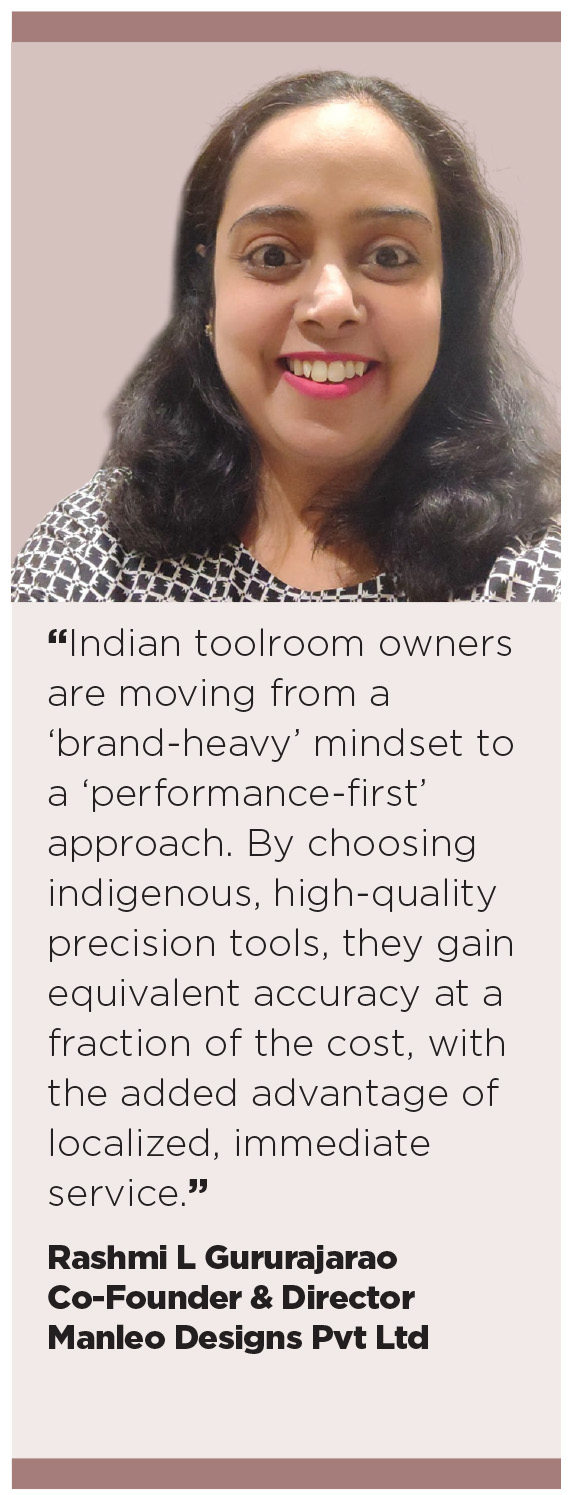
As India becomes a hub for EV components, Rashmi L Gururajarao, Co-Founder & Director, Manleo Designs Pvt Ltd, points out that on-machine inspection acts as a digital gatekeeper. For high-tolerance EV and electronic molds, real-time inspection verifies dimensions before a part is removed, allowing for instant corrective paths and preventing costly rework.
Value of Dual Expertise
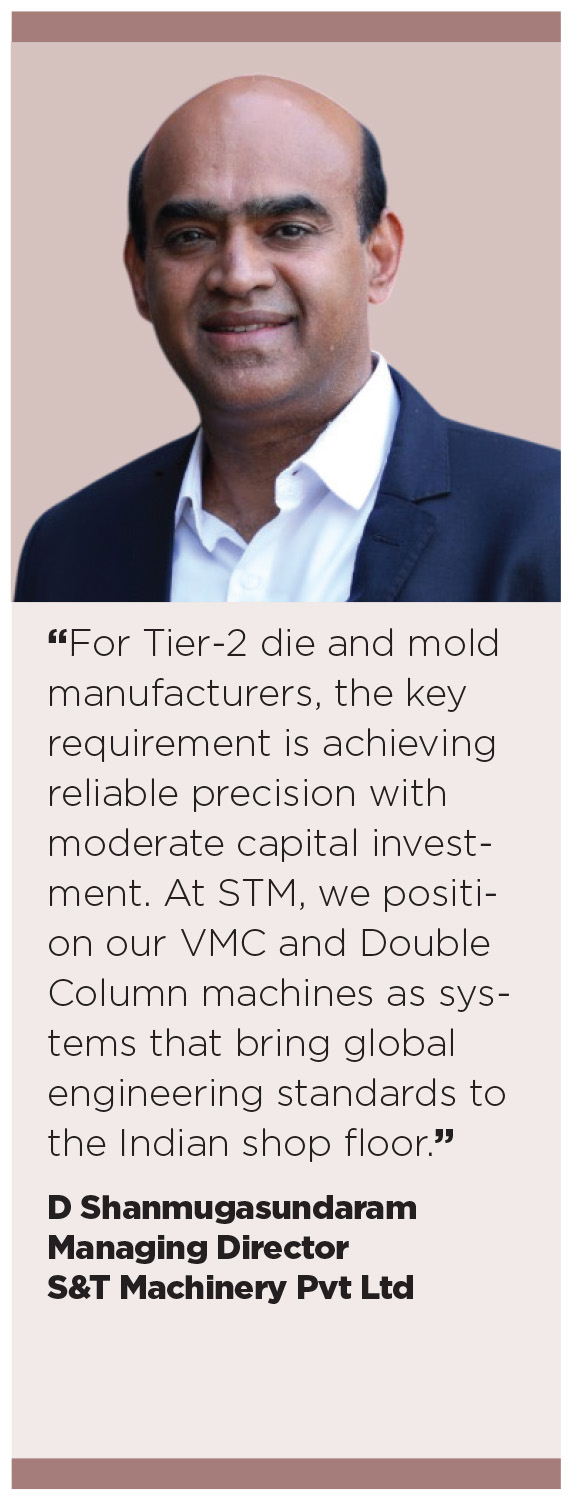
D Shanmugasundaram, Managing Director, S&T Machinery Pvt Ltd, brings a unique perspective sharing that the company is in a unique position of manufacturing both the CNC machines that make the molds (VMCs/EDMs) and the Injection Molding machines that use them. This dual expertise allows the company to understand the end-of-life requirements of a mold. For cost-sensitive Tier-2 shops, STM positions its Double Column and VMC series as systems that bring global engineering standards to the Indian shop floor.
According to him, it manufactures heavy machine structures in India to leverage local cost advantages but insists on importing critical high-precision components like spindles, precision bearings, linear motion systems, and CNC controls from proven global leaders. This hybrid strategy ensures the performance expected in mold manufacturing at an Indian price point.
Moving Inspection to the Shop Floor
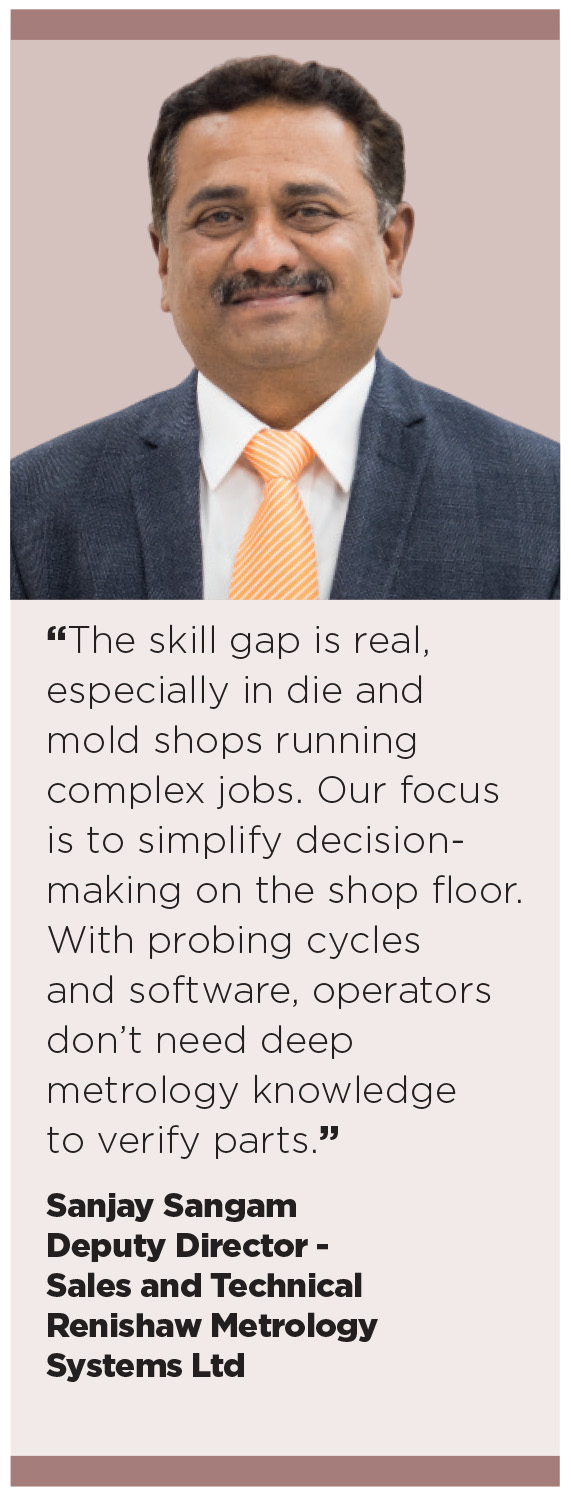
The zero-defect mandate of global OEMs means that inspection can no longer be an afterthought performed in an isolated lab. Renishaw’s approach focuses on making precision practical. Its RENGAGE™ technology (found in probes like the RMP600) uses silicon strain gauges to achieve sub-micron repeatability, even in the harsh, thermally variable environment of a shop floor. Sanjay Sangam, Deputy Director – Sales and Technical, Renishaw Metrology Systems Ltd, says the company champions the move of inspection directly onto the CNC machine using In-Process Probing (MTP). He emphasizes, “Probes establish reliable references and apply offset updates in real-time even as temperatures change across long cycles. This makes inspection part of production and prevents late surprises at final inspection.”
Echoing similar sentiments, Gururajarao shares, “Automated probing and tool-setting solutions help smaller shops reduce setup times by up to 70 percent, ensuring machines stay running.”
Talking of Renishaw’s NC4 laser, Sangam shares that it monitors tool wear and breakage, ensuring surface finishes and critical dimensions stay under control. He explains that for Indian toolrooms supplying global OEMs, this makes it easier to demonstrate capability, consistency, and production approval readiness. The outcome is stable processes, predictable try outs, and fewer last minute corrections.
The Redistribution of Skill
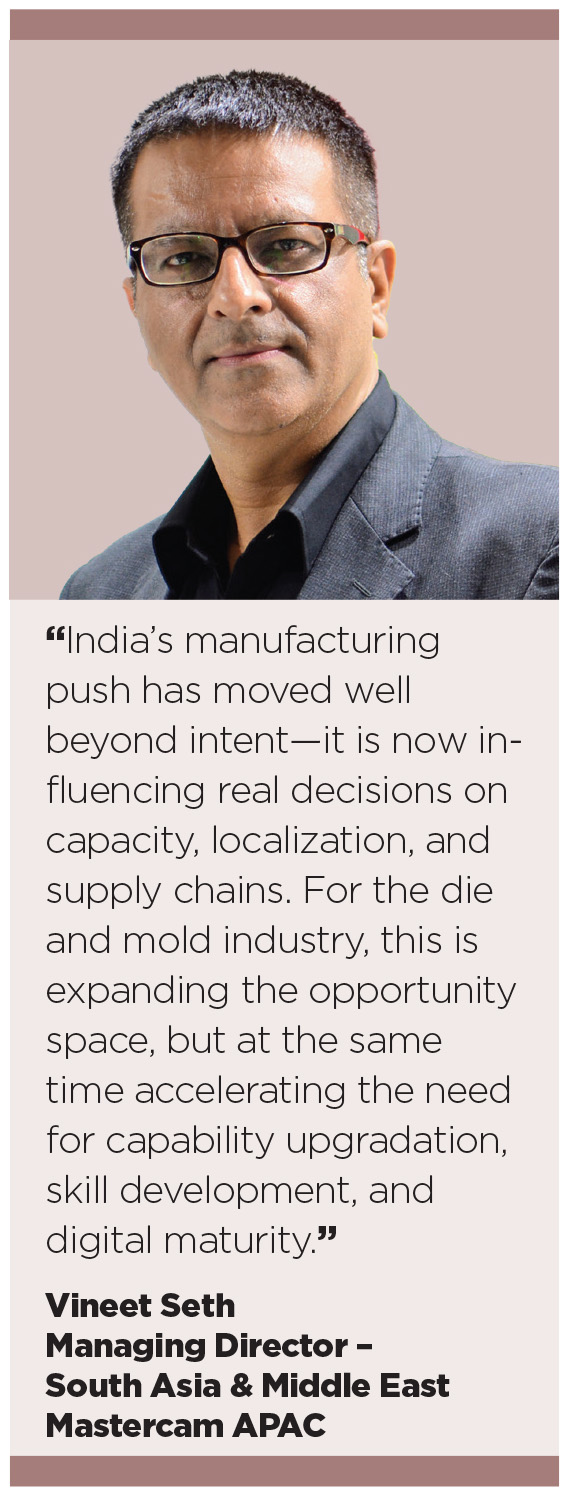
A recurring bottleneck for Indian toolrooms is the shortage of skilled programmers. Vineet Seth, Managing Director, South Asia & Middle East, Mastercam APAC, points out that software intelligence is about the redistribution of skill rather than its removal. He shares that the latest Mastercam 2025 release introduces features like 'Mastercam Deburr', which automates edge finishing—a task that previously required deep multi-axis knowledge. By automating these repetitive tasks, programmers can focus on higher-level problems like tool behavior, machine kinematics, and post-processing.
|
By implementing structured changes—such as shop floor internships for women, ergonomic workstations, and data-driven hiring, the industry is beginning to leverage a more diverse leadership pool to drive innovation in jig and fixture design. |
Seth states that software intelligence helps standardize outcomes and shorten learning curves, but it does not replace engineering judgment; rather, it scales capability across teams.
Industry 4.0 for MSMEs
For the typical Indian toolroom, often an MSME, the concept of Digital Twin can seem intimidating. Hence, LMW addresses this through a phased Industry 4.0 approach at the entry level by monitoring essential machine status and utilization.
The intermediate level includes predictive maintenance dashboards to track machine health, while the advanced level enables full ERP connectivity for toolrooms ready for global integration. This allows smaller owners to monitor unmanned finishing cycles from their smartphones without heavy upfront investment.
Role of Automation in Die and Mold
Discussing the evolution of the sector, Taneja emphasizes that automation is designed to liberate the craftsman from the repetitive cycle of trial and error rather than replace human expertise. He views automation as a means of flexible orchestration that removes the burden of trial and error from the craftsman. By leveraging the 7th SENSE digital ecosystem alongside Zero-Point workholding, Jyoti CNC converts standard machinery into an intelligent partner. With digital twins to simulate the production journey and real-time sensors to compensate for tool wear, intricate mold-making achieves the reliability of mass production. This ‘Smart Shop’ strategy facilitates ‘lights-out’ manufacturing, ensuring even the most complex one-off components are produced with high predictability.
Diversity and Knowledge Capital
The technical transformation is being matched by a cultural one. Gururajarao highlights that the gender gap in toolrooms is often a skills and environment gap. By implementing structured changes—such as shop floor internships for women, ergonomic workstations, and data-driven hiring, the industry is beginning to leverage a more diverse leadership pool to drive innovation in jig and fixture design.
Companies like AMG are investing heavily in their training ecosystems. They don't just deliver a machine; they provide dedicated CNC simulators to transform standard operators into 5-axis specialists, ensuring customers see ROI from day one.
|
As automotive interiors and consumer electronics become more complex and textured, the need for intricate electrodes is surging. As a result, graphite machining has become a necessity. |
Graphite Machining
As automotive interiors and consumer electronics become more complex and textured, the need for intricate electrodes is surging. Shanmugasundaram points out that graphite machining is evolving from an afterthought on standard VMCs to a dedicated necessity. Dedicated graphite centers require specialized machines designed with high spindle speeds, effective dust management, stable motion control, thermal stability, and precision.
“As Indian toolrooms increasingly participate in global aerospace and automotive supply chains, investing in dedicated graphite machining centers will become essential to achieve the precision, repeatability, and productivity demanded by advanced tooling applications,” he predicts.
The Road Ahead
As we look toward the future, the Indian toolroom is no longer defined by the brand of the machine on the floor, but by the intelligence of the process it runs. As Seth rightly points out, “The conversation with global OEMs has shifted from ‘Can you make this?’ to ‘Can you make this consistently, at scale?’”. India’s edge lies in its ability to offer a total engineering solution. The Indian die and mold industry is becoming a hub of innovation and reliability. Backing this evolution, Varun concludes, “As we move through 2026, our focus in the die and mold vertical is centered on enhancing performance capability and operational reliability.”
The direction is clear, combining precision engineering with intelligent system integration to support uninterrupted, high-accuracy mold production.
 |
SOUMI MITRA |
 Facebook
.png) Twitter
Twitter Linkedin
 Subscribe