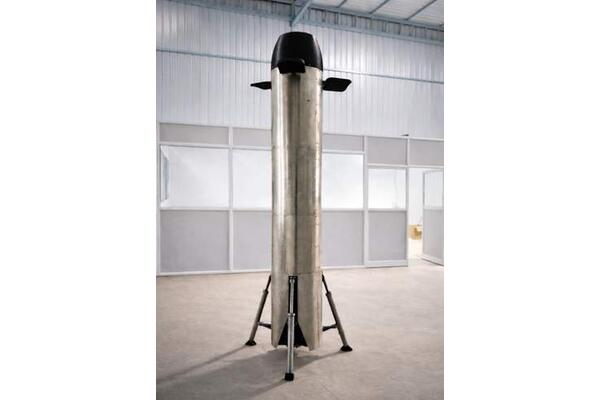

Astrophel Targets Independence Day for Reusable Rocket Test
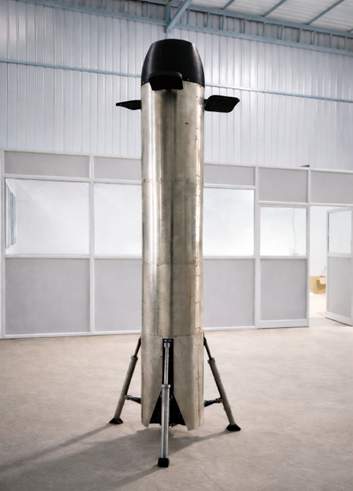
Pune/New Delhi, India – Astrophel Aerospace, a Pune-based space tech startup, which has developed an in-house portfolio of ‘Made-in-India’ propulsion and cryogenic subsystems, announced the upcoming test flight of its reusable suborbital rocket, targeting August 15, 2026. Designed as a vertical takeoff and vertical landing (VTVL) test prototype, a successful test not only represents a critical milestone towards the development of a fully operational and commercially viable reusable launch vehicle in India, but also as a flight-relevant validation platform for Astrophel’s cryogenic subsystems and components.
The 3-meter-long prototype, also known as a hopper, weighs approximately 200 kg and is currently being designed, manufactured, and assembled at Astrophel’s Pune facility. The space tech startup also recently developed high-performance cryogenic control valves, marking another key milestone in India’s private aerospace component manufacturing ecosystem. The valves are part of Astrophel’s broader portfolio of propulsion and cryogenic subsystems, including turbopumps, vacuum-insulated cryogenic storage tanks, and high-speed precision linear actuators.
“We expect the upcoming test to mark one of the first instances of a privately developed reusable rocket prototype that’s been designed, manufactured, and tested entirely from within India,” said Suyash Bafna, Co-founder and CEO, Astrophel Aerospace.
Astrophel Aerospace was one of a handful of space tech startups to successfully conduct a cryogenic engine test just three years ago on August 15, 2023, raising more than US$ 800,000 last year. By vertically integrating critical sub-systems, the startup is demonstrating a tightly integrated hardware ecosystem that enables faster development cycles, improved performance control, and seamless integration across allied industries such as aerospace, defense, oil & gas, and emerging energy applications such as green hydrogen.
“Our in-house design and manufacturing approach borrows inspiration from automotive best practices, and we’ll be able to develop subsystems at approximately 40 percent of the cost compared to global players,” added Immanuel Louis, Co-Founder and COO, Astrophel Aerospace.
India’s space tech startups today rely heavily on imported subsystems and components. Astrophel aims to address this gap by developing and validating critical hardware in-house, while also building revenue through component sales and licensing partnerships. The approach enables the company to de-risk the path to orbit while making high-performance propulsion and cryogenic systems more accessible to a broader range of launch partners and customers.
Satellite operators today rely on rideshare programs that face multiple delays due to limited availability and scheduling constraints, while it is predicted that over 70,000 low Earth orbit (LEO) satellites will be launched over the next five years, as per Goldman Sachs Research. Demand for faster and more flexible launch solutions is set to grow exponentially, with reusability emerging as a critical capability driving the future of accessibility to cost-effective launch services.
Image Source: Astrophel Aerospace
 Facebook
.png) Twitter
Twitter Linkedin
 Subscribe