
DRIVING CAPACITY ENHANCEMENT
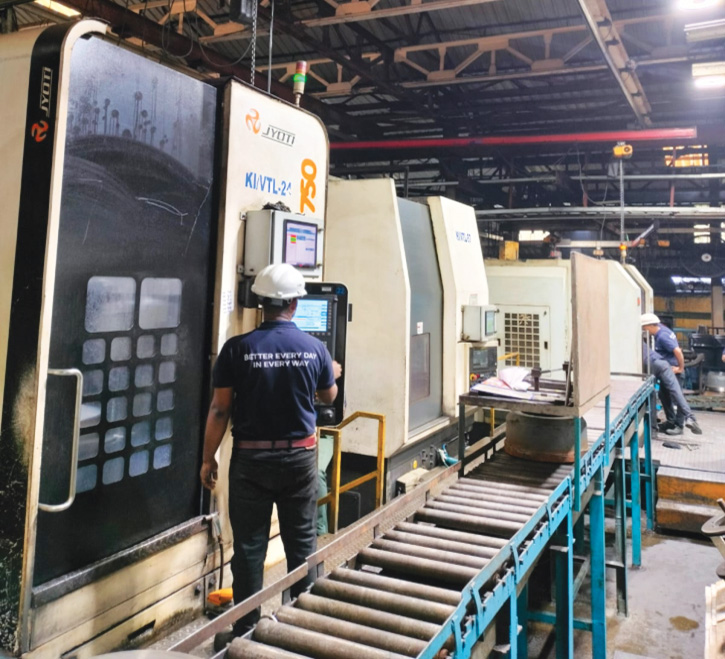
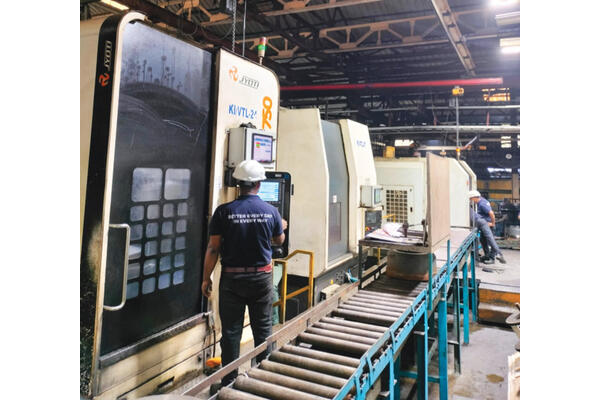
Through cellular manufacturing and shopfloor redesign, Kiswok transformed its machining operations within the same 3,500 sq mt facility. An earlier setup of 41 CNC machines operated by 196 personnel, producing 56,000 components per month, was restructured into an optimized cellular layout. This enabled the company to scale up to 52 CNC machines, reduce manpower to 166, and increase output to 70,000 components per month.
In an increasingly competitive manufacturing landscape, productivity improvement is no longer driven solely by adding machines or manpower. Sustainable growth today depends on intelligent shopfloor design, lean principles, and disciplined execution. This case study from Kiswok Industries, one of India’s leading foundries for machined ferrous castings, illustrates how a focused cellular manufacturing transformation enabled a 25 percent productivity improvement without plant expansion, while simultaneously improving cost, quality, and delivery performance.
Business Context and Objective
Kiswok Industries serves major OEMs in the heavy commercial vehicle segment. Rising customer demand and new RFQs (Request for Quotation) exposed limitations in the existing product machining line at Unit-1. The layout was operation-wise, spread across multiple zones, with long roller conveyors and significant work-in-process inventory.
The project objective was clearly defined: increase product capacity from 56,000 to 70,000 components per month, optimize manpower, reduce WIP, and accommodate additional CNC machines within the same footprint without impacting customer deliveries.
Challenges in the Existing Layout
The baseline assessment revealed multiple operational constraints. Material movement followed a zig-zag path across operations OP-10, OP-20, OP-30, and OP-40, resulting in excessive travel distance, long waiting times, and high WIP. Significant manpower was deployed for material feeding and handling. Parts frequently contacted each other on conveyors, causing dents, noise, and quality concerns. Common production lines also led to part mix-ups, requiring manual sorting during packaging.
A detailed Value Stream Mapping (VSM) study showed a Value-Added Ratio of only 1.75, indicating substantial non-value-added activities and improvement potential.
Lean Strategy and Team Engagement
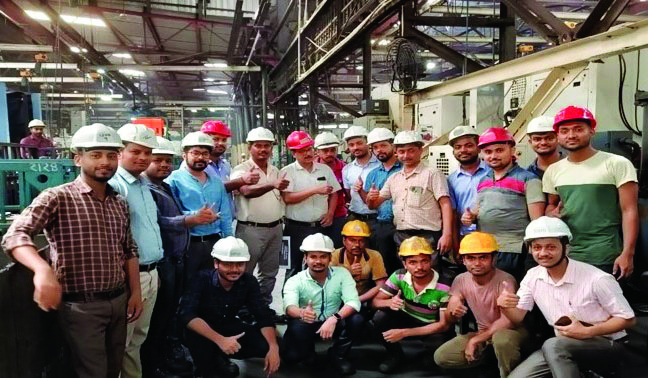
A cross-functional team comprising Production, Maintenance, Quality, Civil, Safety, Planning, and Purchase was formed under strong plant leadership. The team adopted lean principles with a sharp focus on flow, waste elimination, ergonomics, and safety.
Key guiding principles included uninterrupted customer supply, phase-wise execution, no additional manual material handling manpower, and strict adherence to change-management and safety systems. Operator involvement and GEMBA-based reviews were integral to building ownership and acceptance.
Implementation Approach
The transformation was executed over ten months through a structured roadmap. Baseline VSM and bottleneck analysis were followed by cellular layout design, line balancing, and conveyor rationalization. Execution was planned during non-production hours and weekends to avoid delivery disruptions. Hydraulic fixtures were introduced to reduce operator fatigue, and utility lines were redesigned to support the new layout.
Lean electrical initiatives—including power-saving modes, elimination of stabilizers, and installation of phase-failure relays—were implemented in parallel, reinforcing sustainability objectives.
Key Improvements Introduced
The new cellular layout aligned machines sequentially by operation, enabling single-piece flow from OP-10 to OP-40. Roller conveyor length was reduced by more than 60 percent, and unnecessary material movements were eliminated. Machines were positioned ergonomically, allowing multi-machine operation by a single operator.
Jogging tracks improved accessibility around cells, while coolant pipelines routed behind each cell minimized handling. WIP between operations was reduced from ten pieces to one, significantly improving flow and visibility.
Results and Performance Gains
The impact of the transformation was both immediate and measurable. Monthly production increased to 70,000 components, achieving the targeted 25 percent capacity enhancement. Total manpower reduced from 196 to 166, a 15 percent optimization, while the number of machines increased from 41 to 52 within the same facility.
|
|
The Value-Added Ratio improved from 1.75 to 4.0, reflecting a substantial reduction in waste. Manpower cost per component dropped from INR 54.44 to INR 41.50, and delivery performance improved consistently due to reduced congestion and better line balance.
Financial Impact and Sustainability
The layout optimization freed approximately 392 sq mt of floor space, enabling new machine installation without building expansion. Energy savings of nearly 2.3 lakh kWh per annum were achieved, translating into a meaningful reduction in carbon footprint. The overall project delivered a return on investment in under twelve months, demonstrating strong financial viability.
Change Management and Cultural Shift
Resistance to change from operators and supervisors was addressed through transparent communication, training sessions, and involvement during layout finalization. Visible leadership support and early wins helped embed a culture of continuous improvement and cross-functional collaboration.
Gains by Bettering Every Day
This transformation demonstrates that significant productivity gains are achievable through layout optimization and lean thinking, even within existing constraints. By focusing on flow, engaging people, and executing systematically, Kiswok Industries strengthened operational excellence while building a scalable model for future deployment—truly reinforcing the philosophy of being “Better Every Day, in Every Way.”
 |
RAJNISH CHANDRA |
Source: Kiswok Industries
 Facebook
.png) Twitter
Twitter Linkedin
 Subscribe