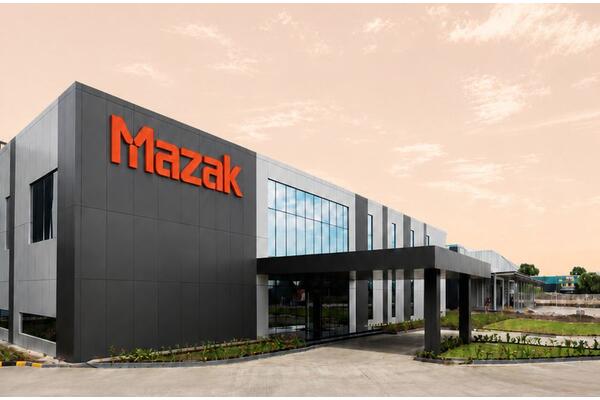

WHERE JAPANESE PRECISION MEETS MAKE IN INDIA
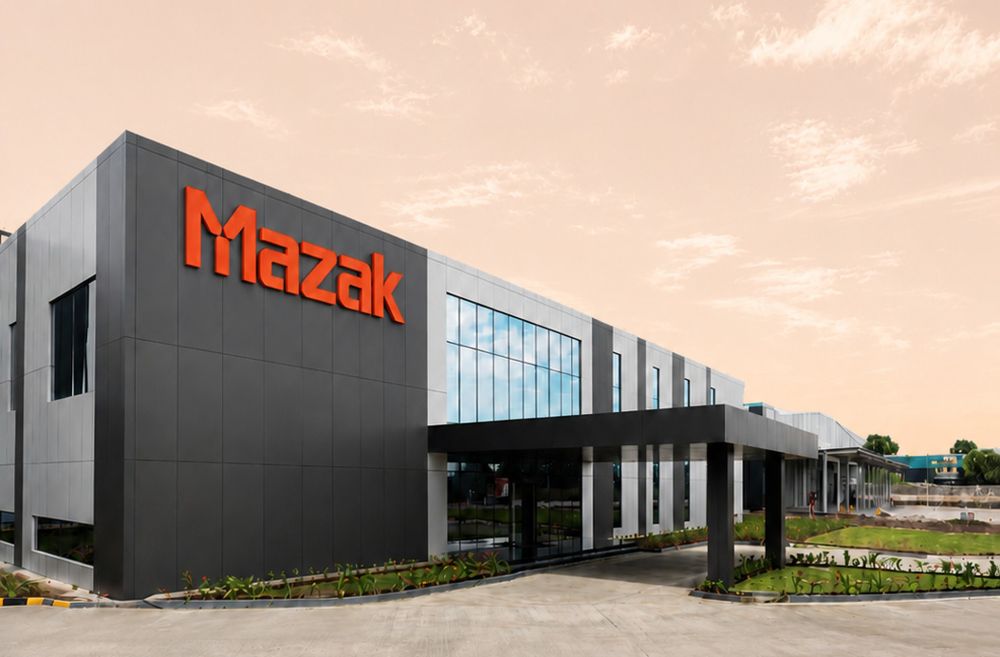
From a greenfield facility in Ranjangaon to a 1,000-machine milestone in less than three years, Yamazaki Mazak India has demonstrated how global quality standards, local manufacturing, and disciplined execution of Japanese manufacturing principles into an Indian production environment can create a new benchmark for India's machine tool industry.
For most industrial manufacturers, the first three years of a greenfield facility are spent stabilizing operations, building supplier networks, refining production processes, and navigating inevitable ramp-up challenges. Reaching full-scale production often takes considerably longer.
 Yamazaki Mazak India’s Ranjangaon plant near Pune has defied timelines, reaching 1,000 machines produced in under three years and setting a new benchmark for greenfield industrial ramp-ups in India. Underpinned by Japanese quality governance, a rapidly maturing local supplier ecosystem, and disciplined sector diversification, the plant now produces over 50 vertical machining centers every month.
At the heart of the story lies a simple but powerful philosophy: growth should never come at the expense of quality.
According to Anil Bhardwaj, Managing Director, Yamazaki Mazak India Pvt Ltd, the milestone was not the result of aggressive expansion or favorable market conditions alone.
“The 1,000-machine milestone is a number we are genuinely proud of — but it was earned through a series of very deliberate decisions made in the earliest weeks of the plant's life, not through luck,” he says.
Building for Flexibility from Day One
One of the most significant decisions made during the plant's establishment was the adoption of a cell-based assembly architecture. Rather than creating a traditional linear transfer line optimized around a fixed product mix, Mazak designed modular assembly cells capable of adapting as customer requirements evolved.
The strategy proved particularly valuable as demand diversified faster than anticipated.
That flexibility has become one of the defining characteristics of the facility. It allows the plant to accommodate varying machine configurations, support multiple industry sectors, and respond to changing market requirements without major disruptions to production.
Today, the facility produces more than 50 vertical machining centers every month—a scale-up that many heavy industrial plants take considerably longer to achieve.
The Supply Chain Equation
Scaling production rapidly while maintaining quality demanded an equally robust supply-chain strategy. Mazak adopted a hybrid sourcing model that combined mostly global precision components with some localized supplier ecosystem.
Critical precision subsystems such as spindles, linear guideways, ball screws, and CNC control units continue to come from Mazak's established global network, ensuring consistency with international standards. Simultaneously, the company initiated a structured qualification program for Indian vendors producing structural castings, sheet-metal enclosures, and coolant systems.
“This two-track approach meant we never had to choose between speed and quality during the ramp-up,” says Bhardwaj.
The Human Factor
Technology and infrastructure alone do not create manufacturing excellence. Recognizing this, Mazak invested heavily in knowledge transfer during the facility's formative period.
For the first 18 months, Japanese master technicians worked directly alongside Indian technicians at the plant.
“These were not classroom instructors; they worked shoulder-to-shoulder with our Indian technicians at the assembly stations, transferring tacit knowledge that no manual can capture,” Bhardwaj notes.
The impact was significant. Skills and production practices that could have taken years to develop naturally were transferred in a much shorter time-frame. By the end of the first full year of production, Indian teams were independently executing assembly protocols to Japanese standards.
Creating a Zero-Defect Culture
If scaling production was challenging, cultivating the famed Japanese quality mindset proved even more demanding.
Bhardwaj is candid about this aspect of the journey. “Honest answer: it was the hardest part of this entire venture — and it remains our most important daily discipline,” he shares.
According to him, the challenge was never a shortage of talent or commitment among Indian technicians. Instead, the real challenge lay in building a culture where quality becomes instinctive rather than procedural.
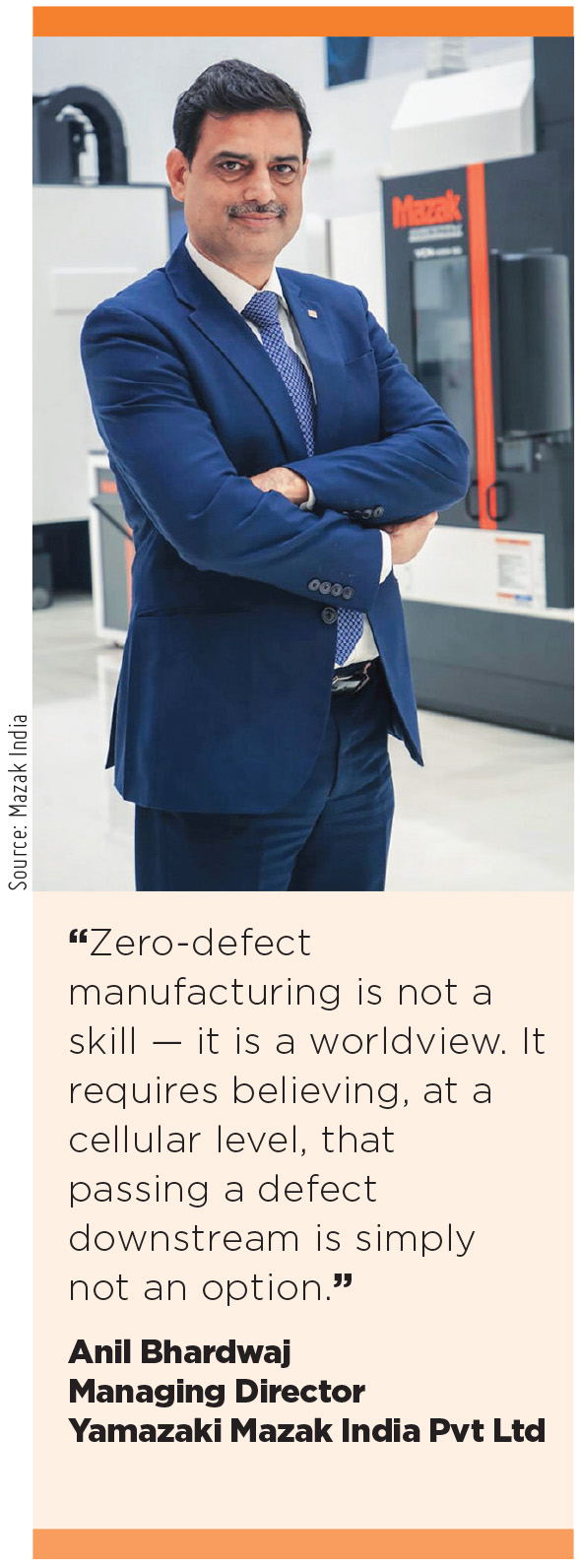
“Zero-defect manufacturing is not a skill — it is a worldview. It requires believing, at a cellular level, that passing a defect downstream is simply not an option, regardless of schedule pressure or production targets,” he adds.
That philosophy is reinforced through an extensive quality framework overseen by Japanese production directors. Rather than functioning as auditors who review completed work, the directors remain actively involved on the shop floor. They explain not only what must be checked, but why. “That ‘why’ is transformative,” emphasizes Bhardwaj.
Understanding the downstream impact of every inspection point transforms quality checks from routine tasks into responsibilities with tangible customer consequences.
Every technician undergoes supervised assembly of a complete machine before being cleared for independent production. A digital quality-capture system records inspection outcomes at every stage, enabling rapid identification of trends and potential issues.
Quality reviews occur daily, weekly, and monthly. “Quality is the first agenda item at every one of these forums — not safety, not output, not cost. The sequence is deliberate and symbolic,” he notes.
The VC-Ez 410, 510, and 610 models have made advanced machining technology accessible to a broader segment of Indian manufacturers.
Manufacturers are now able to access high-precision machining capabilities that were once financially out of reach. The impact is visible across Tier-2 and Tier-3 suppliers. Tighter tolerances, superior surface finishes, reduced cycle times, and lower scrap rates are becoming increasingly achievable.
“What we are observing is a step-change in what these suppliers can offer their OEM customers,” he adds.
Serving Diverse Industries
While automotive remains Mazak India's largest market, the company is increasingly finding opportunities in aerospace, defence, medical devices, and die & mold manufacturing. Each of these sectors presents unique production requirements.
While, automotive manufacturing prioritizes throughput and repeatability, aerospace demands extreme precision, material traceability, and the ability to machine advanced alloys such as titanium and Inconel. Medical-device manufacturing introduces stringent cleanliness and dimensional-consistency requirements.
Balancing these varied demands would be difficult within a rigid production structure. However, the modular assembly-cell architecture implemented from the beginning enables the plant to adapt effectively.
“The modular cell-based assembly architecture we adopted from day one is what makes this sectoral agility possible,” Bhardwaj explains.
Dedicated production slots and customized inspection protocols allow the facility to serve multiple industries without compromising quality or delivery performance.
This approach has created benefits that extend beyond Mazak's immediate supplier network.
As vendors improve their capabilities to meet Mazak standards, they become more competitive across multiple industries and customer segments.
The Next Chapter
The vision for Ranjangaon extends beyond the domestic market, with exports already reaching Southeast Asia and Europe. Mazak aims to establish the facility as a globally recognized center of manufacturing excellence within its worldwide network. Producing 1,000 machines in under three years is a significant achievement, but its deeper importance lies in what it represents: proof that world-class machine tool manufacturing can thrive in India.
Through disciplined processes, supplier development, and an unwavering commitment to quality, Mazak India has shown that Make in India can be much more than a manufacturing slogan. It can be a blueprint for creating globally competitive industrial capability.
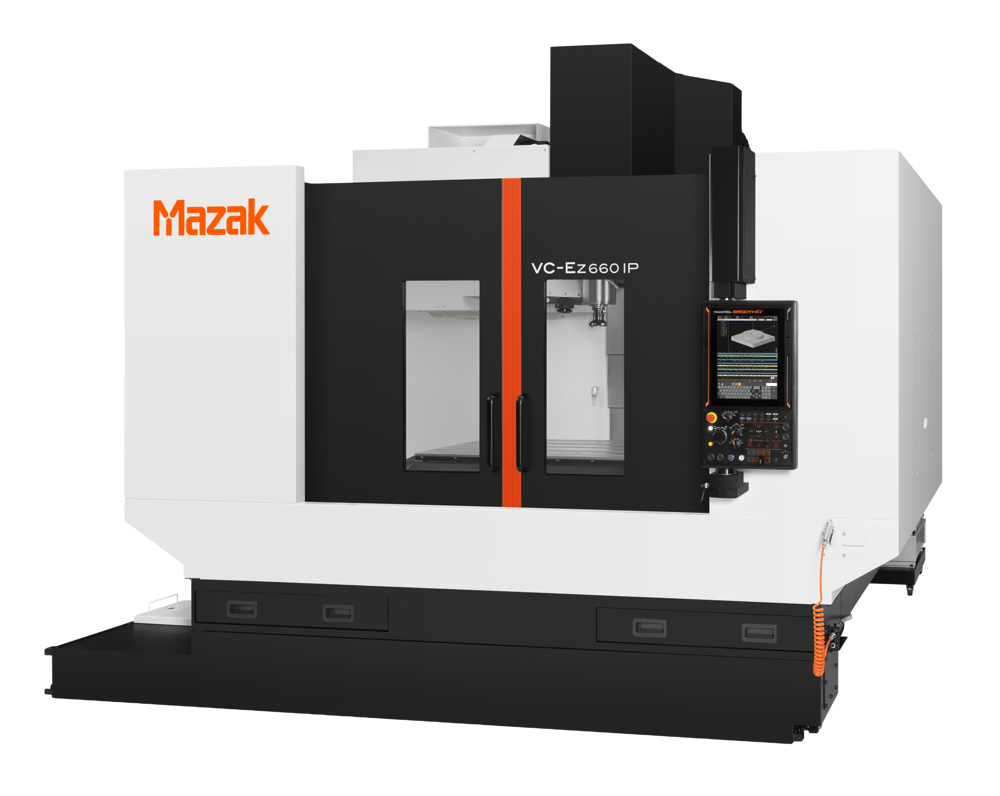
For Bhardwaj and his team, the journey is far from over. “The 1,000-machine milestone is a proud marker on that journey. It is emphatically not the destination,” he concludes.
Source: Mazak India
 |
POONAM PEDNEKAR |
 Facebook
.png) Twitter
Twitter Linkedin
 Subscribe