
BRIDGING THE DIVIDE BETWEEN 3D PRINTING AND MILLING
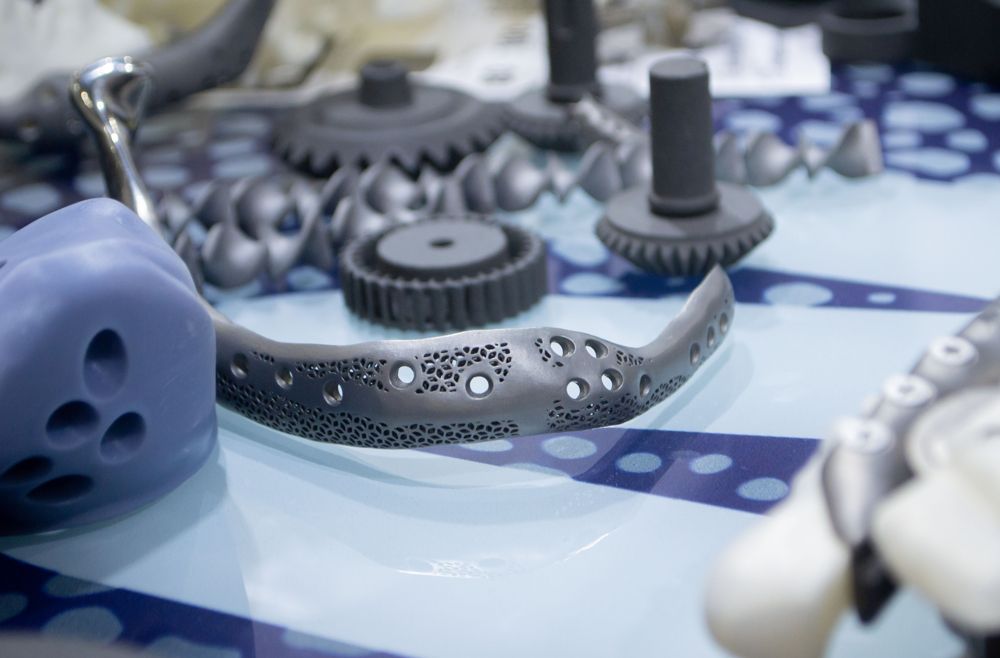
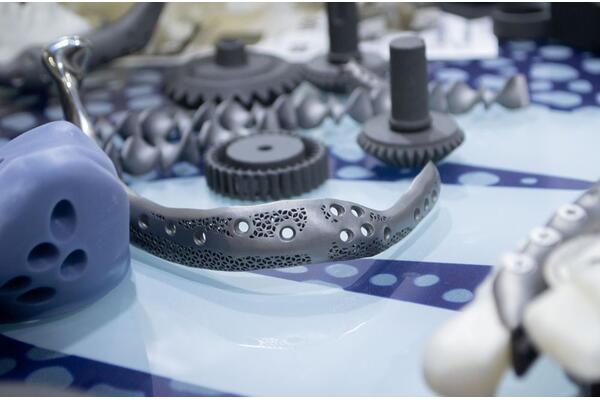
As medical manufacturing evolves from standard mass production to patient-specific implants and complex trabecular lattice structures, the traditional boundary between Additive Manufacturing (AM) and high-precision CNC machining (HMC/VMC) is rapidly dissolving. Yet, seamlessly blending 3D printing with metal-cutting processes presents a formidable mix of technical, digital, and regulatory hurdles.
Creating a modern implant requires marrying two fundamentally opposite manufacturing philosophies – Additive Manufacturing (AM), which uses lasers or electron beams to build organic shapes layer by layer from metal powder, and Subtractive Manufacturing (CNC Machining), which uses ultra-precise spinning cutters to shave away metal down to the fraction of a micron.
Bridging these two worlds is anything but simple. How do you clamp a fragile, porous titanium structure into a multi-tonne CNC vise without crushing it? How do you pass data seamlessly between a 3D printer and a milling machine? And should the medical factory of the future rely on all-in-one hybrid machines, or automated, specialized production cells?
To decode this technical crossroad, industry experts from across additive manufacturing, machine tool building, and industrial automation share their insights on the future of medical engineering.
 The Digital Thread: Software Handshake or Shared Illusion?
The ideal vision for smart manufacturing is a seamless ‘digital thread’—an unbroken software pipeline where a 3D printer embeds orientation, structural history, and datum coordinates directly into a digital file for a CNC milling center to read automatically. However, bringing this digital twin to life on the shop floor reveals significant software silos.
Rahul Singh, Senior Manager, Business Development, Jyoti CNC Automation Ltd, points directly to the software fragmentation that slows down regulated shops. “A major challenge in bridging additive and subtractive manufacturing for medical engineering is the fragmented digital workflow. AM, CAM, and CNC machining still operate on separate software platforms, requiring file conversions that increase validation risks. While standards such as STEP AP242, MTConnect, and OPC UA are improving interoperability, a universal digital twin remains under development.”
Where Singh sees software gaps waiting to be bridged over the next five to six years, Jagannath Varadaraja Iyengar, EVP & COO, m2nxt Solutions Pvt Ltd, sees a problem of architectural ownership.
“The industry talks about a unified digital twin handshake, but the real gap isn't software — it's ownership,” Iyengar argues. “Too many players are trying to bolt AM and subtractive systems together without seamless connectivity. At m2nxt, our approach has been to build hybrid platforms where that handshake is never needed in the first place, because deposition and machining reside in one control architecture from day one.”
For material and hardware developers like Payal Doshi, APAC Marketing Manager, Formlabs, expecting a single proprietary platform to solve everything is unrealistic. Instead, the focus must be on open interoperability. “Today, many manufacturers still rely on multiple software platforms and manual data transfers, which can introduce inefficiencies and increase validation effort, particularly in regulated sectors like medical manufacturing,” she observes. “The focus should be on improving interoperability through open standards and seamless data exchange rather than expecting a single software ecosystem to dominate.”
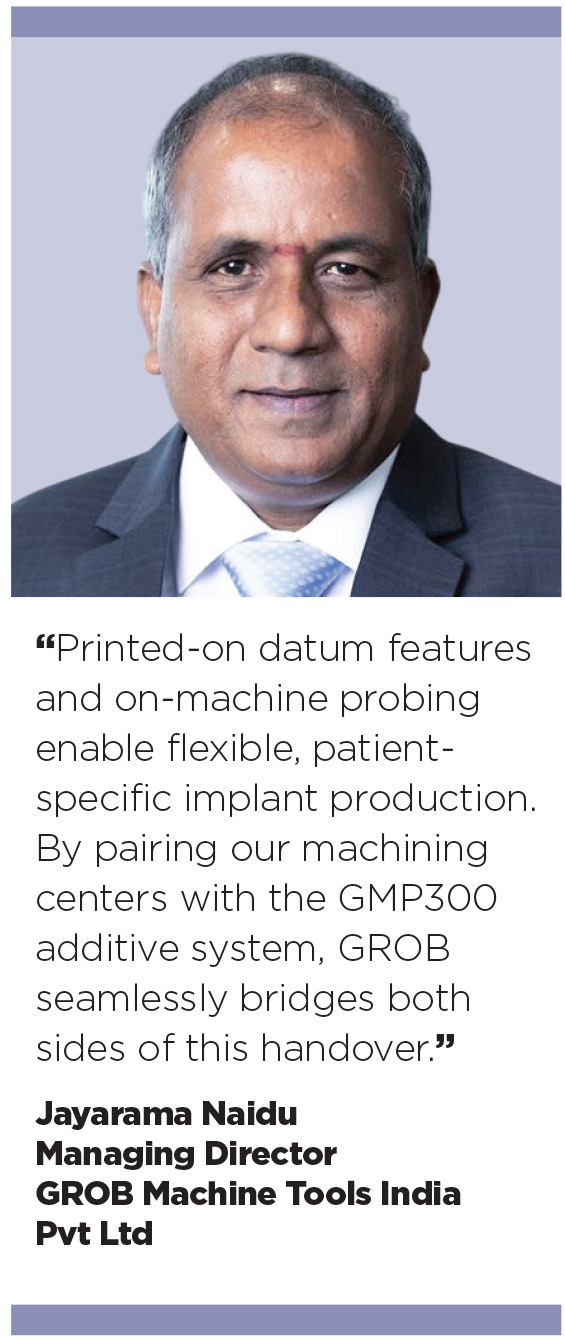
Machine tool builders are working toword practical realities while these standards evolve. Jayarama Naidu, Managing Director, GROB Machine Tools India Pvt Ltd, offers a realistic assessment of where the industry stands today. “How close are we? Honestly: a truly unified, plug-and-play standard is still some years away — today the handshake works reliably only inside integrated CAM chains,” he highlights. “But the building blocks are emerging: the 3MF format is evolving to carry build and traceability data, STEP AP242 embeds product information directly in the model, QIF closes the loop on the measurement side, and UMATI, based on OPC UA, gives machines from different manufacturers a common language.”
While software developers refine these formats, hardware automation is stepping in to maintain physical alignment across production steps. Raghav Badhya TV, President, Makino India Pvt Ltd, highlights how physical fixtures help support the digital thread. “By combining AML-Series additive manufacturing machines with conventional subtractive machines, Makino can support an integrated workflow where additive and machining operations are coordinated through centralized job management and automated sequencing. Robotized pallet transfer with 0-point clamping helps preserve the physical datum from deposition through final machining.”
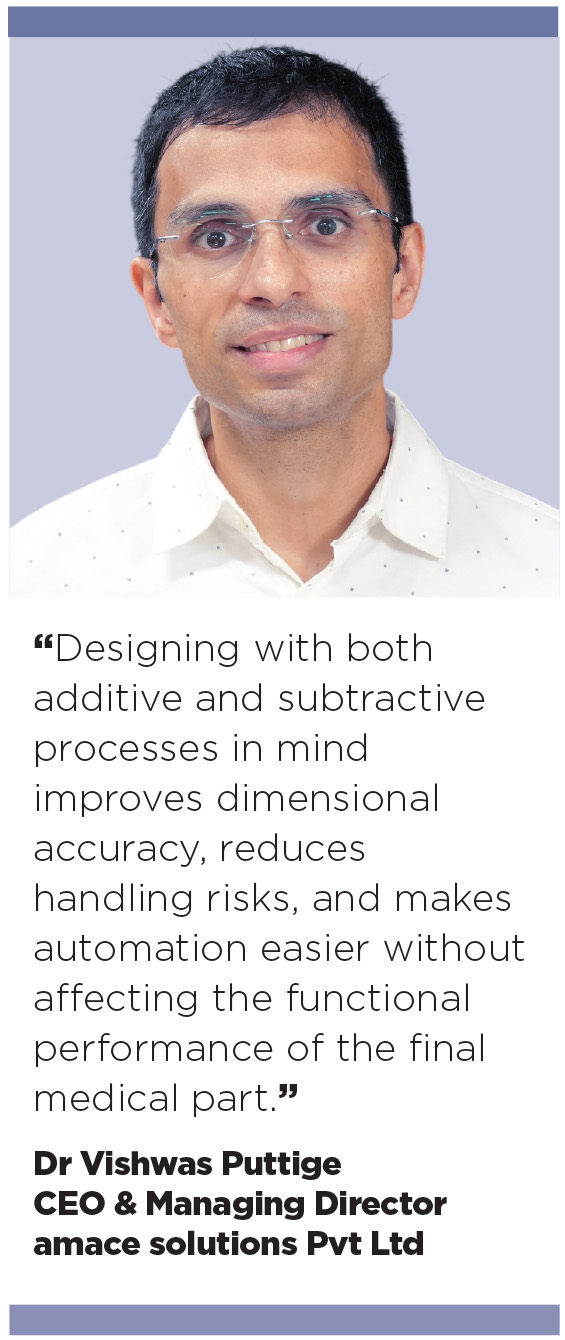
Dr Vishwas Puttige, CEO & Managing Director, amace solutions Pvt Ltd, shares that embedding data at the start of the build remains the goal for regulatory traceability. “Going forward, additive manufacturing systems are expected to embed datum references, orientation details, and traceability information directly into the build file,” he explains. “This would allow downstream CNC machines to automatically identify the workpiece orientation and manufacturing history, reducing manual setup while improving traceability and process validation for regulated medical components.”
The Physical Paradox: How to Clamp a Cloud
Once a complex titanium bone implant is printed, the physical challenge begins. Unlike a solid block of steel, an additive implant often features delicate, porous lattice structures designed to mimic human trabecular bones. Clamping such a part in a traditional metal vise risks crushing the geometry before machining even starts.
“Organic, porous geometries are exactly where conventional workholding starts to break down, and that’s a signal, not a nuisance," states Iyengar. “It tells us the two processes were never meant to be solved separately.”
To protect these delicate shapes, machine builders are moving away from traditional mechanical touch probes toward non-contact, optical scanning.
According to Singh, the company has moved away from relying on touch-probe points on organic geometries and now scan the whole part with on-machine laser or blue-light scanning and let a best-fit algorithm align the mesh to nominal CAD in real time. It cuts setup from hours to minutes and paired with conformal fixtures and soft-jaw holding, Jyoti CNC is protecting those fragile trabecular structures instead of crushing them during clamping.
Naidu elaborates that mathematical alignment turns a time-consuming physical setup into a fast, automated computation. “The part is probed against defined reference features, the coordinate system is compensated automatically or the NC program adapted on the machine, and the references are machined away afterwards," he explains. “With on-machine measurement and best-fit alignment, the part is now aligned mathematically rather than mechanically. This is the direct answer to the setup-time problem.”
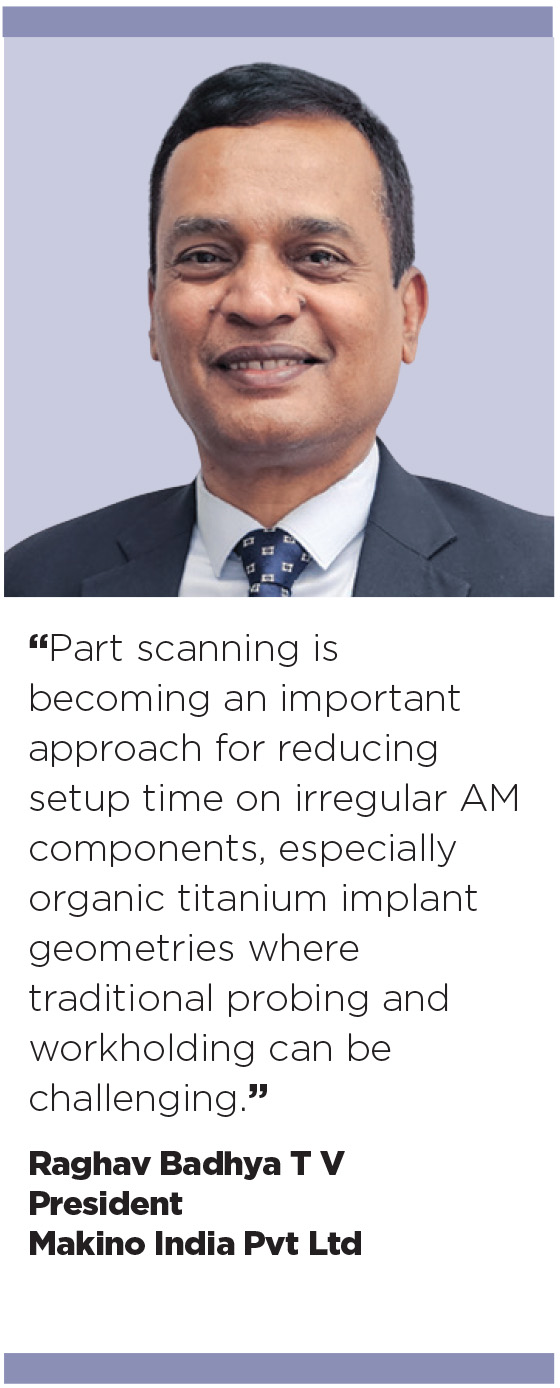
Reinforcing the advantage of keeping metrology inside the machine tool itself, Raghav explains, “By integrating scanning directly into the machine, the part can be measured without moving it to a separate inspection device, helping preserve setup accuracy and reduce manual datum setting.”
However, solving the clamping problem is not just a machine-side task—it begins back on the digital drawing board.
Dr Vishwas emphasizes that manufacturability must be built into the part from day one. “Instead of leaving fixturing entirely to the machining team, manufacturers are incorporating sacrificial locating features, machining allowances, and optimized support structures into the AM build,” he explains. “Smart build plates and standard reference features provide consistent datums for automated probing and machining, while also protecting delicate lattice geometries during handling.”
Doshi agrees, urging a cross-disciplinary approach. “While sacrificial features and optimized build orientations can simplify downstream machining, inspection, or fixturing, they should be viewed as part of a broader Design for Additive Manufacturing (DfAM) approach rather than standalone solutions. The most effective workflows are collaborative, where designers, additive manufacturing engineers, and machinists work together from the outset.”
The Metallurgical Crucible: Exotic Tooling vs. Heavy Iron
When an as-printed titanium or cobalt-chrome implant leaves the printer, its surface is rough, thermally stressed, and hard. Machining this raw outer layer involves coping with interrupted cuts, variable surface allowances, and high tool wear.
Who bears responsibility for managing this tough material state—the additive process or the machining center?
Dr Vishwas advocates for a clear division of labor across the workflow. “This responsibility should be shared across the manufacturing chain, although the additive manufacturer plays an important role in providing a stable starting condition.” He points out that wherever possible, process optimization, stress relief, heat treatment, and quality assurance should be completed before the component reaches the machining stage. The CNC operation can then concentrate on achieving the final tolerances, surface finish, and functional features instead of compensating for material-related variations.
Echoing this view, Doshi shares that consistency is what regulators care about most. “In medical manufacturing, consistency, validation, and repeatability are far more important than assigning ownership to one stage of production.” A collaborative, process-driven approach ensures every step contributes to delivering reliable, high-quality components.
Agreeing that machining tools should not be asked to solve metallurgical problems that belong upstream, Raghav says, “Ideally, AM should deliver a stable near-net blank with controlled residual stress, sufficient machining allowance, and appropriate heat treatment where required.” Further he adds that current HMC and VMC platforms can machine titanium and cobalt-chrome with the right spindle, rigidity, tooling, coolant strategy, and cutting conditions. However, abrasive and variable as-printed surfaces make adaptive control increasingly important. Specialized spindle designs can improve productivity for target materials but may reduce versatility. Tool geometry development is best handled with tooling partners.
Yet, when that raw metal hits the spindle, machine tool builders disagree on the best technical solution.
On one side, Singh argues that cutting raw 3D-printed metal requires specialized machine engineering. “As-printed titanium and cobalt-chrome persist with inconsistent stock allowance, hidden porosity, and a hardened outer skin from the build process, off-the-shelf tooling and rigid spindles just do not hold up. We have variable-helix cutters for interrupted engagement, adaptive toolpath control, and vibration-dampened spindles that sense chatter and adjust feed in real time. Machine builders who ignore this will keep losing implants to tool breakage.”
On the other side, Naidu contends that relying on complex, highly specialized tooling is an expensive trap. For him, fundamental machine rigidity is what truly matters. “In my view, a stable machine concept is at least as important as specialized tooling.”
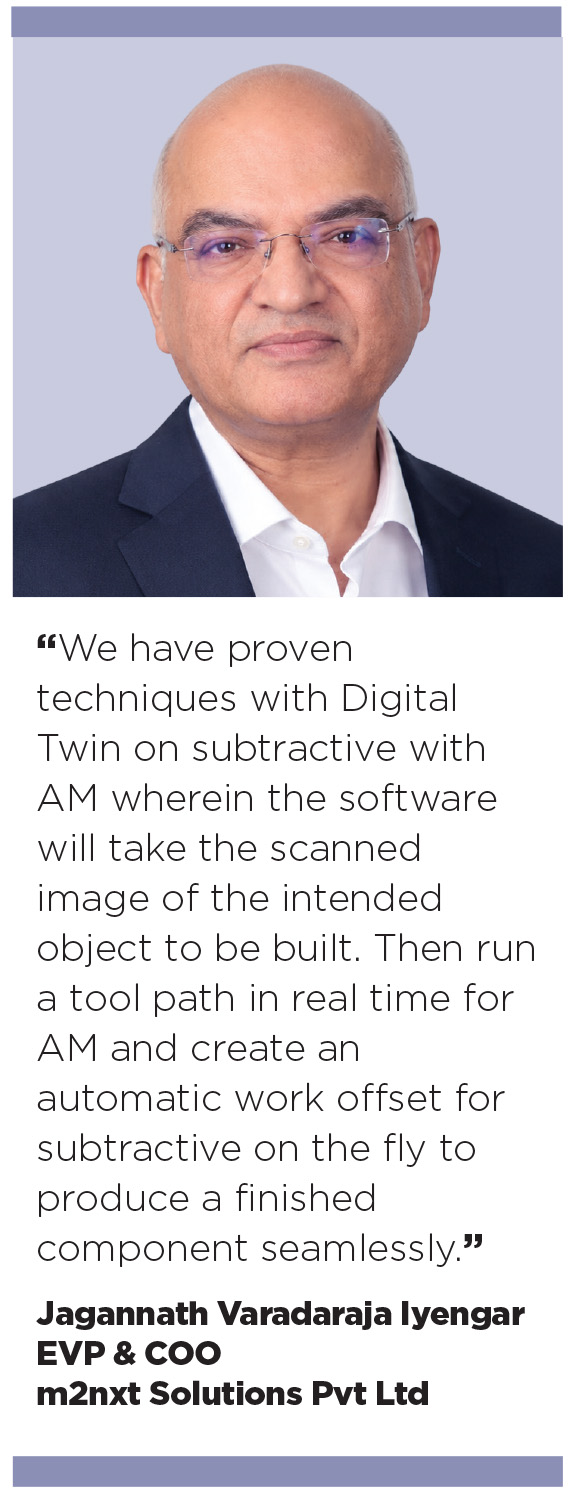
“As-printed titanium and cobalt-chrome are hard and abrasive, and near-net shapes mean interrupted cuts — an argument for rigidity and thermal stability, not exotic tools. Small lots with individual geometries would otherwise demand many expensive special tools while proven solutions already exist for imperfect cast and forged materials. Stability also pays off in finishing: on a knee implant, defects may only appear after final polishing,” he adds.
He emphasizes, “I would invest in a stable machine with standard tooling — minimizing overall cost and avoiding risk in an already demanding, regulated process.”
All-in-One Hybrids vs. Sequential Production Cells
Perhaps the biggest strategic question facing medical device manufacturers today comes down to floor layout. Should a factory invest in all-in-one hybrid machines that deposit metal and mill it inside the same cabinet, or build dedicated sequential cells where automated robots hand off parts between separate 3D printers and CNC machines? Perhaps the biggest strategic question facing medical device manufacturers today comes down to floor layout. Should a factory invest in all-in-one hybrid machines that deposit metal and mill it inside the same cabinet, or build dedicated sequential cells where automated robots hand off parts between separate 3D printers and CNC machines?
In this context, Iyengar makes a direct case for hybrid systems when dealing with patient-specific healthcare. “For customized, regulated medical devices, hybrid wins,” he asserts. “As traceability and validation are dramatically simpler when a part never leaves the datum under single controlled environment. Dedicated sequential cells have their place at high volume, but medical device manufacturing is rarely a high-volume game. On the contrary, products are becoming increasingly unique.”
Naidu agrees that hybrid machines hold unique, life-saving potential for emergency trauma surgery like rebuilding a fractured skull after an accident.
“Hybrids have their place where speed is everything: when throughput time is the critical factor in urgent trauma cases such as craniofacial reconstruction — a single machine with no handover between processes can be the deciding advantage,” he says. “Perhaps one day, a hybrid machine close to the operating room will genuinely save lives.”
However, when scaling up to mass industrial production, he notes, “For high volumes, I clearly see sequential cells winning on ROI and throughput: additive builds are slow while machining is fast, and spindles must run continuously to make money.” He highlights that validation also favors this path at scale — each step is qualified independently under ISO 13485, while a hybrid couples two fundamentally different processes into one validation envelope.
According to Raghav in LMD/DED workflows, coolant residue, chips, or surface contamination from machining must be carefully controlled before further deposition, as they can affect melt pool stability, bonding, shielding gas effectiveness, and deposition quality. He stresses, “Sequential cells allow each process to be optimized independently and run in parallel for higher utilization, validation control, throughput, and long-term ROI.”

This emphasis on flexibility is echoed by Doshi. “Dedicated, digitally connected manufacturing cells are likely to offer greater flexibility and scalability for most medical production environments,” she states. “This modular approach simplifies equipment upgrades, supports evolving production requirements, and makes process validation more manageable in regulated industries.”
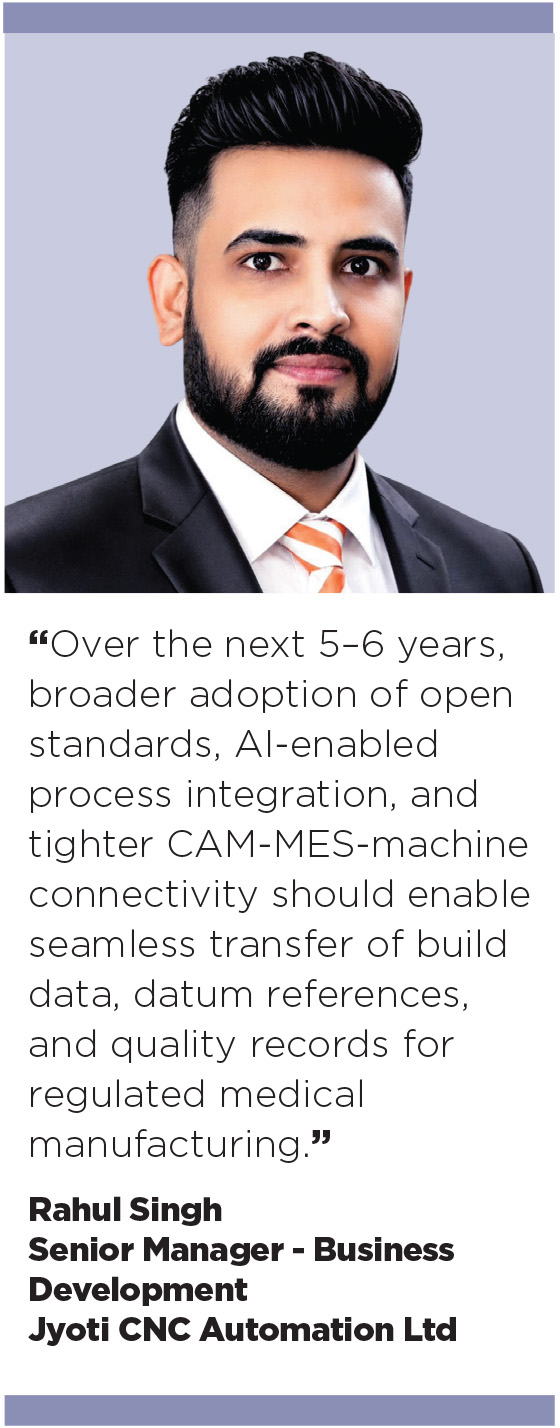
Dr Vishwas reinforces this consensus for industrial production. “When these processes are linked through automation, robotics, and a common digital workflow, manufacturers can achieve higher throughput, better equipment utilization, and the flexibility to produce both patient-specific implants and larger production batches efficiently.”
Singh sees a pragmatic split in how the market will adopt these technologies. “Hybrids make real sense for those one-off, highly customized implants, where you simply can't afford to lose datums moving a part between machines. But once you are really scaling production, dedicated sequential cells still win on ROI. The future looks more like modular cells with a clean, automated handoff, not one machine trying to do it all.”
Engineering the Future of Healthcare
The convergence of Additive Manufacturing and precision CNC machining marks a new era in medical technology. By bringing together open software protocols, adaptive optical scanning, rigid machine tools, and flexible automation cells, manufacturers are moving past old trade-offs between customization and speed.As these hybrid and sequential workflows mature, they promise to lower manufacturing costs, accelerate delivery times, and make custom-fit, high-performance medical implants accessible to patients around the world.
Source: Magic Wand Media
 |
SOUMI MITRA |
 Facebook
.png) Twitter
Twitter Linkedin
 Subscribe