
ADVANCED FINISHING SOLUTIONS FOR MODERN AUTOMOTIVE STEERING SYSTEMS
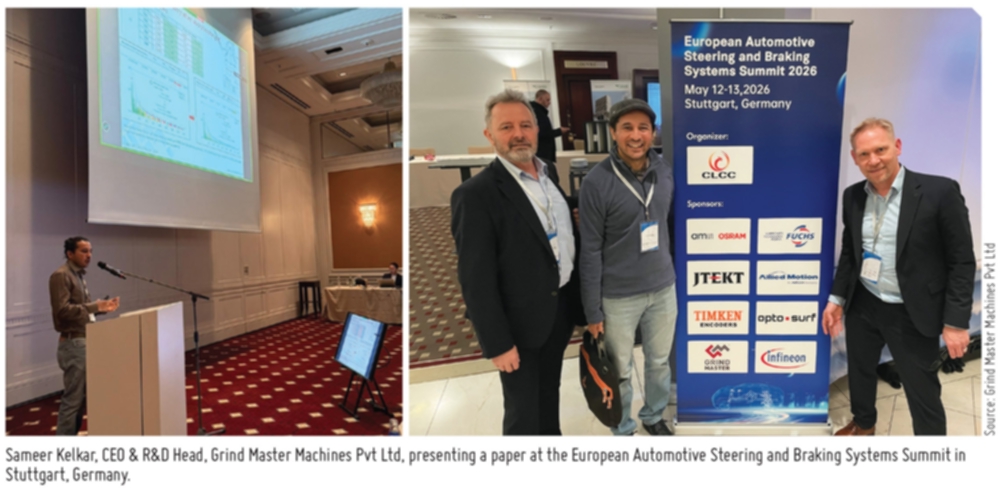
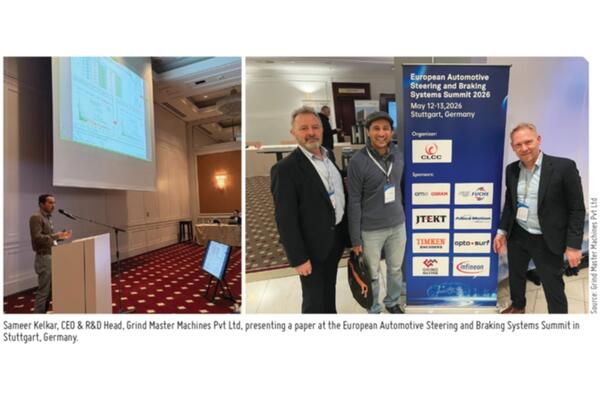
The growing adoption of Electric Power Steering and Steer-by-Wire systems is driving the need for highly precise finishing technologies in automotive steering components. Through its patented NANOSCREW process, Grind Master is advancing microfinishing capabilities to deliver smoother surfaces, lower friction, and improved steering performance.
Driven by electrification, autonomous functions, and rapidly evolving customer expectations, the Automotive industry is undergoing a transformative shift. Among the many subsystems affected by this evolution, steering systems have emerged as a critical contributor to overall vehicle refinement. Noise, vibration, and harshness (NVH) characteristics — once secondary considerations — are now decisive factors in defining perceived quality. This has placed unprecedented emphasis on advanced finishing technologies for steering system components.
Modern Electric Power Steering (EPS) systems demand extremely smooth and precise motion. Unlike hydraulic systems, where fluid damping masked many imperfections, EPS directly transmits mechanical characteristics to the cabin. Even microscopic variations in surface finish, waviness, or geometry can translate into audible noise or tactile feedback at the steering wheel. Consequently, the role of finishing has evolved from a supporting process to a core enabler of premium vehicle performance. It has therefore become ‘mission critical’.
|
|
Surface finishing plays a central role in determining the durability, efficiency, and NVH performance of components such as steering racks, ballscrews, bearings, and drive shafts. A finely controlled surface ensures proper lubrication retention, minimizes friction, and promotes consistent motion. In steering systems, this translates directly into smoother steering feel, reduced noise, and improved long-term reliability.
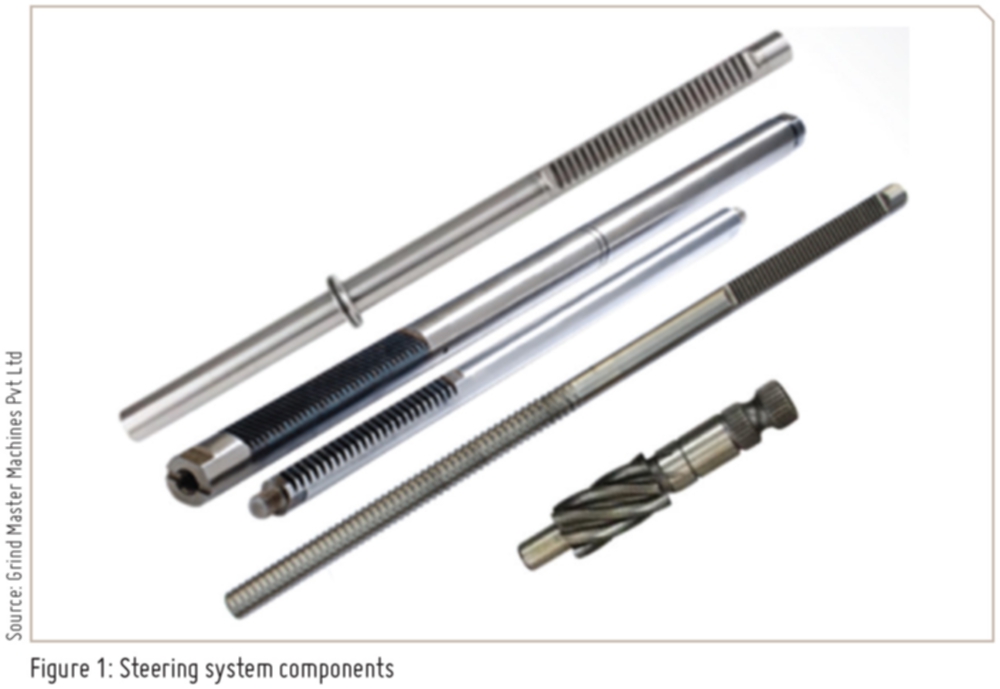
Finishing Requirements in Traditional Steering Racks
Traditional hydraulic steering racks typically require finishing in two key regions: the shaft portion and the area behind the rack teeth. Achieving optimal surface quality in these regions involves a combination of cylindrical finishing, superfinishing, and linear finishing techniques.
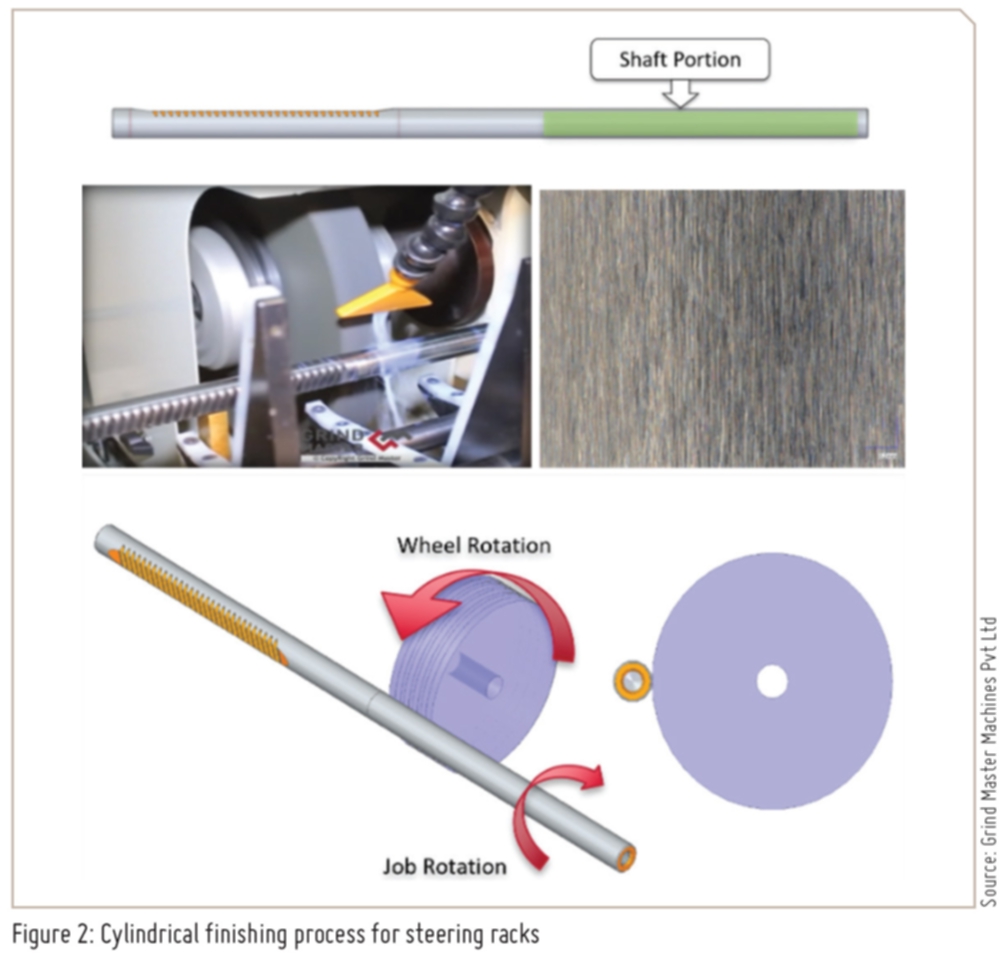
Cylindrical finishing (Figure 2), for instance, involves rotating the component between centers while applying a controlled pressure of a rotating finishing wheel — typically a convolute wheel. Cylindrical finishing is specifically required on the shaft portion and generates a circumferential lay pattern aligned with rotary contact conditions. This finishing method can remove the scale from hardening and generate a decent finish of around Ra 0.2 to 0.3 microns.
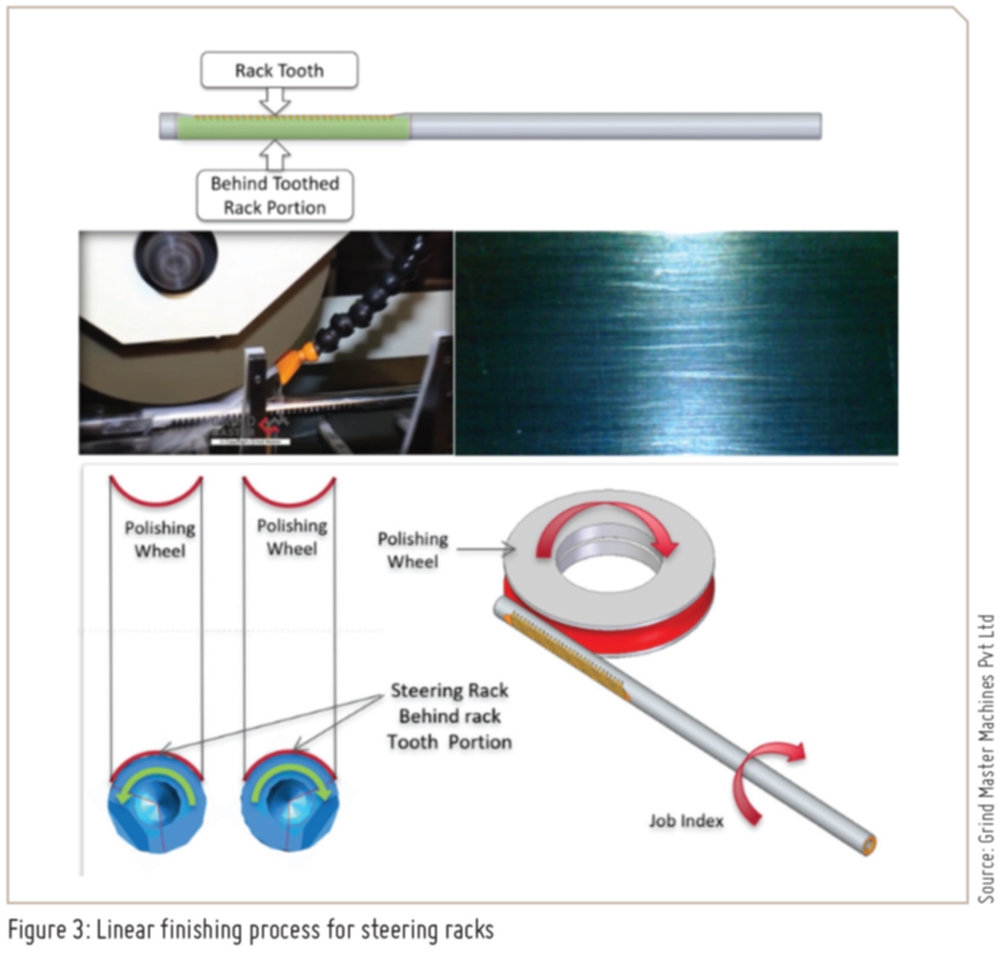
Linear finishing (Figure 3) is applied behind rack teeth to generate a linear lay pattern aligned with the rack’s sliding motion. This directional texture reduces friction during axial movement, ensures smoother contact with guides and seals, improves lubrication behavior, and minimizes wear, ultimately enhancing durability, efficiency, and consistent performance of the steering rack system.
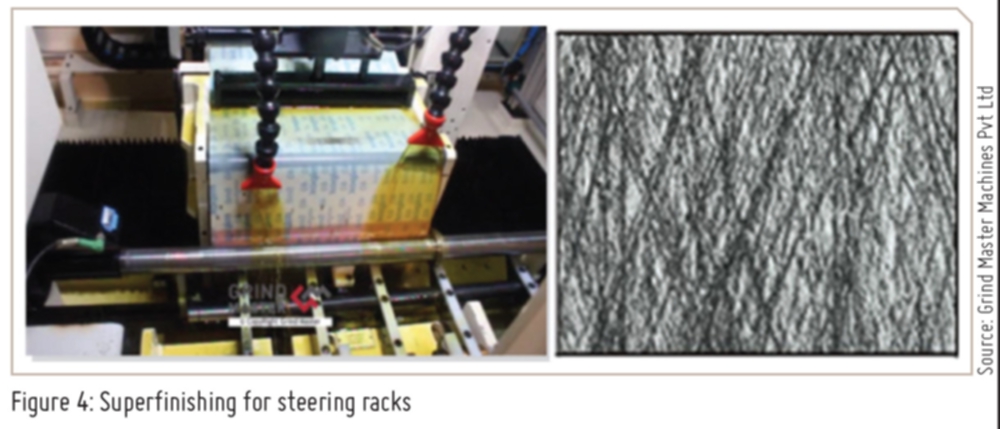
Superfinishing (Figure 4) is a method that uses the combination of rotation of the steering rack and oscillation of a superfinishing abrasive (typically a microfinishing film) for generating a cross-hatch patterned plateau finish. This finish is considered superior to the finish generated by cylindrical finishing — both in terms of Ra value (as fine as Ra 0.02 microns) and much better control on Rz and Tp. Superfinishing can be applied on both the shaft portion and the area behind the rack teeth, making this the preferred method for many steering system manufacturers.
|
|
EPS and SBW Systems Drive Higher Precision Requirements
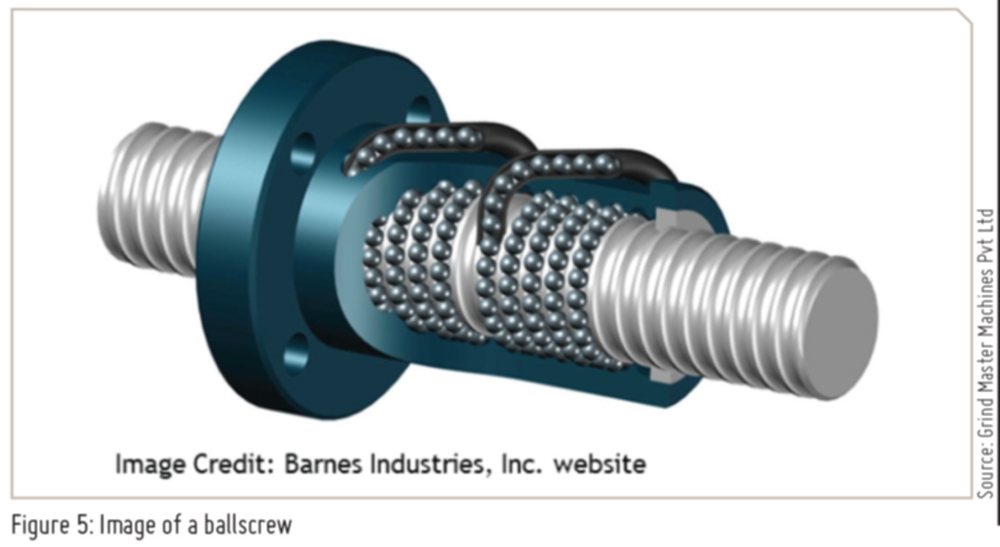
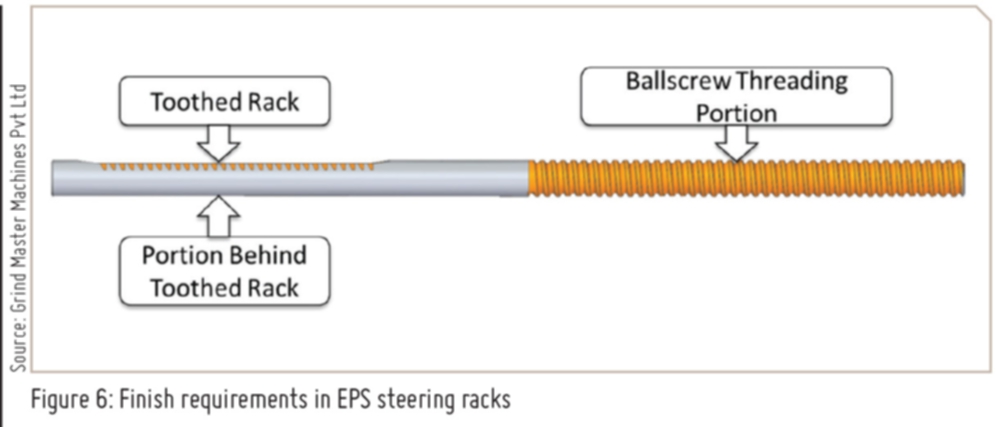
EPS (Electronic Power Steering) and SBW (Steer-By-Wire) systems are considered the future of steering systems. The international Automotive industry, including Europe and China, is fast adopting EPS, with aggressive plans towards SBW. Both the above systems involve ballscrew-based steering mechanisms, which impose significantly tighter requirements (Figure 5 and 6). These systems rely on precise rolling contact between balls and threads, making them highly sensitive to surface irregularities. Key parameters such as lead accuracy, backlash, waviness, and roundness must be tightly controlled. Among these, surface finish plays a particularly critical role as it directly influences friction behavior and noise generation.
|
|
Challenges in Ballscrew Manufacturing
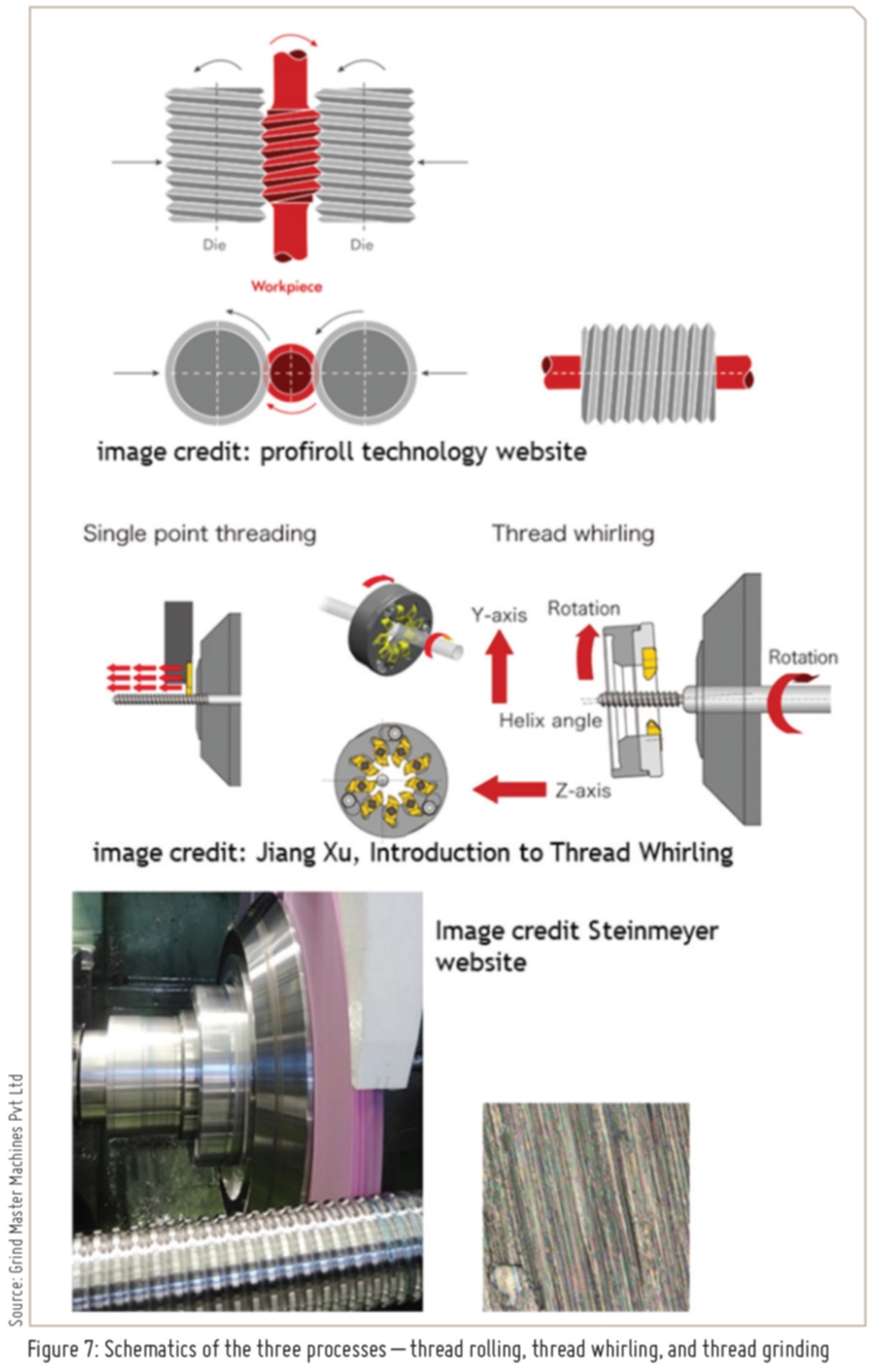
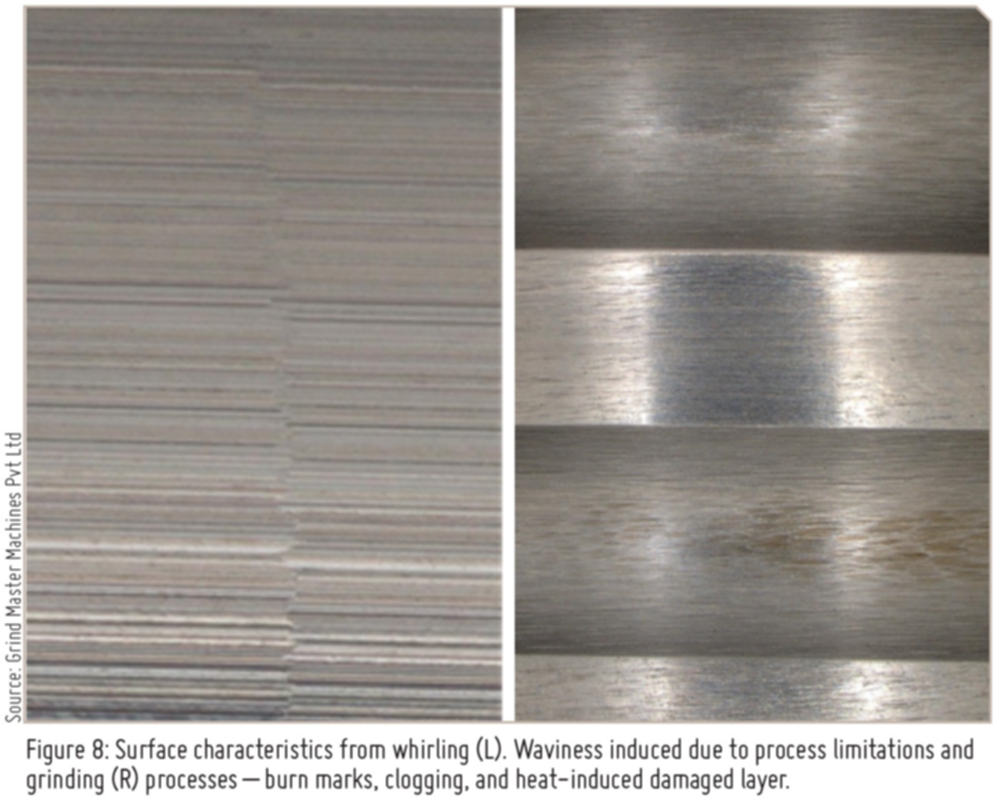
Ballscrews are manufactured using several primary methods, including thread rolling, thread whirling, and thread grinding (Figure 7). Each method offers distinct advantages but also presents unique challenges. Thread rolling is fast and economical, but often produces coarse surfaces and geometric distortions. Thread whirling improves flexibility and finish but tends to introduce periodic waviness. Thread grinding delivers high precision, yet it can result in thermal damage such as grinding burns and micro-cracks, while also being cost-intensive (Figure 8). To overcome these challenges, secondary finishing processes are essential. Traditional approaches include finishing
with abrasive wheels or stone-based superfinishing.
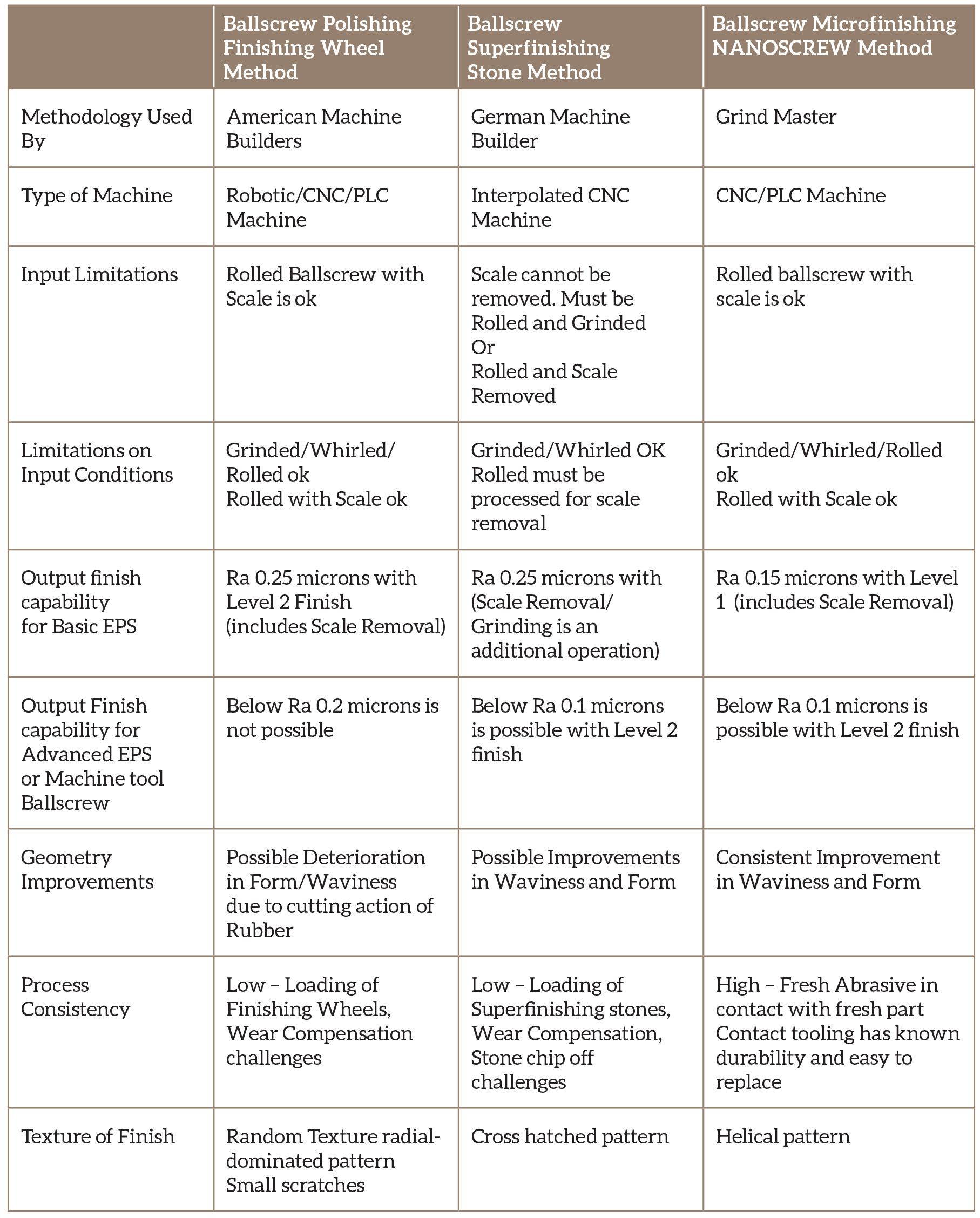
Abrasive wheel-based finishing has several limitations, including the inability to achieve finishes below Ra 0.2 microns, inconsistency in finishing, and limited capability to improve geometry. Abrasive wheel-based finishing machines also tend to use many more processing steps than Superfinishing methods, thus requiring more space, power, and cycle time.
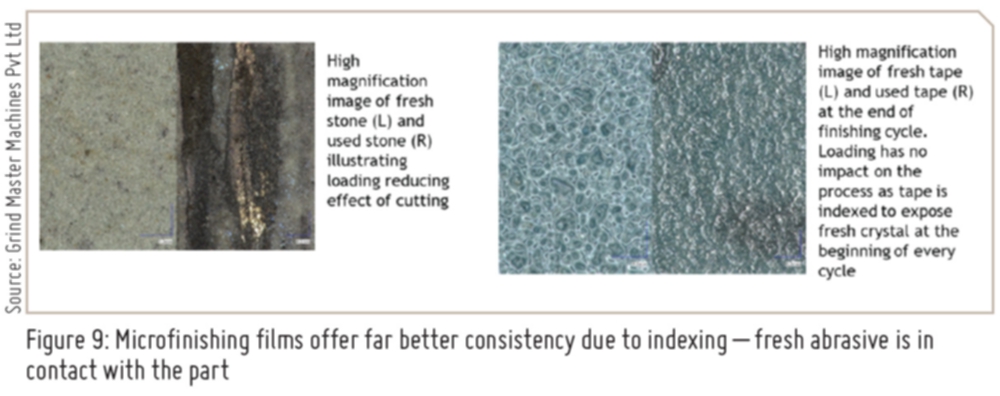
Superfinishing with stones can achieve fine surface finishes but often suffers from process variability. Loading effects on abrasive surfaces can reduce cutting efficiency, leading to inconsistent results and increased maintenance requirements. Superfinishing with stones is also unable to remove the scale that forms on rolled ballscrews after heat treatment. A significant breakthrough in this domain is the development of film-based microfinishing technologies. Grind Master’s patented NANOSCREW process represents a major leap forward, combining specialized tooling with customized abrasive films to ensure complete and uniform contact with complex ballscrew geometries. Unlike conventional methods, this approach guarantees that fresh abrasive material interacts with the component in every cycle, resulting in highly consistent outcomes.
Advancements in Film-Based Microfinishing Technologies
Microfinishing (Figure 9) using film-backed abrasives was introduced as an alternative to traditional stones in the 1970s. Over the decades, advancements in machine design and tooling have extended these benefits to a wide range of automotive components, including crankshafts, camshafts, and transmission parts.
|
|
Grind Master has developed and patented the ‘NANOSCREW’ method to apply microfinishing films to ballscrews. Advancements in the process in the past few years have allowed the process to conform to helical geometries, achieving surface finishes below Ra 0.05 microns. This represents a substantial improvement over conventional processes and is particularly valuable for high-performance EPS systems.
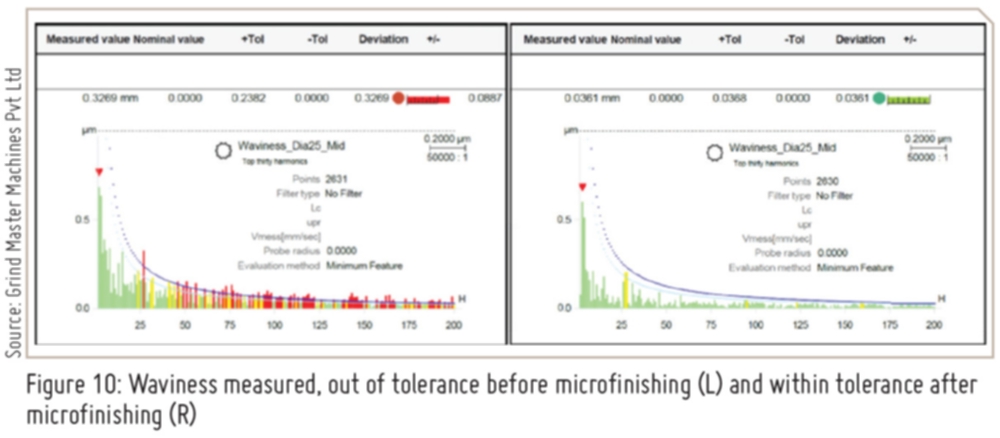
The microfinishing method uses force-balancing finish units that wrap around the part, eliminating bending and improving contact uniformity. The result is reduced cycle time, enhanced geometry control, and improved surface consistency. By combining hard and soft contact elements, these systems achieve both geometry improvement and surface smoothing in a single operation (Figure 10).
Improving Surface Quality, Geometry, and NVH Performance
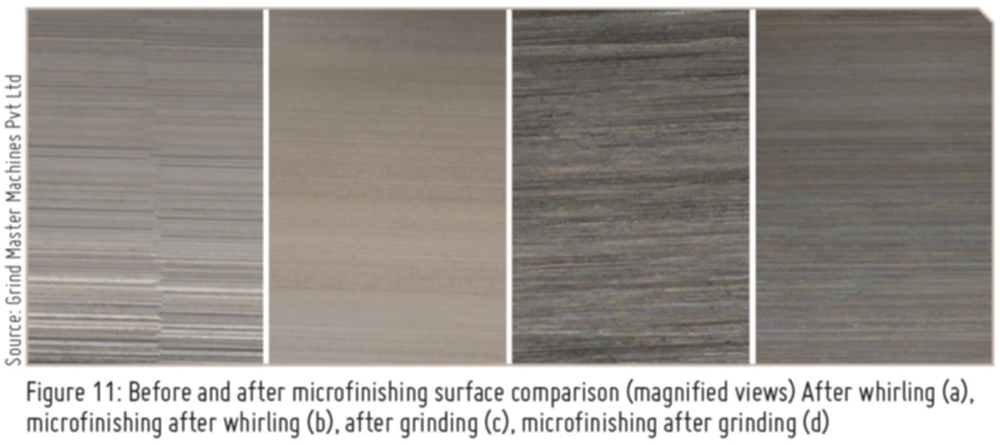
The impact of advanced microfinishing on component performance is profound. Surface roughness reductions from Ra 0.4 microns to Ra 0.04 microns are routinely achieved, while waviness improvements of over 90 percent have been documented. These improvements lead to smoother motion, reduced friction, and significantly lower noise levels. In practical terms, this translates into quieter cabins and more
refined steering feel in modern vehicles (Figure 11).
Flexibility is another important advantage of modern microfinishing systems. A single machine can handle multiple part variants, accommodating differences in diameter, pitch, and length with minimal setup time. This is particularly valuable in high-mix production environments, where quick changeovers are essential for maintaining productivity.
Comparative Advantages of Film-Based Microfinishing
Comparative analyses highlight the superiority of microfinishing with film over traditional methods. While wheel-based polishing may introduce scratches and inconsistent textures, and stone superfinishing may suffer from tool wear and variability, film-based processes deliver a controlled helical texture that aligns with the functional requirements of ballscrew operation. The result is not only better surface quality but also improved repeatability and process reliability.
While steering racks and ballscrews are the primary focus, similar finishing technologies are applied to other steering components such as drive shafts, sector shafts, and control valve shafts. Dedicated process development facilities, equipped with advanced metrology tools, enable the customization of finishing solutions to meet specific application requirements.
Ultimately, the advancement of microfinishing technologies has redefined the standards for steering system manufacturing. By enabling ultra-smooth surfaces, precise geometries, and highly consistent results, these processes play a crucial role in achieving the NVH performance demanded by modern vehicles. As the industry continues to move toward electrification and autonomy, the importance of such technologies will only continue to grow.
Making for the World
|
|
Grind Master has been a pioneer in Superfinishing and Microfinishing in India, with a profound impact on the Automotive industry in achieving fine finishing specifications. With over 50 percent exports in advanced technology products, it is today recognized globally as an expert in the field, with a strong capability in process research and breakthrough developments. Working with the most advanced steering system manufacturers globally has enabled Grind Master to stay at the forefront of developments. The company is proud to bring its truly ‘Made in India – Made for the World’ microfinishing and superfinishing solutions to the Indian steering industry.
 |
SAMEER KELKAR |
 |
AKSHAY BHAT |
 Facebook
.png) Twitter
Twitter Linkedin
 Subscribe