
INTELLIGENT ROTOR MAGNET INSERTION AUTOMATION
One of the most critical and skill-dependent processes in EV motor assembly is rotor magnet insertion, where precision directly impacts motor performance and reliability. This case study from Mekhos Technology Services demonstrates how intelligent, selective automation transformed a manual, error-prone operation into a robust and scalable solution, delivering measurable gains in productivity and quality.
Mekhos Technology Services Pvt Ltd is a bootstrapped Indian automation company founded in 2015, specializing in assembly and testing solutions through turnkey, bespoke machine development. Mekhos focuses on delivering reliable, value-driven automation for high-mix, high-variant manufacturing environments, particularly in the Automotive, Electronics, and Medical sectors. The organization’s engineering philosophy emphasizes problem definition, root-cause analysis, and pragmatic design choices that balance robustness, flexibility, and cost—an approach well aligned with India’s price-sensitive manufacturing landscape. The rotor magnet insertion solution discussed in this paper is a representative example of Mekhos’ capability to translate productivity challenges into scalable automation outcomes.
India’s electric two-wheeler market is expanding at an unprecedented pace, compelling manufacturers to scale up production while improving quality, consistency, and cost efficiency. At the National Productivity Summit 2025 held in Ahmedabad, the company presented a case study focused on one such critical manufacturing challenge: rotor magnet insertion in EV motor assembly. This article adapts that conference presentation into an industry narrative, outlining the problem definition, solution development, and implementation journey of a semi-automatic magnet insertion system.
|
|
Issues in Rotor Magnet Insertion
Rotor magnet insertion directly influences motor performance, efficiency, and reliability. In the pre-implementation stage, this operation was entirely manual. Operators were required to identify the correct magnet variant, verify polarity, and insert magnets into the rotor assembly. Depending on the design, up to forty magnets were inserted per rotor. With multiple rotor variants in production, the process was highly skill-dependent and vulnerable to human error.
The manual process resulted in lower output per manpower. Work-in-progress levels were high and operator upskilling time was significant. More critically, the absence of structured poka-yoke mechanisms increased the risk of incorrect polarity insertion and magnet damage, leading to rework and potential scrap. These issues became increasingly visible as annual production volumes continued to rise.
The project was initiated with clear and measurable objectives. These included reducing cycle time, improving production throughput, lowering dependency on operator skill, reducing training time, and minimizing rejection through robust poka-yoke implementation. An equally important requirement was the ability to handle multiple rotor variants within a single machine, while remaining viable for a price-sensitive market.
Selective Automation as the Solution
To ensure that the solution addressed root causes rather than symptoms, a detailed Why-Why analysis was conducted. The analysis highlighted excessive manual verification, lack of standardized changeover methods, and absence of error-proofing as the primary contributors to inefficiency. This reinforced the need for an approach that combined automation with process discipline and lean principles.
During the solution generation phase, robotic automation was evaluated, particularly for its flexibility in handling future rotor design changes. However, a detailed pro-con analysis revealed that robotic solutions resulted in higher capital cost, increased cycle time, and reduced robustness. Simultaneous insertion of multiple magnets was not achievable in a cost-effective manner. Based on life cycle assessment and manufacturability considerations, a simpler mechanical solution was selected.
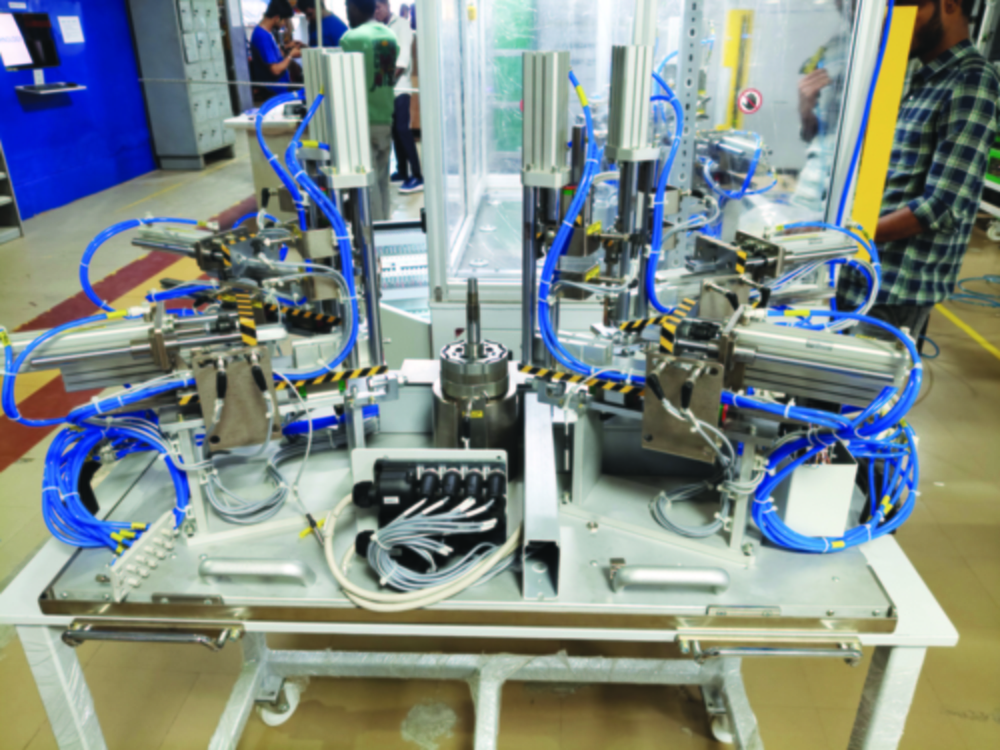
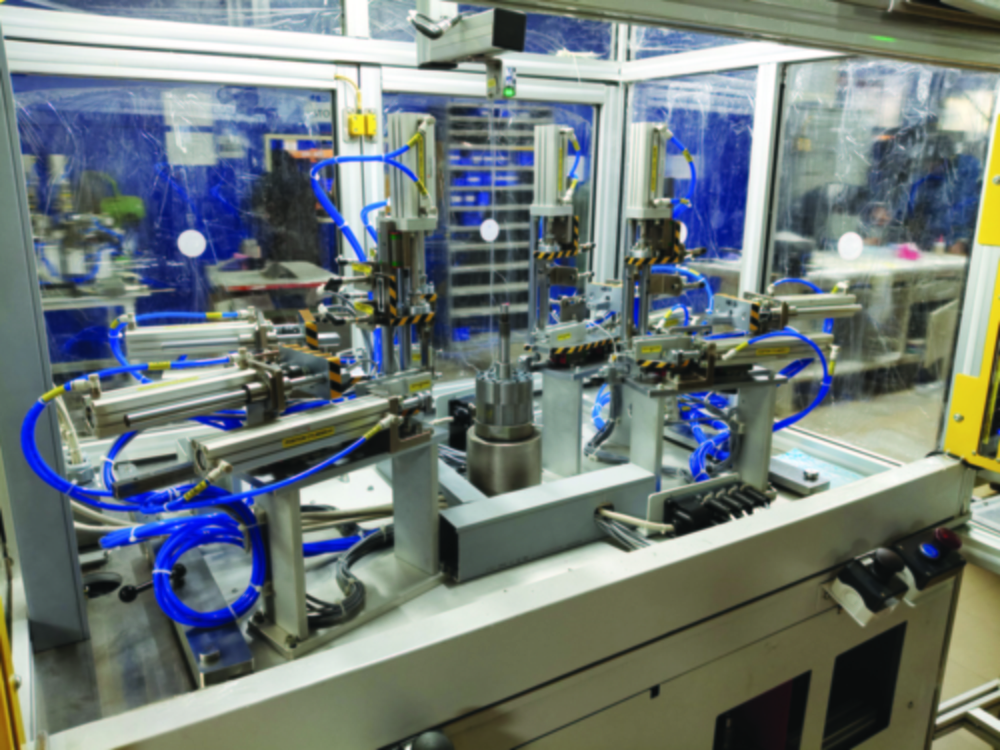
The final concept was a semi-automatic rotor magnet insertion machine with manual loading and unloading and fully automatic insertion. The operator loads the rotor and a group of magnets into dedicated magazines. Magnet insertion is carried out using pneumatic cylinders, while a servo-driven rotary system precisely positions the rotor for each insertion location. Electrical and pneumatic quick connections enable rapid variant changeover using SMED-based fixtures.
|
|
Quality assurance was embedded into the machine through multiple layers of poka-yoke at both prevention and detection levels. Polarity sensors ensure correct magnet orientation prior to insertion. Component presence sensors confirm proper loading. Proximity sensors monitor home and work positions of pneumatic cylinders. Orientation detection sensors ensure fixtures are correctly referenced, while docking locator pins eliminate fixture misalignment during changeover.
Substantial Productivity Gains
Following implementation and stabilization, the results were significant. Cycle time was reduced by 48 percent compared to the manual process. Production per shift at the station increased by 90 percent, while overall cell output improved by 30 percent. The risk of magnet damage was reduced due to consistent insertion force and controlled orientation. Operator upskilling time also reduced, as the machine logic guided correct operation.
One of the key learnings from this project was the importance of selective automation. Fully automating complex, non-repetitive activities such as rotor component loading would have increased system complexity without proportional benefit. By automating only repeatable, value-adding steps and designing for future variant changes within defined limits, the solution achieved robustness, flexibility, and viability.
From a productivity standpoint, the project aligns strongly with the broader themes discussed at the National Productivity Summit 2025. The focus was not merely on increasing speed, but on improving effectiveness across manpower, quality, and flexibility. By embedding quality at the source and reducing manual dependency, the solution improved output per operator while lowering risk and variability.
This project demonstrates that intelligent mechanical automation, supported by poka-yoke and structured problem-solving, can deliver substantial productivity gains without excessive complexity. As India’s EV manufacturing ecosystem continues to mature, such pragmatic and scalable automation approaches will play a vital role in driving sustainable industrial growth.
 |
ANANTHA KARANTH |
 Facebook
.png) Twitter
Twitter Linkedin
 Subscribe