
Sandvik Coromant and Partners to Accelerate Digital Manufacturing Through STEP-Based Collaboration
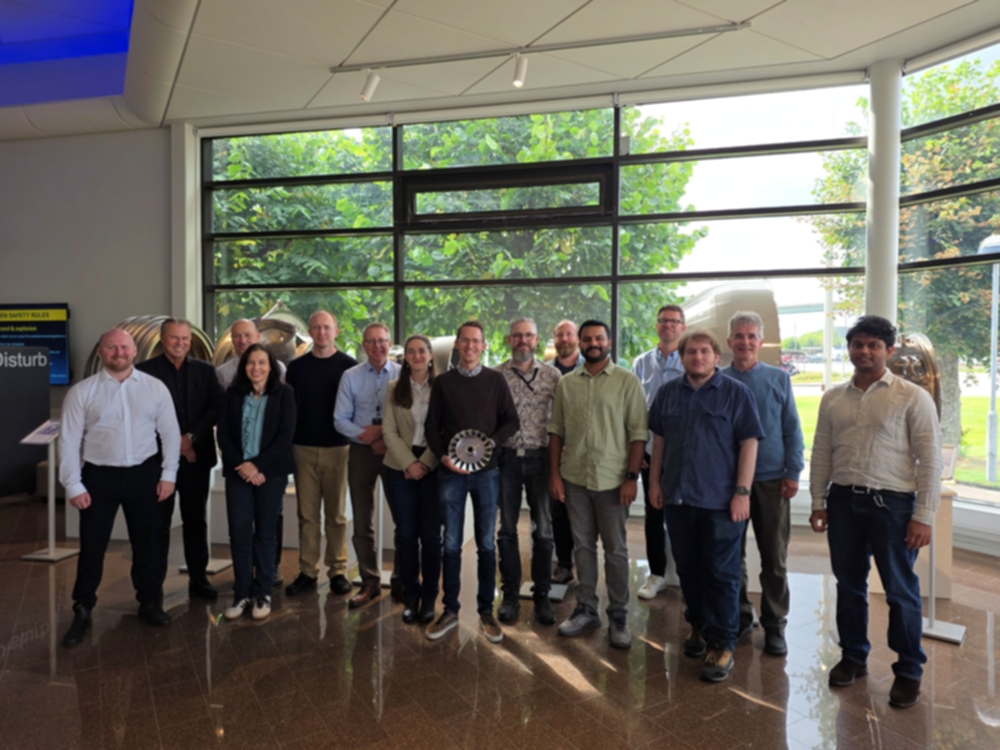
Sandvik Coromant, a metal cutting and manufacturing solutions expert, has participated in a successful research project for the Standard for the Exchange of Product (STEP) data. Together with GKN Aerospace Engine Systems, Chalmers University of Technology, and Fraunhofer Chalmers Research Centre for Industrial Mathematics, the working group has developed a collaboration environment and applied it for the maintenance and repair operations (MRO) process for complex metal parts. The results demonstrate how ISO standards for digital manufacturing offer a foundation for interoperable, model-based data exchange and execution across the entire repair value chain.
Repairing a damaged turbine blade is almost always a unique situation. No two damages are alike, tolerances are extremely tight, and the work requires specialist knowledge across multiple domains. Traditionally, images, PDFs, screenshots, and native CAD/CAM files need to be shared back and forth between companies and software systems to enable repairs – a time-consuming process that increases the risk of errors.
Through the Dig4ReMan project, funded by Vinnova and the Advanced Digitalization program, the team applied STEP Application Protocols AP242 and AP238 standards to create a neutral, model-based language for 3D geometry, PMI, machining instructions, and tool data. Much like a shared cloud document, everyone involved can view and update the same model without losing information.
The result is a fully connected digital thread running through the repair process – from inspection of a damaged part, to material removal and additive manufacturing planning, simulation, CAM programming, and final machining and verification. GKN Aerospace estimates that a refurbished component can save up to 95 percent in material, energy, and CO₂ emissions compared to a new spare part, and cost is radically lower.
Researchers from Chalmers and Fraunhofer Chalmers Centre contributed advanced models that predict deformation, tolerances, and thermal behavior. Sandvik Coromant contributed cutting tool expertise and data standards knowledge enabling CNC machines and CAM systems to exchange richer manufacturing information than traditional G-code allows.
“This type of machining is extremely demanding,” said Johan Vallhagen, Senior Researcher & Project Lead, GKN Aerospace. “Each damaged blade presents a new challenge, and it is common to rely on manual adjustments and scattered communication across many systems. By using a standardized digital chain, we can reduce complexity dramatically and ensure that every expert works with the same accurate data.”
The ISO STEP standards were used in every step of the workflow. AP238 enables CAM-to-CAM and CAM-to-machine exchange of machining sequences, tool definitions, and ISO 13399 cutting tool parameters. AP242 enables model-based definition used consistently in inspection, planning, simulation, and verification.
“It wasn’t just about repairing parts” said Mikael Hedlind, Project Coordinator, Sandvik Coromant. “It was about proving that design, machining, simulation, and inspection data can flow seamlessly between companies. STEP standards gave us a shared language, and once everyone speaks the same language, collaboration becomes faster, clearer, and more intelligent.”
The Dig4ReMan project demonstrates that STEP-based data exchange can carry true manufacturing intent across different organizations, disciplines, and software systems. Sandvik Coromant and its partners will continue to continue developing methods that strengthen digital collaboration within manufacturing.
 Facebook
.png) Twitter
Twitter Linkedin
 Subscribe