
CERATIZIT Advances Recycling-Based Tungsten Supply Security for Europe
Mamer, Luxembourg – Securing the supply of tungsten has become a defining challenge for Europe’s metalworking industry. At the European Cutting Tools Conference (ECTC) in Graz, the European Cutting Tools Association (ECTA) underlined the urgency clearly: “Recycling is now decisive: returning cemented carbide to the European cycle is a key lever for supply security and competitiveness.”Mamer, Luxembourg – Securing the supply of tungsten has become a defining challenge for Europe’s metalworking industry. At the European Cutting Tools Conference (ECTC) in Graz, the European Cutting Tools Association (ECTA) underlined the urgency clearly: “Recycling is now decisive: returning cemented carbide to the European cycle is a key lever for supply security and competitiveness.”
For the CERATIZIT Group, this message reinforces the long-term positioning of our supply chain as resilient by design — built on an integrated value chain, advanced recycling capabilities, and transparent standards. It also confirms the growing relevance of keeping tungsten-containing scrap in European recycling loops in order to strengthen continuity of supply, compliance, and planning reliability for customers.
ECTA states that China continues to control more than 80 percent of global tungsten production and processing, while around 50 percent of cemented carbide used in Europe already originates from recycling. At the same time, the association warns that European recycling systems are under growing strain and calls for coordinated action across the value chain to keep more tungsten in Europe and expand processing capacity.
Integration and Control Across the Value Chain
CERATIZIT’s supply security is built on a fully integrated tungsten value chain as part of the Plansee Group — from powder production to carbide manufacturing and finished tools — creating control over crucial steps and reducing exposure to short-term market fluctuations.
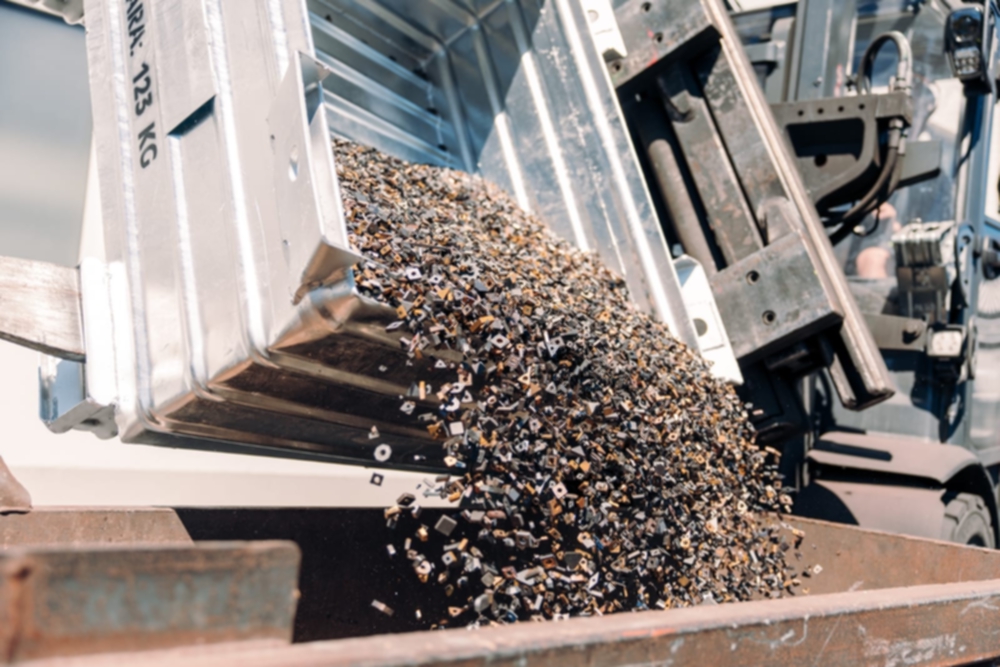
A central element of this model is the structured return of tungsten-containing scrap into Western recycling networks. Through subsidiary Stadler Raw Materials — Europe’s largest collector and trader of tungsten scrap and among the largest globally — tungsten-containing scrap is systematically collected and channeled into established recycling routes. This helps to keep valuable secondary raw materials in Europe. “We systematically collect and sort tungsten-bearing scrap across Europe and channel it into our Western recycling network,” according to Andreas Lackner, Member of the CERATIZIT Group Executive Board.
Recycling-Driven Supply as a Strategic Stability Factor
CERATIZIT operates a recycling-driven supply chain with a tungsten recycling rate of over 90 percent (FY 2024/25). This circular approach reduces dependence on primary raw materials and strengthens long-term supply resilience. Oliver Sax, Member of the CERATIZIT Group Executive Board, says, “CERATIZIT manages a fully integrated value chain — from powder production to carbide manufacturing and finished tools — complemented by advanced recycling capabilities.”
The ECTA communication supports this broader industry context by highlighting recycling as a decisive lever for Europe’s competitiveness and supply security. “Recycling is now decisive: returning cemented carbide to the European cycle is a key lever for supply security and competitiveness,” Federico Costa, President, ECTA, states.
Responsible Sourcing and Transparent Standards
CERATIZIT ensures raw materials are sourced responsibly and transparently through RMI-conformant smelters and a strict Supplier Code of Conduct. This supports compliance and traceability expectations in customer supply chains.
In this context, CERATIZIT’s integrated approach combines recycling, processing capability, and transparent documentation to support customer requirements in an environment shaped by raw material volatility and increasing traceability expectations.
What this Means for CERATIZIT Customers
For customers, the value is clear:
- Stronger continuity of supply through an integrated value chain and control of crucial process steps
- Recycling-driven supply security supported by an over 90 percent tungsten recycling rate (FY 2024/25)
- Structured European scrap collection and recycling routes through Stadler Raw Materials
- Responsible sourcing and traceability through RMI-conformant smelters and a strict Supplier Code of Conduct
- Planning reliability in a market environment marked by volatility and tightening raw-material availability
 Facebook
.png) Twitter
Twitter Linkedin
 Subscribe