
Lead-Free Machining and the Cutting Tool Industry
The regulatory landscape governing lead in manufacturing is undergoing a significant transformation in Europe. Driven by a suite of directives and regulations, the permissible use of lead across a broad range of products and materials is being curtailed with increasing rigor. For engineers and manufacturers, particularly those supplying European markets or working with free-cutting alloys, this transition demands both awareness and adaptation.
Europe’s restrictions on lead are governed not by a single regulation but by an interlocking set of frameworks, each targeting a distinct product category or use case.
RoHS (Restriction of Hazardous Substances) limits lead in electrical and electronic equipment to a maximum of 0.1 percent by weight in homogenous materials. Exemptions that previously allowed lead in high-melting-point solders and as an alloying element in steel, aluminum, and copper are being phased out on fixed timelines, offering manufacturers a narrowing window for compliance.
REACH takes a broader view, restricting total lead content in consumer products and accessible articles — particularly those reachable by young children — to 0.05 percent (500 ppm) by weight. The European Chemicals Agency (ECHA) continues to advance authorization requirements for metallic lead in European manufacturing, signaling that restrictions will only intensify.
The Drinking Water Directive has halved the permissible lead concentration at the tap from 10 µg/L to 5 µg/L, effectively mandating a 0.1 percent maximum lead threshold for alloys such as brass and bronze used in plumbing applications. EU Positive Lists are now being enforced to ensure compliance across all water-contact materials.
Ammunition Restrictions round out the picture: the EU has banned lead gunshot in wetlands and is progressing toward broader habitat-wide restrictions under REACH, with the eventual phase-out of lead in shots, bullets, and fishing weights firmly on the agenda.
Implications for Indian Manufacturers
For Indian manufacturers exporting to European markets, these regulations carry direct compliance obligations. Products containing lead concentrations above the prescribed thresholds — whether in electronic components, plumbing fittings, or consumer-accessible parts — risk rejections, withdrawal from the market, or significant financial penalties. Exporters must audit their material supply chains, update product declarations, and engage proactively with EU customers to confirm conformity. These regulations make it clear that early adaptation is preferable to reactive compliance.
The Machining Challenge
From a cutting tool perspective, the shift away from lead-containing alloys introduces a set of machining challenges that deserve careful attention. Alloys developed under the new lead restrictions will have significantly different machining properties compared to their leaded counterparts.
To understand why, it helps to examine precisely what lead does within an alloy’s microstructure. During machining, lead — a soft, heavy metal — forms small nests or inclusions within the alloy. These inclusions act as predetermined breaking points, causing chips to fracture at regular intervals and producing the short, controllable chips that are essential for machining. At the same time, lead functions as an in-situ lubricating film at the tool-workpiece interface, reducing friction, lowering cutting forces, and measurably extending tool life. It is this dual role — structural chip breaking and interfacial lubrication — that makes lead so effective as a machinability additive, despite its well-documented toxicity.
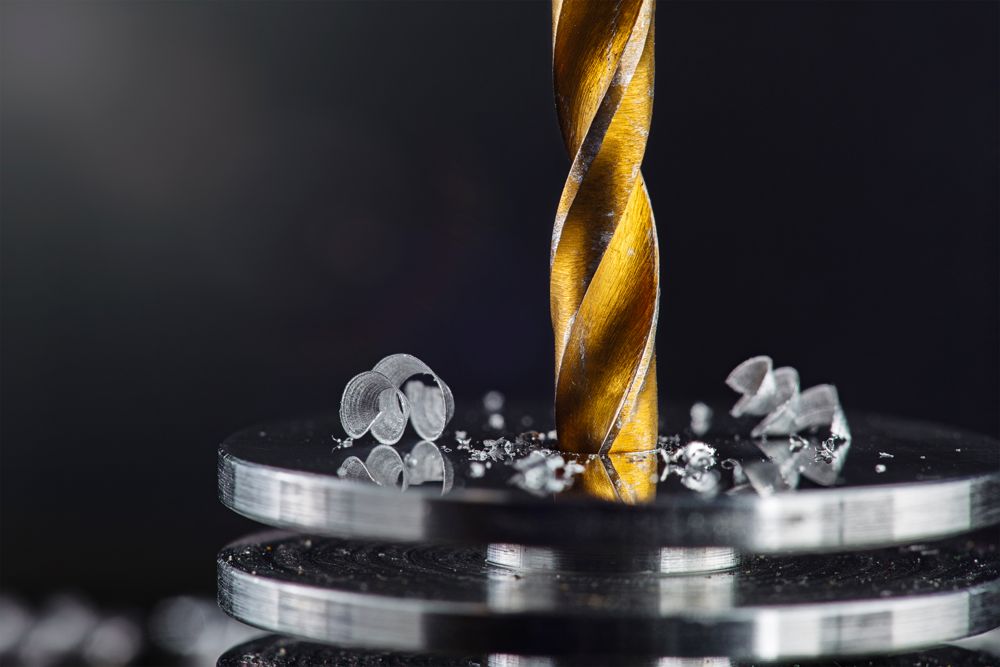
Without lead, whether in brass or free-cutting steel, chips tend to become long and stringy, increasing the risk of tool entanglement, surface damage, and unplanned machine downtime. The absence of the lubricating effect also means greater heat generation at the cutting edge, accelerated tool wear, and the need for more frequent tool changes — all of which carry cost and productivity implications.
Tooling and Process Adaptations
Transitioning to lead-free alloys is not simply a material substitution — it requires a systematic review of the entire machining process. Cutting speeds, feed rates, and depth of cut may all need recalibration. Tool coatings optimized for leaded materials may perform sub-optimally on alternatives such as bismuth-bearing brass or silicon-brass alloys. Carbide grades, insert geometries, and chip breaker designs should be evaluated specifically for the lead-free substitute in question, as performance characteristics vary considerably between alternative alloys.
Coolant selection and delivery also warrant attention. High-pressure coolant systems can help mitigate the increased heat generation associated with lead-free machining, though the appropriate approach will depend on the specific alloy and component geometry. Tooling suppliers and end users alike will benefit from systematic trials rather than assuming that existing parameters translate across to lead-free materials.
The regulatory momentum in Europe is unambiguous: lead will be progressively removed from the manufacturing supply chain. For the Cutting Tool industry, this represents both a challenge and an opportunity — to develop tooling solutions, test methodologies, and process knowledge that enable manufacturers to machine lead-free alloys with the efficiency and reliability previously achieved with leaded materials. Early engagement with this transition will be the distinguishing factor for those who compete successfully in this new environment.
 |
NIKHIL NAYAK |
 Facebook
.png) Twitter
Twitter Linkedin
 Subscribe