
AFM Cluster, AER Automation Join Forces to Launch ÁNIMA
Donostia / San Sebastián, Spain – AFM Cluster and AER Automation, two of Spain’s leading associations in robotics, automation, and manufacturing, have joined forces to create ÁNIMA, the Spanish Association for Humanoid Robotics and Physical AI, a new organization set up with the aim of bringing together, representing, and supporting the development of this emerging technological and industrial ecosystem in Spain.
ÁNIMA brings together, in a single initiative, manufacturers of humanoid robots, their components and systems, artificial intelligence and software developers, system integrators, technology centers, and universities, as well as end-user companies that are beginning to explore the opportunities that these new technologies offer.
The association has been launched at a time when the development of humanoid robotics is accelerating at an astonishing rate. Developments that until recently were confined to laboratories and experimental projects are now beginning to enter factories, workshops, warehouses, and other industrial environments. There are also significant opportunities in areas such as home assistance, personal care, and other services.
With international competitions for logistics humanoid robots, announcements by Asian, European, and US manufacturers of large-scale production plans, and so on, the sector is entering a new phase involving the industrialization of the technology and the exploration of real-world applications.
“We are entering a new era in robotics. The convergence of artificial intelligence and robotics is accelerating the development of humanoid robots that are increasingly autonomous, versatile, and capable of functioning in environments designed for people,” says Carlos Méndez, President, ÁNIMA and CSO, ARITEX.
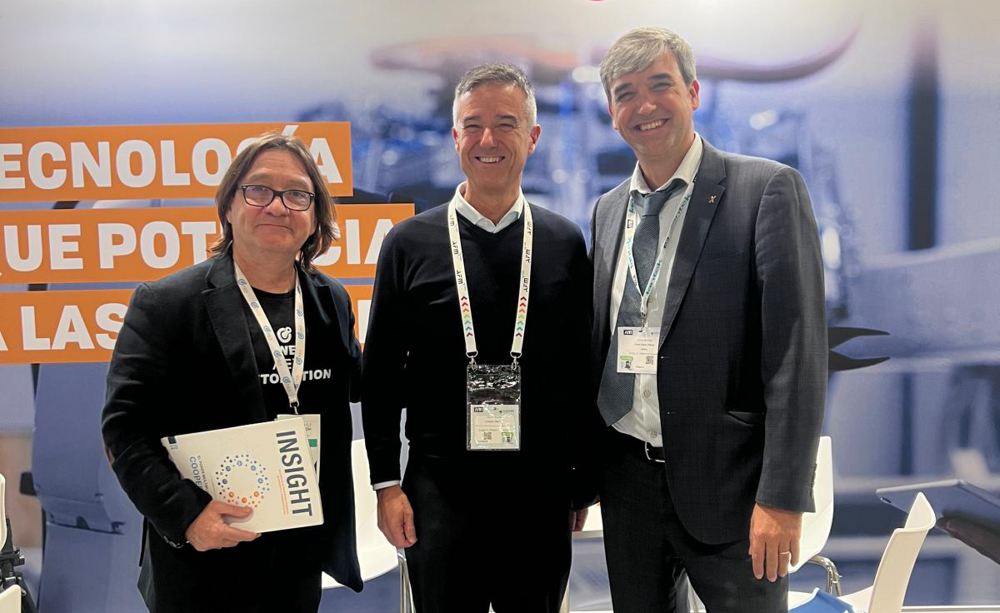
The vice-chairmanships have been awarded to Francesco Ferro, CEO, PAL Robotics and Agustín J Sáenz, Director of Strategy, Market and Technology, TECNALIA, while Alfonso Ganzabal, CEO, SISTEPLANT, will serve as secretary. All four organizations are pioneers in the fields of humanoid robotics and physical AI.
From Artificial Intelligence to Physical AI
Behind this acceleration lies a combination of technological advances that are now converging: increasingly compact and efficient actuators, high-performance computing, new sensors, advanced vision systems, simulation, imitation learning, and artificial intelligence models capable of linking perception, language, and task execution.
This is what is coming to be known as physical AI: bringing the capabilities of artificial intelligence into the physical world, enabling machines to perceive their surroundings, understand situations, and act upon them.
Humanoid robots are one of the most visible expressions of this. Their main distinguishing feature is that they replicate, either fully or partially, the functional organization of the human body, enabling them to function in environments originally designed for people and to coexist safely with them.
This characteristic is opening up the possibility of automating operations that up to now have proven to be over-complicated or inefficient, especially in scenarios with high variability, changing tasks, or facilities that are difficult to modify.
But physical AI goes far beyond humanoid robots. These perception, reasoning, and action capabilities can also be incorporated into industrial and collaborative robots, autonomous mobile systems, machine tools, and more broadly across all types of machinery and equipment, gradually endowing them with greater levels of autonomy, adaptability, and interaction with their environment.
This broad view of physical AI also explains why AFM Cluster and AER Automation have come together to drive the ÁNIMA project forward. The experience of both organizations, which represent more than 1,000 companies in the robotics, automation, digitalization, machine tool, and manufacturing technologies fields, makes it possible to link the development of humanoids to a much broader industrial landscape, in which artificial intelligence is set to transform not only robots, but also machines and production systems.
An Industrial Opportunity for Spain
For Spanish industry, the opportunities offered by humanoid robotics go far beyond simply manufacturing the complete robot.
An extensive value chain is emerging around these machines, encompassing motors, actuators, gearboxes, bearings, sensors, vision systems, electronics, batteries, lightweight materials, simulation, software, artificial intelligence, cybersecurity, integration, maintenance, and training.
Spain has industrial and technological capabilities in many of these areas.
ÁNIMA was set up precisely with the aim of bringing these skills together and fostering cooperation between companies, technology centers, universities, and end users, so that Spanish industry can play a significant role within this new global value chain.
The association has a team with extensive experience in association management. ÁNIMA is headed by Naiara Zubizarreta, Director of STECH, AFM Cluster, with Alex Salvador, Director of AER Automation, serving as deputy director. Both bring with them extensive experience in the associations sector and in-depth knowledge of the robotics, automation, and advanced manufacturing sectors.
A Meeting Point for the Entire Ecosystem
As set out in ÁNIMA’s articles of association, membership of the association is open to manufacturers of humanoid robots and other physical AI systems —including bipedal, quadrupedal, mobile-torso, and exoskeleton robots—, component manufacturers; software and artificial intelligence companies; engineering firms and system integrators, importers and distributors, specialized consultancy firms, technology centers, universities and training centers, end-user companies, and other stakeholders linked to the sector.
Its main areas of focus will include mapping the Spanish humanoid robotics and physical AI ecosystem, technological and market development, the generation and dissemination of reliable sector-specific data and information on the Spanish humanoid and physical AI market, the identification of industrial opportunities, the promotion of collaborative and use-case projects, internationalization, knowledge generation, training, and the sector’s institutional positioning.
ÁNIMA will also work to connect the Spanish ecosystem with the key initiatives emerging in Europe and other international markets. In order to encourage participation and spur the consolidation of this ecosystem, membership of ÁNIMA will be free of charge for a limited period during its launch phase.
Image Source: AFM CLUSTER
 Facebook
.png) Twitter
Twitter Linkedin
 Subscribe