


ENGINEERING A CENTURY OF TRUST
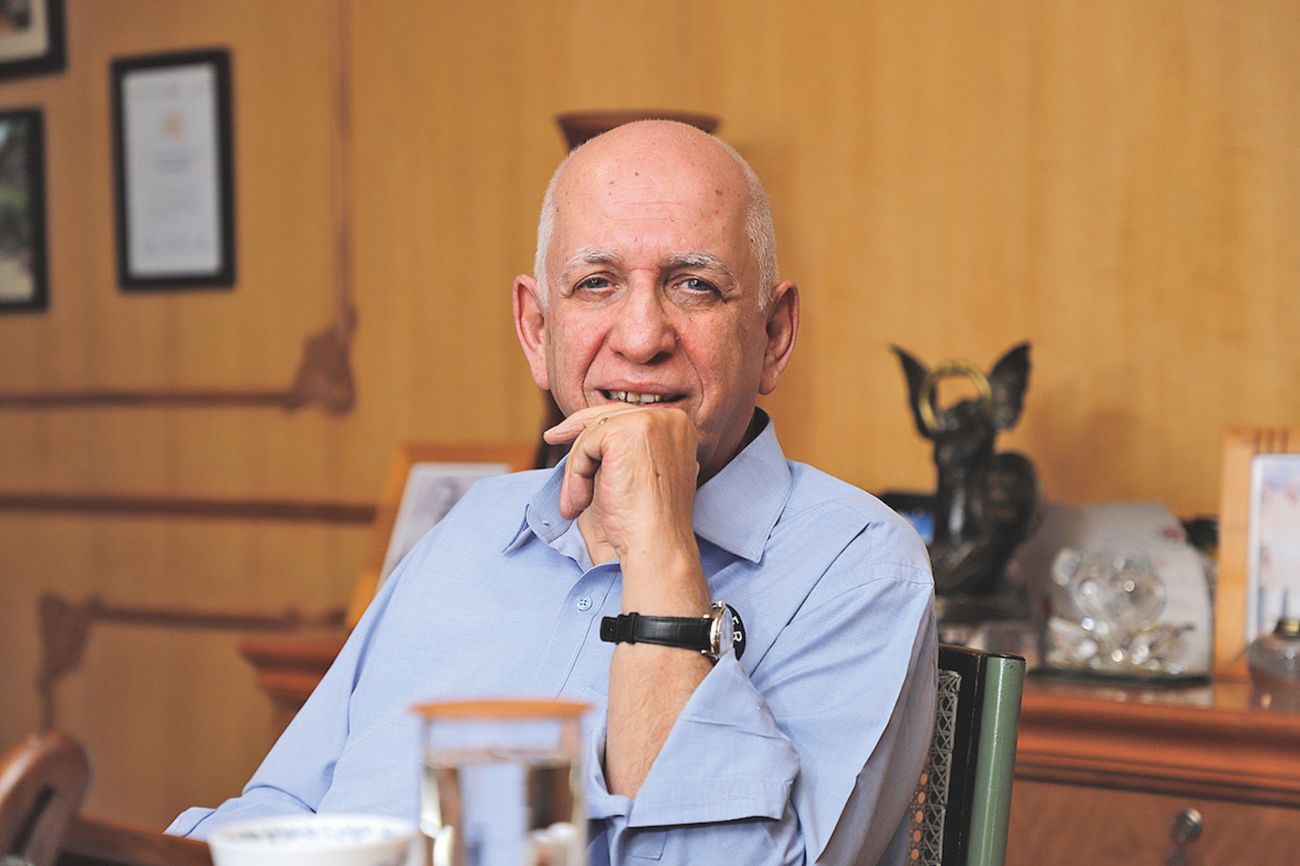
With more than a century of manufacturing heritage, Cooper Corporation Pvt Ltd has evolved from a Satara-based engine manufacturer into a globally competitive engineering powerhouse. In this interaction with Soumi Mitra, Editor-in-Chief, Modern Manufacturing India (MMI), Farrokh Cooper, Chairman & Managing Director, reflects on legacy-driven decision-making, rapid growth over the past decade, key milestones, export successes, and the company’s vision for a cleaner, technology-led future in power generation.
Cooper Corporation has completed over a century of operations. How has the company’s legacy shaped its growth philosophy and decision-making in today’s highly competitive global manufacturing landscape?
Completing more than 100 years is not merely a milestone for Cooper Corporation; it is a responsibility. Our legacy has instilled in us a deep respect for engineering integrity, long-term thinking, and disciplined decision-making. From our early days, we have believed that sustainability, whether in business, technology, or relationships, comes from building in-house capabilities and not chasing short-term gains. This philosophy continues to guide us in today’s competitive global environment.
Every major decision we take is evaluated through three lenses: technological relevance, long-term value creation, and national as well as global responsibility. Our legacy has taught us that resilience comes from consistency and innovation working together. While markets, regulations, and technologies evolve rapidly, our core belief remains unchanged that manufacturing excellence must be rooted in quality, trust, and continuous improvement. This heritage allows us to compete globally while remaining grounded in Indian engineering values.
Under your leadership, the company has grown nearly 500 percent in the last decade. What key strategic shifts or milestones were instrumental in driving this remarkable transformation from a Satara-based manufacturer to a global engineering powerhouse?
The last decade has been transformative for Cooper Corporation, driven by a clear strategic shift from being a product manufacturer to becoming a full-fledged engineering solutions provider. One of the most critical milestones was our conscious decision to invest heavily in R&D, tooling, testing, and advanced manufacturing infrastructure. We focused on developing world-class engines and components that could meet the most stringent global emission and performance standards.
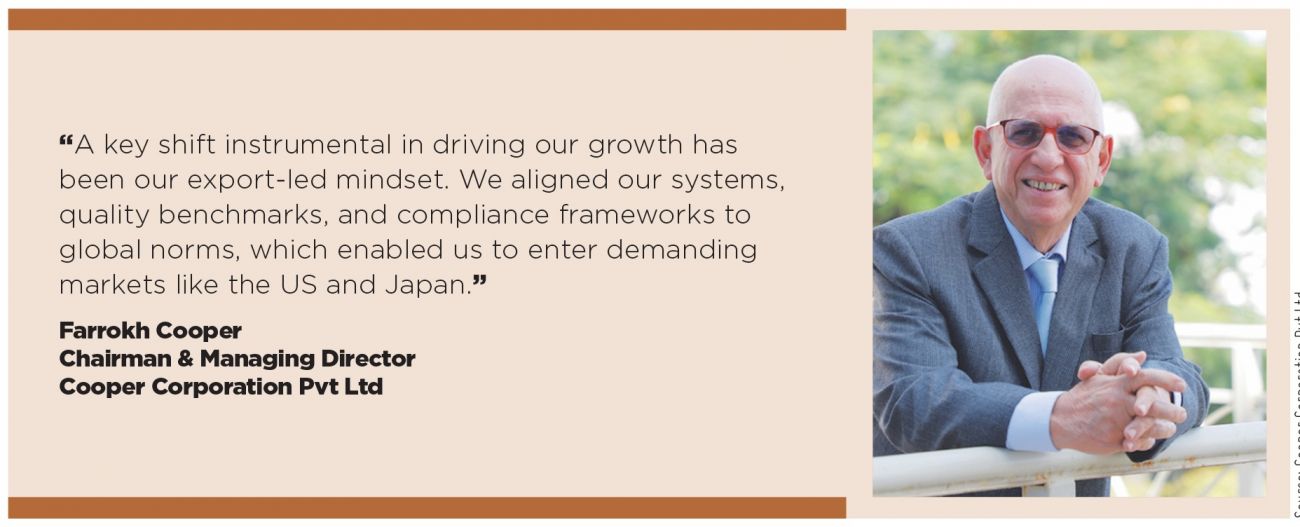
Another key shift was our export-led mindset. We aligned our systems, quality benchmarks, and compliance frameworks to global norms, which enabled us to enter demanding markets like the US and Japan. Vertical integration spanning foundry, machining, assembly, and testing gave us control over quality and scalability. Importantly, we nurtured a strong engineering culture and leadership pipeline. Growth was not accidental; it was the result of consistent reinvestment, strategic partnerships, and an unwavering focus on technology-led manufacturing excellence.
|
With Sinfonia’s technology and Cooper’s manufacturing scale, localization capability and market understanding, 10-kVA LPG gensets can redefine small-capacity power generation with global relevance. |
The recently announced joint venture with Japan’s Sinfonia Technology marks a significant step in the power generation segment. What potential do you foresee for 10-kVA LPG gensets in the Indian and international markets?
The joint venture with Sinfonia Technology represents a convergence of two engineering-driven organizations with shared values around precision, reliability, and sustainability. The 10-kVA LPG genset addresses a highly important transition phase in power generation where customers are seeking cleaner, quieter, and more efficient alternatives to conventional diesel systems.
In India, we see strong potential across urban infrastructure, telecom, healthcare, commercial establishments, and residential applications where emission norms and noise regulations are becoming increasingly stringent. LPG gensets provide a compelling balance between environmental responsibility and operational reliability. Internationally, especially in markets like Japan and parts of Southeast Asia, LPG-based solutions are well aligned with clean energy policies and urban deployment needs.
With Sinfonia’s technology and Cooper’s manufacturing scale, localization capability and market understanding, we believe this product category can redefine small-capacity power generation with global relevance.
The JV products comply with CPCB IV+ norms, among the most stringent emission standards globally. How is Cooper Corporation preparing for a future where clean energy and low-emission technologies will dominate the power generation landscape?
CPCB IV+ compliance is not an endpoint for us; it is a foundation. At Cooper Corporation, we have long anticipated that the future of power generation will be defined by clean energy, lower emissions, and higher efficiency. Our approach has been to stay ahead of regulatory curves rather than react to them. This is why we invested early in advanced combustion technologies, alternative fuels, precision fuel management systems, and extensive validation infrastructure.
We are also actively working on multi-fuel platforms, hybrid solutions, and engines optimized for LPG, CNG, and other cleaner fuels. Equally important is our focus on lifecycle efficiency, reducing emissions not just at the tailpipe but across manufacturing, testing, and usage stages. Partnerships such as the Sinfonia joint venture further strengthen our capability to absorb global best practices. Clean energy is not a compliance requirement for us; it is central to our long-term engineering and business strategy.
Cooper Corporation recently began exporting its EPA-certified clean energy engines to the US and Japan. What technological strengths or manufacturing capabilities enabled you to achieve this milestone?
Entering markets like the US and Japan requires far more than competitive pricing. It demands engineering credibility, process discipline, and uncompromising quality. Our ability to export EPA-certified engines is the result of years of focused investment in design validation, emissions testing, durability assessment, and advanced manufacturing systems.
One of our core strengths lies in complete in-house capability from engine design and simulation to casting, machining, assembly, and final testing. This vertical integration allows us to maintain tight tolerances and consistency across batches. Additionally, our manufacturing facilities are equipped with globally benchmarked CNC machines, robotic processes, and automated quality checks.
|
One of Cooper’s key differentiators is its ability to design engines that are robust, efficient, and adaptable to multiple fuels while meeting global emission norms. |
Equally important is our engineering mindset. Every product is designed for global compliance from day one. Achieving EPA certification was not a one-time effort but a validation of our systems, people, and long-term commitment to world-class manufacturing standards.
Your engines have served the Indian Defence Forces for more than a decade. How does supplying to Defence shape your product quality, testing rigor, and innovation cycle?
Supplying engines to the Indian Defence Forces is a matter of immense pride and responsibility. Defence applications demand absolute reliability under extreme operating conditions, whether it is temperature, terrain, or load variability. This requirement fundamentally elevates our approach to design, testing, and validation.
Our defence-grade engines undergo rigorous endurance testing, stress simulations, and failure-mode analysis far beyond conventional commercial norms. This level of scrutiny strengthens our overall product portfolio, as learnings from defence applications often cascade into civilian and export products. It also accelerates innovation by pushing our engineers to solve complex performance and durability challenges.
You recently expanded manufacturing capacity with two new units dedicated to foundry operations and aluminum high-pressure die casting. How will these facilities enhance Cooper Corporation’s vertical integration and global supply capabilities?
The addition of dedicated foundry and aluminum high-pressure die casting facilities is a strategic move to strengthen our vertical integration and future readiness. These units give us greater control over material quality, metallurgical consistency, and supply-chain resilience, which are critical factors when serving global OEMs and export markets.
Aluminum high-pressure die casting plays a vital role in lightweighting, thermal efficiency, and structural precision, especially for modern engines and power generation components. By bringing these capabilities in-house, we reduce dependency on external suppliers, shorten development cycles, and enhance confidentiality for advanced designs.
From a global supply perspective, these facilities enable us to scale faster while maintaining uniform quality standards. They also position Cooper Corporation as a reliable long-term partner for international customers seeking integrated, high-quality manufacturing solutions from India.
R&D has always been a key differentiator for Cooper Corporation. Could you elaborate on the technological strengths or breakthrough innovations that set your engines and components apart?
R&D at Cooper Corporation is deeply embedded in our manufacturing DNA. We believe true differentiation comes from engineering depth rather than incremental improvements. Our R&D strengths span combustion optimization, fuel-agnostic engine platforms, emission-control integration, and advanced material engineering.
One of our key differentiators is our ability to design engines that are robust, efficient, and adaptable to multiple fuels while meeting global emission norms. We also invest significantly in simulation tools, prototype testing, and endurance validation, which allows us to reduce time-to-market without compromising reliability.
|
Cooper’s ability to export EPA-certified engines is the result of years of focused investment in design validation, emissions testing, durability assessment, and advanced manufacturing systems. |
Breakthroughs often come from solving real-world challenges, whether it is improving fuel efficiency under variable loads or ensuring performance in harsh environments. Our close collaboration between R&D, manufacturing, and testing teams ensures that innovation is practical, scalable, and commercially viable.
Could you please share the percentage split between India-manufactured and foreign-manufactured machines deployed within your facility? Additionally, what guidance would you offer to Indian machine tool manufacturers?
At present, approximately 65 to 70 percent of the machines deployed across our facilities are India-manufactured, with the remaining sourced from global OEMs for highly specialized applications. Over the years, the quality and capability of Indian machine tool manufacturers have improved significantly and we actively encourage this ecosystem.
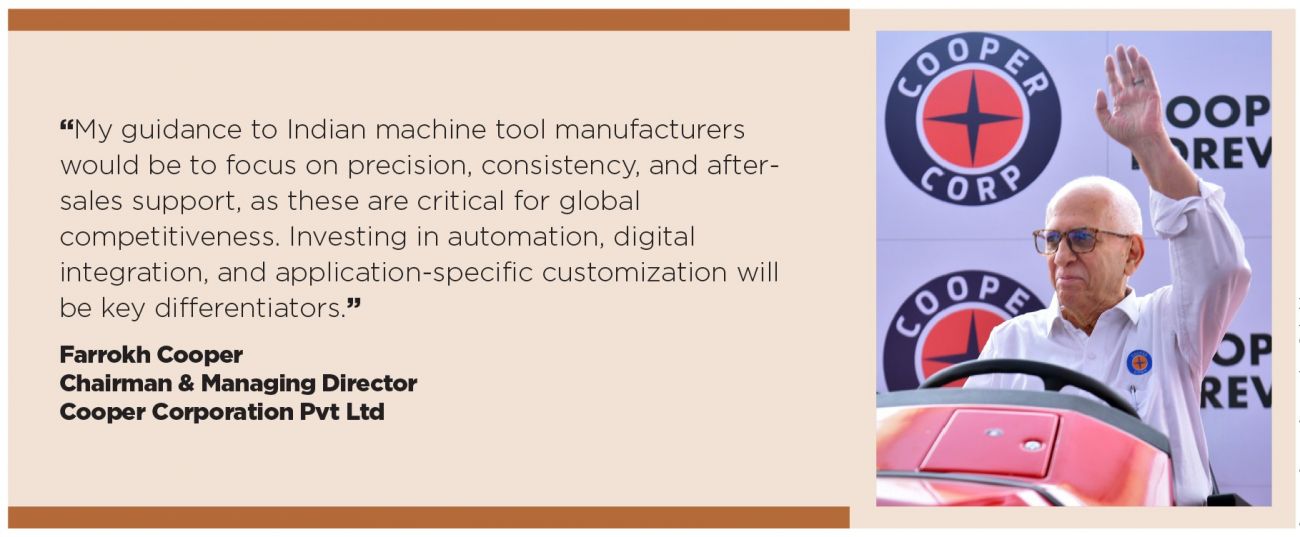
My guidance to Indian machine tool manufacturers would be to focus on precision, consistency, and after-sales support, as these are critical for global competitiveness. Investing in automation, digital integration, and application-specific customization will be key differentiators. Equally important is collaborating closely with end-users to understand real manufacturing challenges.
India has the talent and scale to become a global machine tool hub. The next leap will come from innovation-led engineering, not just cost competitiveness.
 |
SOUMI MITRA |
 Facebook
.png) Twitter
Twitter Linkedin
 Subscribe