
CRAFTSMANSHIP IN THE AGE OF AUTOMATION
In manufacturing’s digital era, it’s easy to assume that software, robotics, and AI have rendered manual skill obsolete. The world’s most advanced machine tool builders remind us otherwise: craftsmanship coexists with automation, not in spite of it, but because of it.
Today’s manufacturing world is dominated by automation, multi-axis CNC machines, and AI-driven manufacturing and quality control. It may appear that human touch and craftsmanship have become outdated, relegated to history. However, the art of precision machine building continues to rely on human skill—especially for developing ultra-precision machines.
Traditional skills like hand scraping, alongside other manual expertise such as spindle assembly, guideway matching, and thermal compensation awareness are still highly sought after in Japan and Europe in the ultra-precision machine building industry.
Hand Scraping: Where Craftsmanship and Precision Converge
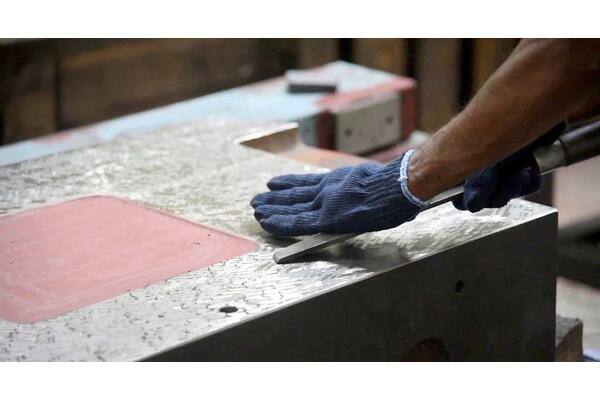
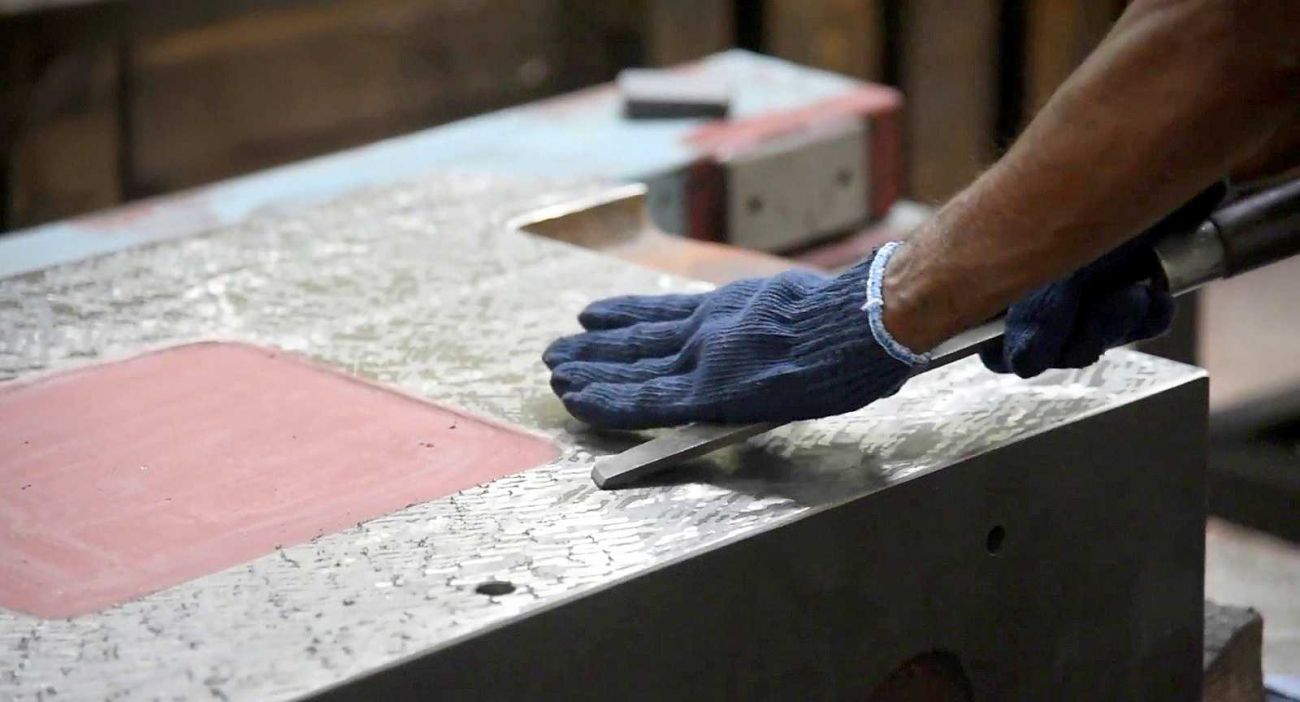
One of the purest expressions of craftsmanship in machine tool manufacturing is hand scraping, a manual process still widely practiced by select ultra-precision builders. Hand scraping involves removing microscopic amounts of material from critical surfaces to achieve precise geometric behavior and surface characteristics unattainable by grinding or machining alone.
This highly skilled process works as follows:
- Initial machining or grinding brings a surface close to its nominal shape.
- A surface plate and marking medium identify high and low points.
- Craftsmen use a hand scraper to remove small irregularities.
- Repeated marking and scraping until the desired contact pattern and flatness are achieved.
- Precision instruments verify flatness, parallelism, and bearing points.
This produces surfaces with improved lubrication retention, reduced friction and true geometric alignment that provides better long-term stability and motion quality than manufacturing processes deliver.
YASDA’s ‘Kisage’: Craft as Corporate Core
YASDA, one of the world’s most respected ultra-precision machine builders, explicitly calls hand scraping part of its corporate core philosophy. Known in Japanese as ‘Kisage’, the art of scraping is considered not just a technique, but a philosophy of precision that pervades the company’s entire culture.
At YASDA, every critical mating surface is scraped with sub-micrometer precision to ensure long-lasting performance, not just short-term accuracy. Hand scraping contributes to high bearing contact geometry, smooth slide motion, and vibration damping, all of which underpin the ultra-precision machining that YASDA machining centers are known for.
The word ‘Takumi’ refers to master craftsmen who have spent decades honing their skills. In companies renowned for ultra precision, such as those building high-end machining centers, jig borers, and grinding machines, Takumi are entrusted with the most critical processes — hand scraping of ways, spindle alignment, geometric calibration, thermal stability tuning, and the final ‘feel of perfection’ that no automated system can fully replicate.
These artisans don’t simply follow tolerances; they refine machines until they exceed expectations, often tuning accuracy in microns through methods that combine science with lived, tactile wisdom. YASDA’s commitment to hand scraping reflects a broader principle — true precision isn’t just manufactured and measured, it’s crafted.
|
Companies that remain competitive at the highest tier of precision do not view craftsmanship as a cost; they see it as strategic risk mitigation. |
Beyond Scraping: Other Dimensions of Craftsmanship
Craftsmanship manifests in several other artisanal competencies that modern manufacturing cannot easily replicate:
Spindle Mastery: Ultra-precision spindles require careful assembly, preload tuning, and inspection that extends beyond automated checks. The tactile feel and nuanced judgement of expert technicians ensure the spindle performs reliably across its entire speed range and temperature variations.
Guideway and Structural Matching: Precision machine tool geometry depends on how parts work together and not just how they are individually finished. Human fitting and assembly remain crucial for structural harmony, ensuring load paths, symmetry, and rigidity are balanced in actual operation.
Thermal Awareness: Modern machine tools manage thermal effects through design and control algorithms. The intuitive understanding of how materials behave with heat remains a tacit skill, embedded in how parts are assembled, mass is balanced, and cooling systems are integrated.
Human-Centered Inspection: Even with advanced metrology, from laser trackers to interferometry, human engineers interpret data, determine corrective actions, and make judgement calls that machines alone cannot decide, especially under real-world factory constraints.
Craftsmanship Meets Modern Technology
Today’s machine tool industry uses ultra-precise metrology systems to verify features to sub-micron levels. There are thermal management systems that stabilize machine structures within ±0.5°C in operating conditions. Advanced spindle technologies like self-adjusting preload systems that maintain optimal contact through heat generation are commonly used. Yet even with these innovations, companies like YASDA still rely on craftsmanship because they believe that the last microns of precision often depend on the human hand and eye.
Why Craftsmanship Still Matters Today
In a global machine tool market driven by cost pressures, rapid throughput, and monthly sales targets, many builders have relegated manual finishing to history. However, companies that remain competitive at the highest tier of precision do not view craftsmanship as a cost; they see it as strategic risk mitigation.
Longevity: Hand-scraped surfaces and expertly assembled interfaces maintain accuracy over decades, not just months.
Stability: Crafted surfaces resist thermal and dynamic variation more effectively than fully automated processes alone.
Behavioral Precision: Real-world performance depends on how machines behave under load, something craftsmanship helps ensure.
When tolerances enter the sub-micron realm, craftsmanship isn’t optional; it’s differentiating.
Precision is Human and Technological
In manufacturing’s digital era, it’s easy to assume that software, robotics, and AI have made manual skill obsolete. The world’s most advanced machine tool builders remind us otherwise: craftsmanship coexists with automation, not in spite of it.
YASDA’s unwavering commitment to hand scraping, and the larger philosophy of meticulous human inspection and assembly, demonstrates that true precision is not merely engineered; it is crafted. In a marketplace where microns decide success, the human hand remains a quiet yet decisive guardian of geometric truth and long-term machine performance.
Reji Varghese is the President of RV Forms and Gears, one of India's oldest fixture building companies.He is also a guest writer for a number of national newspapers and magazines.
 |
Reji Varghese |
 Facebook
.png) Twitter
Twitter Linkedin
 Subscribe