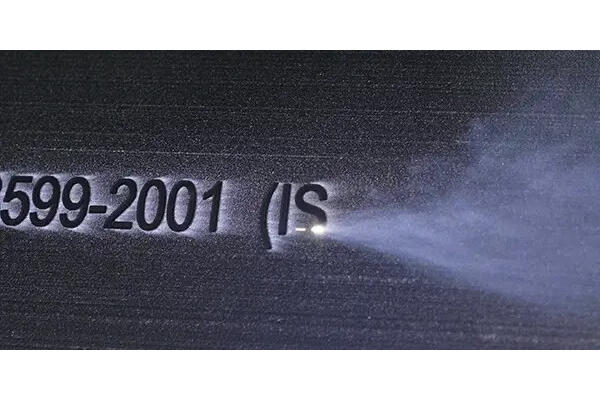

For Traceability and Performance
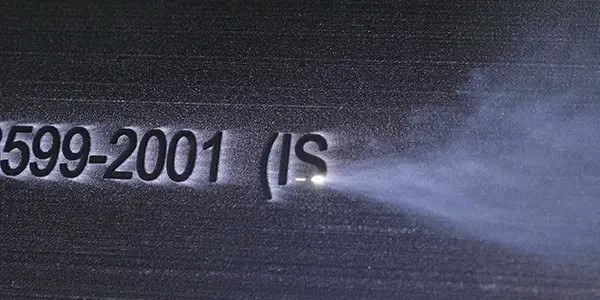
In industrial manufacturing, component traceability and long-term performance are directly tied to how parts are identified and tracked throughout their lifecycle. Laser marking machine design services provide a precise, permanent solution for marking critical information onto components without affecting dimensional tolerances or material integrity.
Laser marking is a non-contact process that uses focused energy to alter the surface of a material, producing high-contrast, permanent marks. Unlike mechanical engraving or ink-based methods, laser marking does not introduce tool wear or consumables, making it highly consistent across both short runs and high-volume production.
For engineers and OEM designers, this consistency is critical. Properly executed laser marking machine design services ensure that markings remain legible under operating conditions that may include abrasion, chemical exposure, or elevated temperatures.
Improving Traceability Through Precision Marking
Traceability is essential for quality control, compliance, and maintenance tracking. Components used in mechanical assemblies—such as pulleys, housings, and bearing systems—must be identifiable throughout their service life.
With engineered laser marking machine design services, manufacturers can apply:
*Serial numbers for part tracking, *Data matrix or QR codes for digital traceability, *Lot and batch identifiers for quality assurance, and *Permanent branding for product identification.
Each mark is positioned and controlled with precision to maintain readability without interfering with component function or assembly tolerances.
Enhancing Performance Without Compromising Materials
One of the primary advantages of laser marking is its ability to preserve the base material properties of a component. Properly configured laser marking systems can mark metals such as stainless steel, aluminum, and carbon steel—as well as engineered polymers—without inducing mechanical stress or deformation.
This is particularly important for power transmission components where surface integrity, balance, and fit directly affect system performance. By integrating marking into the design process, engineers can ensure that identification features do not compromise operational reliability.
Design Considerations for Laser Marking Systems
Effective laser marking machine design services require more than just applying a mark—they involve aligning the marking process with the component’s geometry, material, and intended use. Key considerations include:
Material response: Different alloys and polymers react uniquely to laser energy, affecting contrast and depth
Mark location: Placement must avoid functional surfaces or load-bearing areas
Tolerance sensitivity: Marking must not alter critical dimensions or fits
Environmental exposure: Marks must remain legible under real-world operating conditions.
Torque Transmission works with customers to ensure above factors are addressed, resulting in markings that support both performance and long-term usability.
The company can apply advanced laser marking system capabilities to ensure that each mark—whether a serial number, barcode, or logo—meets strict requirements for clarity, durability, and repeatability across production volumes.
Integration with Manufacturing Workflows
Laser marking is most effective when integrated into the broader manufacturing process. Whether applied during prototype validation or final production, it complements other services such as machining and additive manufacturing.
For example, components developed through 3D printing can be marked for testing and validation, while machined parts can receive permanent identification before assembly. This integration improves workflow efficiency and ensures consistency across all stages of production.
Image Source: Torque Transmission
 Facebook
.png) Twitter
Twitter Linkedin
 Subscribe