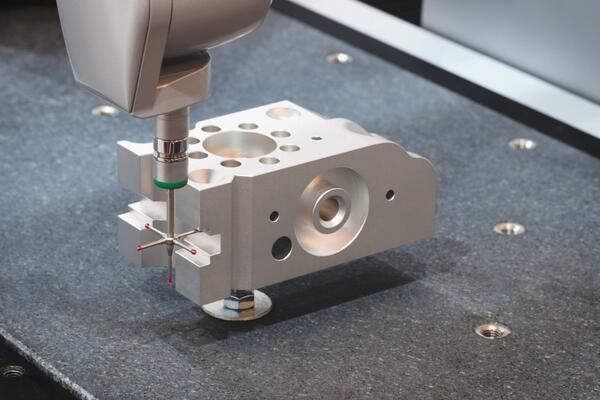

QUALITY AS A MINDSET
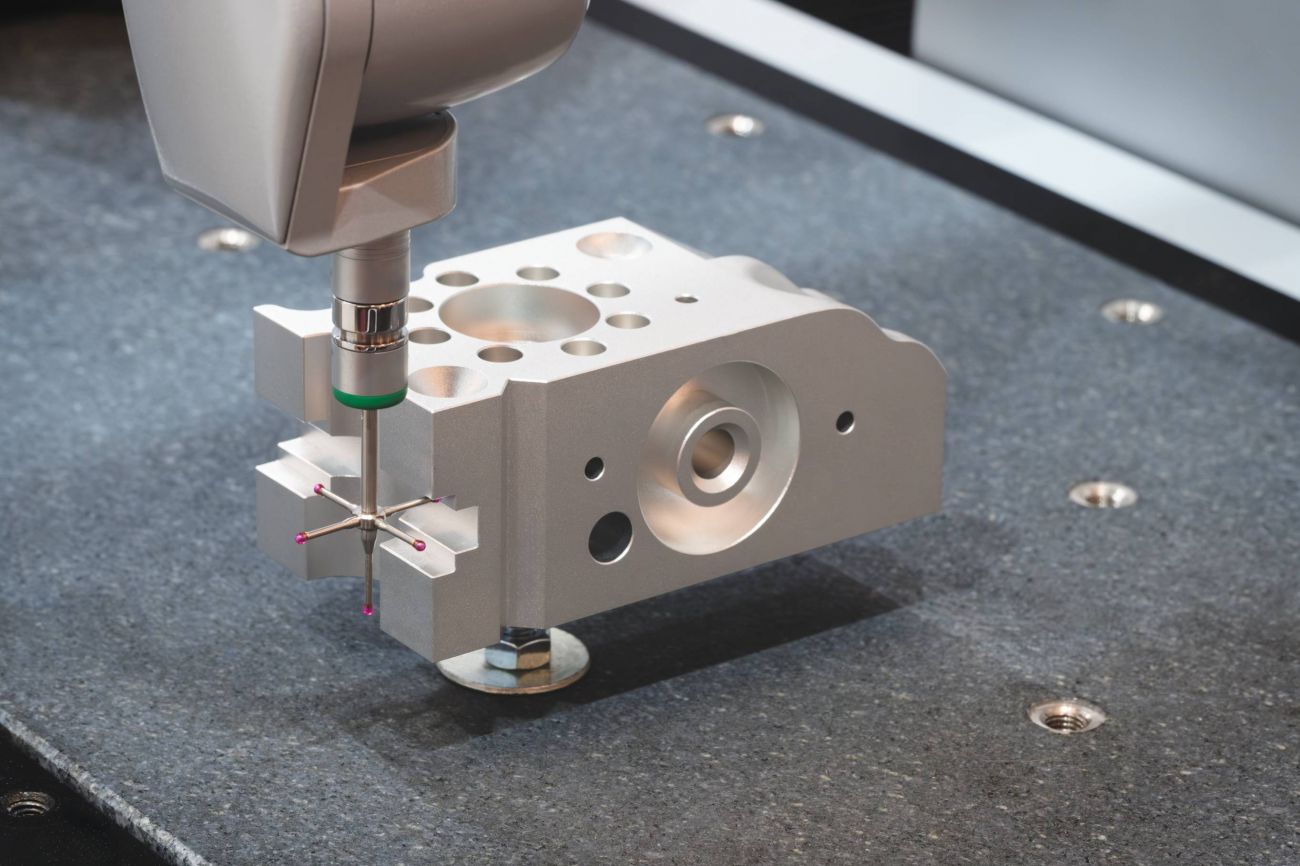
A reflection on why the iconic book 'Zen and the Art of Motorcycle Maintenance' continues to influence engineers and engineering education worldwide, 52 years after it was first published.
In engineering colleges around the world, students spend years learning thermodynamics, materials science, fluid mechanics, and machine design. They learn equations, tolerances, stress limits, and simulation tools.
And then, every so often, they encounter a book that teaches them none of these things, but something equally important.
Robert M Pirsig’s 1974 classic ‘Zen and the Art of Motorcycle Maintenance’ is not a textbook, nor is it a repair manual for motorcycles. It is the story of a journey across America taken by Pirsig and his son on a motorcycle. Along the way, the author pursues a deceptively simple question: What is Quality?
What is Quality?
For engineers accustomed to measurable quantities — microns, Cp/Cpk, efficiency percentages — this question can be unexpectedly unsettling. Yet for more than fifty years, the book has found a place in engineering curricula of colleges such as Princeton, MIT, Stanford, the University of Michigan, and others because it explores issues that are difficult to teach through equations.
These include the meaning of quality, the ethics of engineering decisions, the relationship between craftsmanship and purely analytical thinking, and the connection between technology and human values.
Beyond Equations: Asking ‘Why’
Engineering education traditionally focuses on the ‘how’. Students are taught how to design a fixture, how to optimize a machine tool, and how to calculate fatigue limits.
But Pirsig asks a different question: why does good engineering matter?
In the book, he describes two ways of understanding the world. The first is the classical view, which is analytical, logical and technical. The second is the romantic view, which is experiential, aesthetic, and intuitive.
Engineers often live comfortably in the classical world. They believe in deterministic laws, logical systems, and the ability to analyze performance with precision.
But technology detached from the web of human purpose inevitably becomes sterile. A machine may function correctly according to calculations yet still lack the care and skill that distinguish great work from mediocre work.
The book reminds engineers that technology and values cannot be separated. Every engineered system reflects human choices, about safety, responsibility, cost, and care. Engineering, in the end, is not just about machines. It is about the people who design, build, operate, and depend on them.
Quality as a Mindset, Not a Metric
In manufacturing, quality is often discussed in numbers — tolerances, rejection rates, Cp and Cpk values, and audit scores. These measures matter. But anyone who has spent time on a shop floor knows that true quality appears before the numbers.
It shows up in the way an expert machinist listens to the cutting sound of a tool. In the way a machine tool designer anticipates problems. In the extra minute taken to clean a datum surface before setup.
On the shop floor, quality is rarely discussed in philosophical terms. It is recognized in quieter ways, through habits, discipline, and the accumulated wisdom of experience.
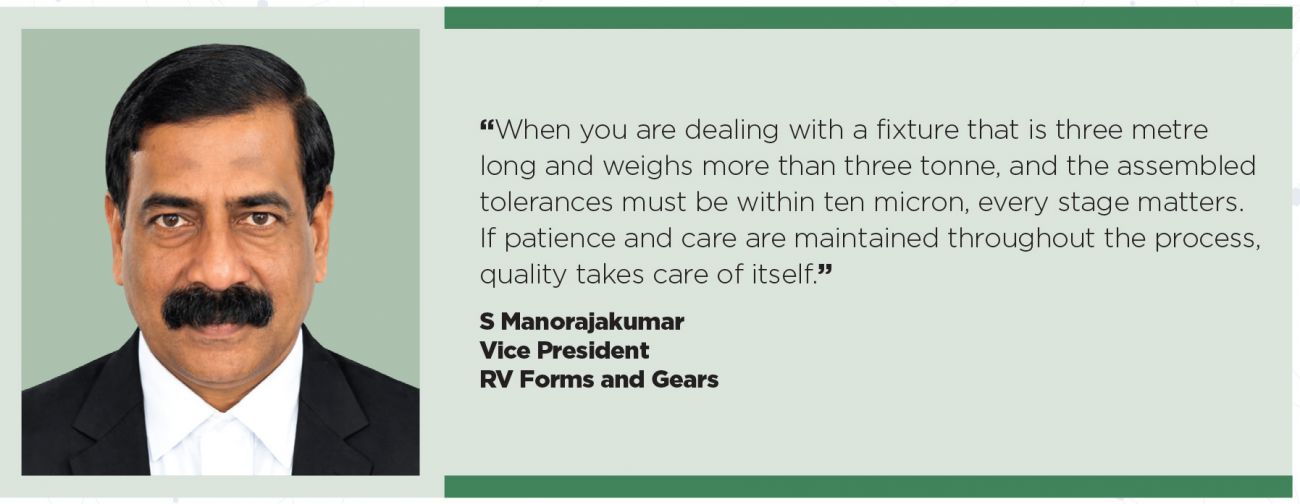
S Manorajakumar, Vice President, RV Forms and Gears, has spent more than four decades building high-precision fixtures. For him, quality begins not with inspection reports but with mindset.
|
“Quality does not suddenly appear at the inspection stage. It emerges much earlier, in the care, attention, and quiet discipline with which the work itself is approached.” |
“Quality is fundamentally a way of thinking,” he says. “Our focus has always been on creating a culture of quality in the workplace. One of the ways we do this is through extensive apprenticeship. Young trainees work alongside experienced craftsmen and slowly absorb the discipline, patience, and attention to detail that the work demands.”
The scale and precision of the fixtures produced by the company leave little room for error.
“When you are dealing with a fixture that is three metre long and weighs more than three tonne, and the assembled tolerances must be within ten micron, every stage matters,” Manorajakumar explains. “The stack-up tolerances of the individual components can easily affect the final accuracy. If patience and care are maintained throughout the process, quality takes care of itself.”
Pirsig’s central insight was simple but radical: quality is not something added at the end of a process. It is sensed at the beginning.
A hurried technician can finish the job. But a skilled mechanic listens to the engine, notices subtle changes in vibration or sound, and patiently restores the system to its optimal condition. The difference is not just technical knowledge – it is care.
For engineers and manufacturing professionals, this idea resonates deeply. Quality is not only about inspection or standards. It is also about attention to detail, intellectual honesty, curiosity, and pride in craftsmanship. These qualities cannot be reduced to formulas or procedures. They can only be illustrated.
Where Quality Really Begins
In manufacturing organizations, quality is often treated as the responsibility of the quality department. In reality, quality begins much earlier, at the moment attention is brought to the task.
When work is rushed, fragmented, or treated as a checklist exercise, defects multiply. When attention is steady and thoughtful, problems are caught early, sometimes well before they fully appear.
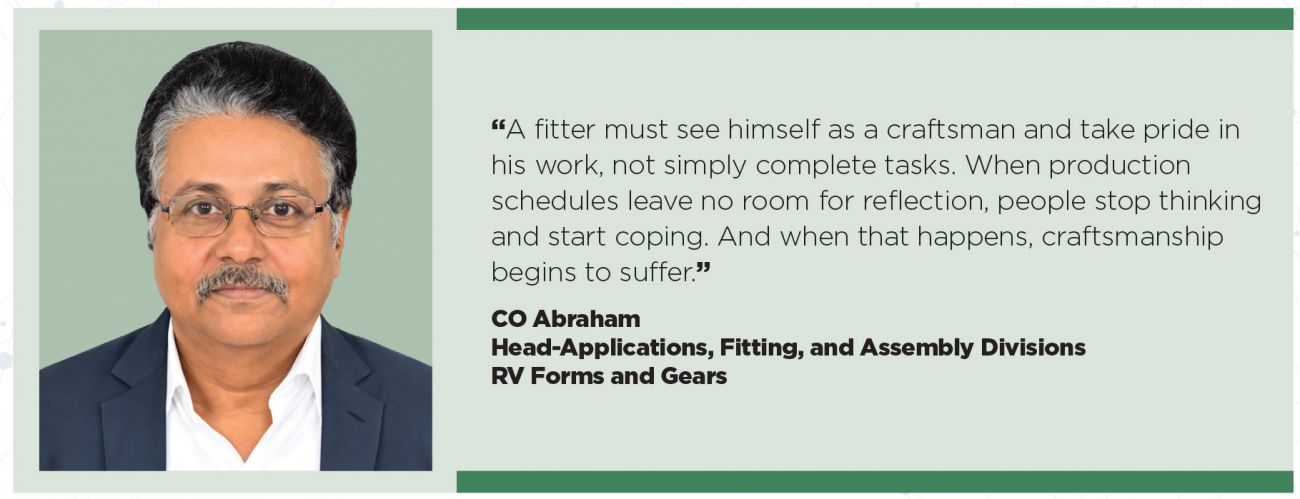
That philosophy is echoed by CO Abraham, who began his career as a tool-and-die maker at the age of eighteen and today, five decades later, heads the applications, fitting, and assembly divisions at RV Forms and Gears.
“When I walk through the shop floor, I look at small things,” he says. “The way a fitter has stacked the components, the care taken to deburr sharp edges, the neatness of the workbench. These details reveal the mindset of the person doing the work.”
For Abraham, craftsmanship lies in how seriously a person relates to the task at hand.
In many ways, these shop-floor observations echo the central insight of Pirsig’s book: quality does not suddenly appear at the inspection stage. It emerges much earlier, in the care, attention, and quiet discipline with which the work itself is approached.
The Lesson of Maintenance
When people think about engineering, they often imagine invention and design. New technologies capture headlines.
Pirsig’s story, however, focuses on something more mundane: maintenance.
Understanding how a machine works, how its components interact, how failures arise, requires patience and trial and error. Factories, aircraft, machine tools, and power plants depend less on dramatic breakthroughs than on the steady work of maintenance, monitoring, and repair.
Production systems are complex, dynamic systems. They behave less like static machines and more like living organisms. They must be watched, adjusted, and cared for.
|
In many ways, the best engineering is the kind that understands a system so well that once it is properly established, it runs smoothly with minimal intervention. |
Avoiding the ‘Gumption Traps’
One of the most memorable ideas in Pirsig’s book is the concept of ‘gumption traps’. These are psychological obstacles that technicians encounter while solving problems.
An Engineer debugging a turnkey project on a machine tool may experience frustration, boredom, impatience, and overconfidence. When these traps appear, mistakes multiply.
Abraham says, “Anyone who has worked on a factory floor trying to diagnose a malfunctioning machine knows the feeling. The most effective engineers are often those who recognize when frustration is clouding their thinking, step back, and approach the problem again with patience.”
Technical competence matters, but clarity of mind matters just as much.
Creating Conditions for Quality
Quality cannot be imposed through slogans or audits alone. But certain conditions make it far more likely to emerge.
Respect for time: Not slower production, but realistic production. When schedules leave no room for reflection, people stop thinking and start coping.
Intimacy with the process: Operators who understand why processes work develop judgment rather than mere compliance.
Learning cultures outperform blame cultures: Cultures built entirely on penalties produce compliance, not excellence. Quality improves when mistakes become opportunities to learn.
Integration of logic and intuition: Manufacturing often separates engineering analysis from shop-floor experience. The best results appear when both work with each other. Precision and craftsmanship are not opposites. They are partners.
Why the Book Still Matters
More than fifty years after its publication, ‘Zen and the Art of Motorcycle Maintenance’ continues to appear on engineering reading lists. The reason is simple. Engineering schools can teach students to solve equations and design systems. But the profession also requires soft skills and qualities that are harder to teach such as intellectual humility, curiosity, patience, respect for systems, and commitment to craftsmanship.
Pirsig’s book reminds us that engineering is not merely a technical activity; it is a human one. Whether designing a machine tool, maintaining a production line, the best engineers bring something that no equation alone can supply: care for the work itself. And when that care is present, quality tends to follow.
Reji Varghese is an industry veteran with nearly four decades of experience in high-precision fixture building. He also contributes as a guest writer to several leading national newspapers and magazines.
 |
Reji Varghese |
 Facebook
.png) Twitter
Twitter Linkedin
 Subscribe