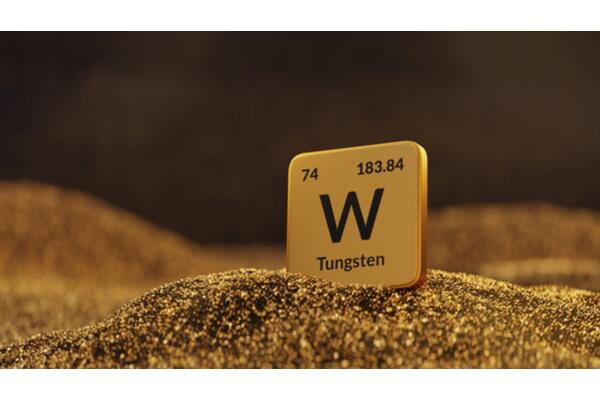

The Tungsten Crunch

Tungsten carbide — the critical material for cutting tools such as drills, end mills, and indexable inserts — is becoming one of the most strategically precarious inputs in manufacturing.
China accounts for approximately 80 percent of global tungsten mining and processing capacity. Export restrictions and domestic policy adjustments have contributed to upward price pressure, but the problem runs deeper. New mine development has been chronically underfunded worldwide, and the pipeline of tungsten concentrate is not keeping pace with demand. That demand is accelerating simultaneously across Defence, Aerospace, Electric Vehicles, and Semiconductors — all competing for the same shrinking pool of material. Defence procurement during wartime triggers pre-emptive stockpiling that tightens the market further. Scrap carbide now commands record premiums, a clear signal that primary supply alone cannot meet demand.
The APT Bottleneck
Over 75 percent of global tungsten production passes through Ammonium Paratungstate before becoming powder, carbide, or alloys — making APT the hidden lever of the entire tungsten economy.
Its purity, refined to 99.9 percent, directly determines carbide grain structure and tool life. When APT supply tightens, manufacturers face not only cost increases but quality variability as they turn to less familiar suppliers. Rising energy and logistics costs compound the pressure at every stage. There is no single relief valve; every link in the chain is strained simultaneously.
The Industry Must Act
The forces driving tungsten carbide costs higher — supply concentration, underinvestment in new mines, and structural demand growth — are not cyclical. They are here to stay. Three priorities belong on every procurement leader’s agenda: build long-term supplier agreements that diversify sourcing across multiple geographies; integrate carbide recycling as a strategic supply buffer, not an afterthought; and engage with emerging tungsten sources globally, even at a near-term cost premium. The value of diversification will only grow.
Strategy for India
For Indian manufacturers, this moment is both a challenge and an opening. India’s Cutting Tool, Automotive, and Engineering sectors are significant consumers of tungsten carbide, and the industry should act decisively. The immediate priority should be leveraging trade relationships with tungsten-producing nations to secure stable, long-term supply agreements. Industry bodies need to coordinate collective procurement, giving local manufacturers the negotiating scale they cannot achieve alone. Tosher Hormusjee, Executive Committee Member & Past President, Indian Cutting Tool Manufacturers Association (ICTMA), says that he has has been pushing for action for the past ten years but response has been slow.
Domestically, carbide recycling remains underutilized. India generates substantial scrap volumes across its manufacturing base, yet formal reprocessing infrastructure is underdeveloped. Building that capacity now — while premiums are high — creates a locally insulated supply buffer. Longer term, Indian manufacturers should engage with Make in India and the Production Linked Incentive scheme to develop upstream APT processing capability. Even modest domestic APT capacity would reduce dependence on imported intermediates and strengthen India’s position in the global tungsten value chain.
The current tungsten crunch is not a cycle — it is a reconfiguration of the global supply landscape. The manufacturers that emerge strongest will be those who recognize this now, before the next price surge makes the choices for them.
 |
NIKHIL NAYAK |
 Facebook
.png) Twitter
Twitter Linkedin
 Subscribe